

November 06, 2026
Hashir Ahsan
ISLAMABAD
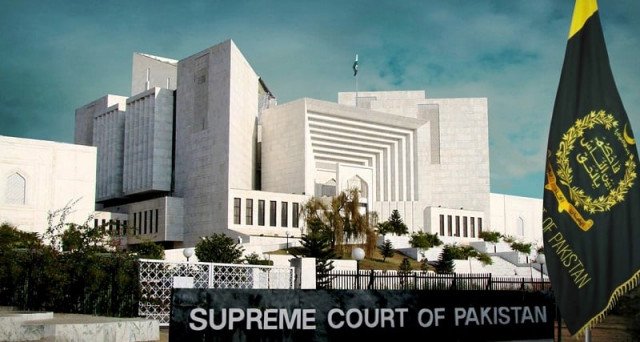
The Supreme Court of Pakistan has delivered a landmark judgment clarifying the scope and jurisdictional limits of the Khyber Pakhtunkhwa Enforcement of Women’s Property Rights Act, 2019.
A two-member bench comprising Justice Ayesha A. Malik and Justice Mohammad Shafi Siddiqui set aside the rulings of both the Peshawar High Court (PHC) and the Provincial Ombudsman. The apex court ordered that the land dispute be sent as a formal reference to the relevant civil court for regular adjudication.
The Supreme Court held that under the 2019 Act, the Ombudsman’s jurisdiction is strictly summary in nature and limited to the summary restoration of clear ownership. Under the law, a woman seeking relief from the Ombudsman must first establish undisputed title and unlawful deprivation of possession. Where ownership is crystal clear, the Ombudsman may call for an inquiry report from the Deputy Commissioner within 15 days, decide the matter within 60 days, and grant relief under Section 5.
However, where a case involves complex questions of title, intricate legal issues, or disputed facts requiring detailed investigation and evidence, it falls outside the Ombudsman’s summary domain. In such circumstances, Section 6 of the Act mandates that the Ombudsman refer the matter as a formal reference to the competent civil court to be tried as a regular civil suit.
The court observed that both the Ombudsman and the PHC failed to properly apply this legal requirement despite the presence of multiple complex disputes.
The judgment outlined four primary reasons why the case was unfit for summary proceedings:
Lack of Possession: According to the Deputy Commissioner’s inquiry report, the petitioners were not in possession of the disputed property; it was occupied by the family of respondent Muzaffar Shah Afridi.
Absence of Valid Revenue Records: No conclusive title document—such as the claimed gift deed dated November 14, 2023, or formal inheritance entries—was produced before the Ombudsman, except for a basic property certificate in the name of the late Rehmat Shah Afridi.
Unsubstantiated Oral Claims: The petitioners’ assertion of an oral gift agreement by co-respondents could not be accepted without judicial proof, particularly when Muzaffar Shah Afridi asserted an independent title claim.
Lack of Formal Land Records in Former FATA: The disputed property is situated in the former FATA region (District Khyber), where no historical revenue records of ownership or possession exist to settle title summarily.
Examining the High Court’s earlier ruling, the Supreme Court noted that the PHC also erred in holding the Ombudsman’s proceedings completely void merely because a civil suit was pending. Section 7 of the Act explicitly permits a woman to file a complaint—and allows the Ombudsman to initiate an inquiry—even if court proceedings are underway. However, given that an appeal is a continuation of original proceedings, the High Court should have converted the matter into a Section 6 reference to the civil court rather than outrightly dismissing the complaint.
The Supreme Court emphasized that the spirit of the special law is to resolve property disputes on a single judicial platform while respecting due process, rather than subjecting women litigants to protracted, repetitive litigation.
Converting the petitions into appeals and allowing them, the Supreme Court set aside the decisions of both lower forums and issued concrete directions:
- The Ombudsman shall transfer all records, applications, and reports to the court of Civil Judge-1 Bara, Mr. Samiullah (District Khyber), where a civil suit filed by Muzaffar Shah Afridi against the petitioners and co-respondents is currently pending.
- The civil court will consolidate the reference under Section 6 of the Act with the pending suit and treat it as the petitioners’ formal claim, resolving the title dispute after recording regular evidence without delay.
- The civil court was directed to issue notices to all parties within 15 days of receiving the reference. Copies of the judgment were also dispatched to the District Judge Khyber and the Provincial Ombudsman to ensure uninterrupted proceedings.
- The apex court reiterated that the KP Enforcement of Women’s Property Rights Act, 2019 is an enforcement mechanism for established or easily determinable titles, not a forum to adjudicate complex, unproven property claims.
Background of the Case
- The dispute concerns approximately 39 kanals of land situated at Mandai Khas, Alam Gudder near Dogra Hospital, Bara, District Khyber. The petitioners—Naheed Shah Afridi and others, along with Musammat Islam Bibi (acting as the daughters and widow of the late Rehmat Shah Afridi)—filed a complaint before the Ombudsman seeking possession from respondents.
- The late Rehmat Shah’s brother, Muzaffar Shah Afridi, disputed the claim, asserted sole ownership, and instituted a civil suit.
- The Ombudsman initially allowed the complaint on October 22, 2024, directing the Deputy Commissioner Khyber to partition the land and deliver physical possession. Following an unsuccessful stay application, Muzaffar Shah challenged the order in the Peshawar High Court under Section 8. On January 17, 2025, the PHC set aside the order and remanded the matter for a fresh inquiry.
- Subsequent reports were submitted by the Deputy Commissioner (February 25, 2025) and a Local Commission (February 28, 2025), leading the Ombudsman to issue a second order on October 2, 2025, again restoring possession to the women.
- Muzaffar Shah appealed this decision to the PHC, which, on July 3, 2026, set aside the Ombudsman’s order and dismissed the complaint on procedural grounds. The petitioners then approached the Supreme Court, leading to the present judgment.