

April 20, 2026
Staff Report
LAHORE
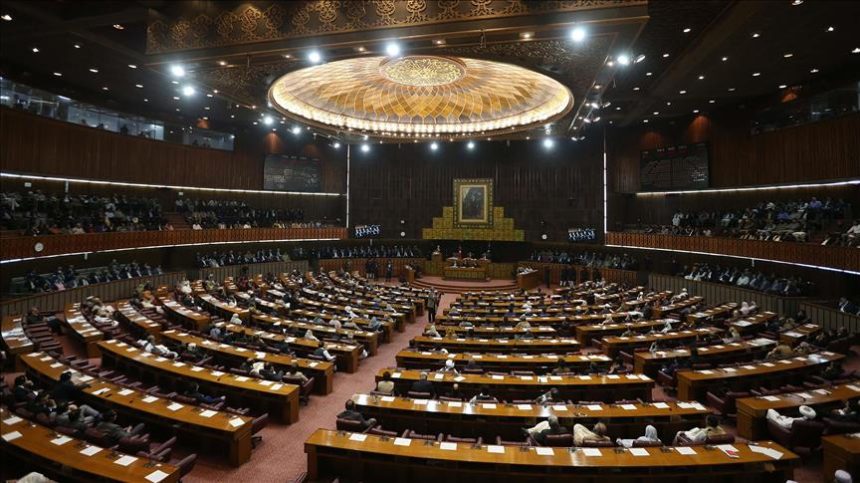
Federal ministers and parliamentary leaders showed little interest in the National Assembly’s proceedings during its 26th session, even as Pakistan was engaged in a critical diplomatic role in the region amid the peak of the Iran conflict and backchannel mediation efforts.
The six-sitting session, held from March 30 to April 8, came at a time when Islamabad was actively involved in facilitating dialogue between Tehran and Washington, with expectations that the government would brief the House and take Parliament into confidence on its peace efforts. Instead, attendance data reveals a striking absence of key decision-makers from the floor.
According to a report by the Free and Fair Election Network (FAFEN), the Prime Minister did not attend any of the sittings, while the Leader of the Opposition was present in only three out of six. Several parliamentary party heads, including leaders of major political parties, also recorded zero attendance, reflecting a broader disengagement at the leadership level.
The overall attendance figures mirror this trend. Out of 333 MNAs, 51 members, or 15 percent of the House, did not attend a single sitting. Another 267 lawmakers, nearly 80 percent, missed at least one sitting. Only 66 MNAs maintained full attendance across all six sittings.
Federal ministers, who are expected to lead the government’s legislative business, were among the least present. Of the 19 cabinet members scheduled to respond during the Question Hour, only four attended as required. In their absence, parliamentary secretaries were left to respond on behalf of ministers in at least eight ministries, limiting direct accountability to the House.
The session also took place when the country was facing hours-long power outages and rising petrol and diesel prices. Despite the urgency of these issues, the federal minister for power and the minister for petroleum showed little interest in the proceedings, attending only one and two sittings respectively.
Several key ministries recorded no ministerial attendance throughout the session. These included communications, railways, religious affairs, and national heritage. Other important portfolios such as commerce, power, planning, and information technology saw their ministers attend only one sitting each.
The trend extended to Calling Attention Notices, which require ministers to respond to urgent public issues. Five ministers were expected to address these notices, but only four attended even a single relevant sitting.
The report also points to weak compliance with parliamentary procedures. Of the 273 MNAs who missed one or more sittings, only 76 submitted formal leave applications. The remaining 197 members were absent without any official intimation.
Attendance varied across sittings, with the third sitting recording the lowest turnout at 40 percent following disruptions triggered by a journalists’ walkout and protests by lawmakers. The fourth and sixth sittings saw the highest attendance at 62 percent.
One notable exception was female lawmakers, who consistently showed higher participation rates compared to their male counterparts.
FAFEN, which has been tracking parliamentary performance for over a decade, notes that attendance is a key indicator of a legislator’s commitment to lawmaking, debate, and oversight. In this case, the absence of federal ministers and parliamentary leaders takes on added significance given the timing of the session.