September 04, 2025
by Dauran Baloch
QUETTA
Militant group Islamic State (IS) has claimed responsibility for the attack that took place at the Shahwani Stadium on Quetta’s Sariab Road.
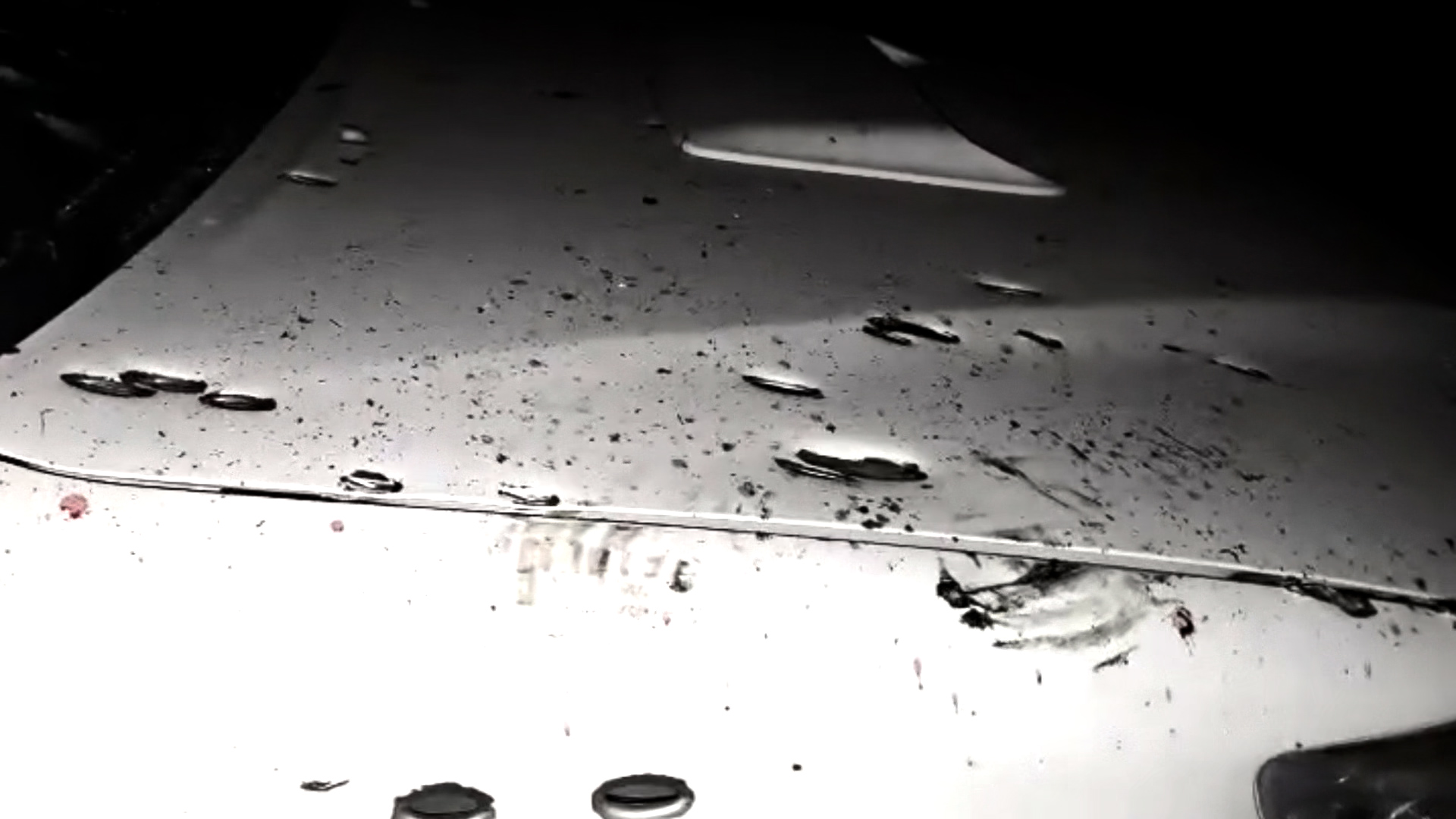
Around 15 people lost their lives with at least 38 injured as the tragic scene unfolded on Tuesday night, after a condolence gathering marking the fourth death anniversary of veteran nationalist leader Sardar Attaullah Jan Mengal. As the meeting concluded, a powerful suicide blast ripped through the parking area near the venue.
The Counter-Terrorism Department (CTD) has registered a case against unidentified suspects.
The incident has once again cast a shadow of grief over the provincial capital. The BNP has announced three days of mourning, while an all-parties conference has called for a province-wide wheel-jam strike and protest on September 8 in response to the deadly attack.
An injured patient Haji spoke to Voicepk
“When we were leaving the venue, the blast occurred about 20 feet away,” he said. “Suddenly, chaos erupted everywhere. Motorbikes and cars were lying on the ground, and flames had engulfed the area. After that, I lost consciousness and was brought to the hospital in critical condition. When I regained consciousness, I was already in the hospital.”
Haji said that the suicide attacker was most likely in one of the vehicles that were present at the location and moving slowly.
“He detonated himself there, and within moments, there was blood everywhere and vehicles shattered into pieces.”
Security analyst and journalist Ihsanullah Tipu told Voicepk that the suicide bombing targeting the Balochistan National Party (BNP) gathering must be understood in the broader context of threats that had been repeatedly issued by the Islamic State Khorasan Province (ISKP).
According to Tipu, just a couple of months ago reports emerged that Baloch militants had attacked an ISKP hideout in Mastung, killing around 33 of its fighters. In response, ISKP released a statement vowing retaliation, specifically warning that it would begin targeting Baloch nationalist militants, separatist groups, and the political parties associated with them. The group also urged the public not to attend rallies of these nationalist parties, declaring them to be ISKP’s future targets.
“This was a direct and open threat,” Tipu explained. “ISKP clearly stated that since Baloch separatists had attacked and killed their fighters, they would now retaliate by striking at nationalist political groups and gatherings. The BNP rally in Quetta fits into that threat framework.”
He added that ISKP’s ideology is not limited to targeting nationalist parties. Religious political groups have also been prime targets, with Jamiat Ulema-e-Islam (JUI-F) suffering repeated deadly attacks in Balochistan and Khyber Pakhtunkhwa. Notably, ISKP carried out the Mastung attack on Ex Senaor Hafiz Hamidullah convoy and also bombed JUI-F gatherings in Khyber Pakhtunkhwa, killing dozens, including nearly 70 people in a single attack.
“ISKP’s ideology holds democracy, elections, and political parties whether secular, religious, or nationalist as un-Islamic systems,” Tipu said. “That is why they continue to target such gatherings, claiming it as part of their religious struggle.”
He warned that the BNP attack should be seen not as an isolated incident but as part of ISKP’s declared strategy. “Looking ahead, the threat is not just for Baloch nationalist parties but also for other political actors across the region, including in Pakistan, Iran, and Afghanistan,” Tipu emphasized. “ISKP has a record of turning its threats into action, and therefore the risk of future attacks remains high.”
Balochistan National Party’s Quetta President Ghulam Nabi Marri told Voicepk.net that the deadly suicide bombing targeting the party’s gathering will not deter their democratic struggle.
Marri said that when the explosion occurred, party workers were still packing up equipment from the rally. “We were winding up the event, the tents and other materials were still on the stage when we suddenly heard the blast. As we rushed outside, there was chaos everywhere,” he recalled.
He emphasized that such attacks are part of a long pattern of attempts to silence democratic voices in Balochistan. “Throughout history, terrorism has been used here as a tool to suppress political voices and intimidate those who dare to speak up for democracy,” he said.
Highlighting recent incidents, Marri added that BNP has faced repeated losses. “Just yesterday, one of our workers was martyred in Noshki. And now in Quetta, we have lost around 20 workers while more than 40 others have been injured and are receiving treatment at local hospitals,” he stated.
Marri also criticized the government for failing to provide security despite clear threats. “We were not given security, and this negligence paved the way for the attack,” he said.
However, he vowed that such tactics will not succeed in silencing the BNP. “We will continue to raise our voice politically and democratically. These acts of terror will never stop our struggle for the rights of our people,” Marri declared.
Additional Home Secretary Hamza Shafqaat told Voicepk during a joint press conference with police officials that Tuesday night’s Quetta blast on Sariab Road was a suicide attack. The explosion occurred after the rally had ended, killing one policeman and injuring two others. Authorities recovered the body of the suicide bomber, believed to be under 30 years old, who used nearly 8 kilograms of explosives.
Hide quoted text
Shafqaat said Section 144 is in force across Balochistan until September 15. He added that organizers had been issued an NOC with strict conditions, including time limits, which were unfortunately not followed. He announced compensation of Rs1.5 million for families of the deceased, Rs500,000 for the severely injured, and Rs200,000 for the slightly injured.
According to Shafqaat, 22 terrorists have already entered the province to disrupt peace, and strict SOPs will now be enforced for rallies and processions. No gatherings will be allowed after dark. Security will be heightened for 12 Rabi-ul-Awal, for which a fresh threat alert has also been issued.
He further revealed that operations against Afghan migrants began on September 1, and over 90 government employees found involved in anti-state activities have been dismissed. Meanwhile, more than 3,000 social media accounts spreading hostile propaganda have been blocked.