


October 8, 2026
By Nadeem Khan
QUETTA
The roar of diesel generators fills the air in the Maizai Addah area of Killa Abdullah district, near Pakistan’s border with Afghanistan and about 70 kilometres from Quetta. Their fumes hang around the cold-storage facilities, making it difficult to breathe as visitors approach.
Inside one of the buildings, the temperature feels almost below freezing, causing one to shiver. The delicious smell of apples offers some distraction, and relief.
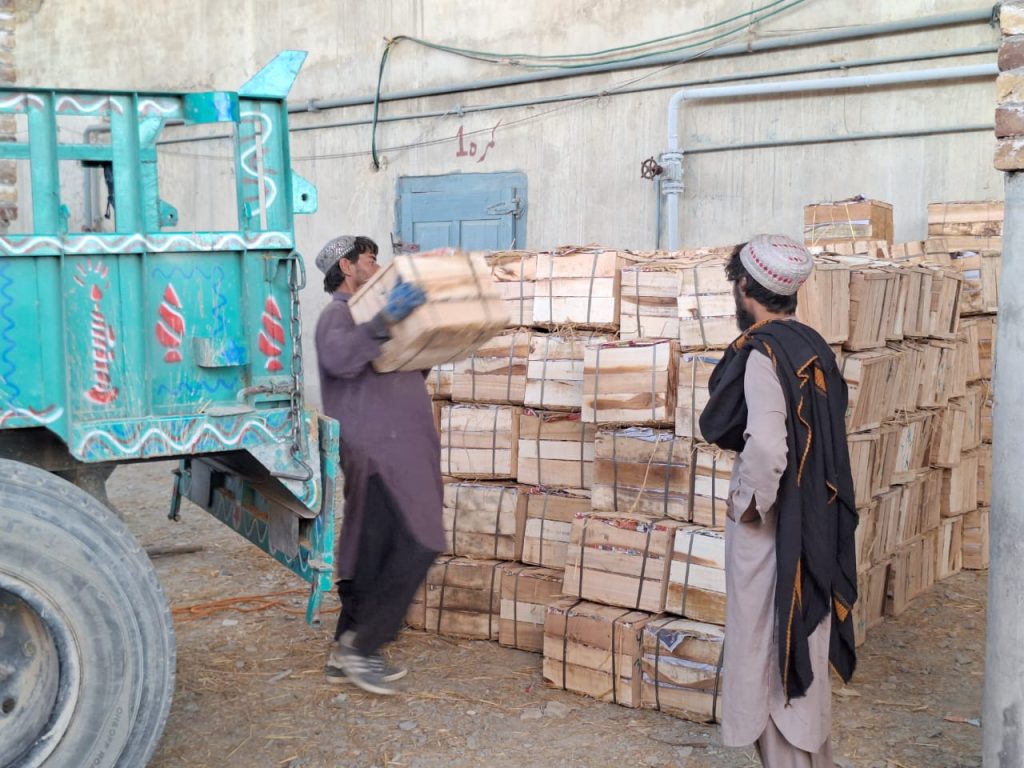
The three-storeyed cold store belongs to Mohammad Iqbal. Its wooden floors and long hall, constructed with clay and mud to help insulate the facility, hold up to 75,000 crates of apples.
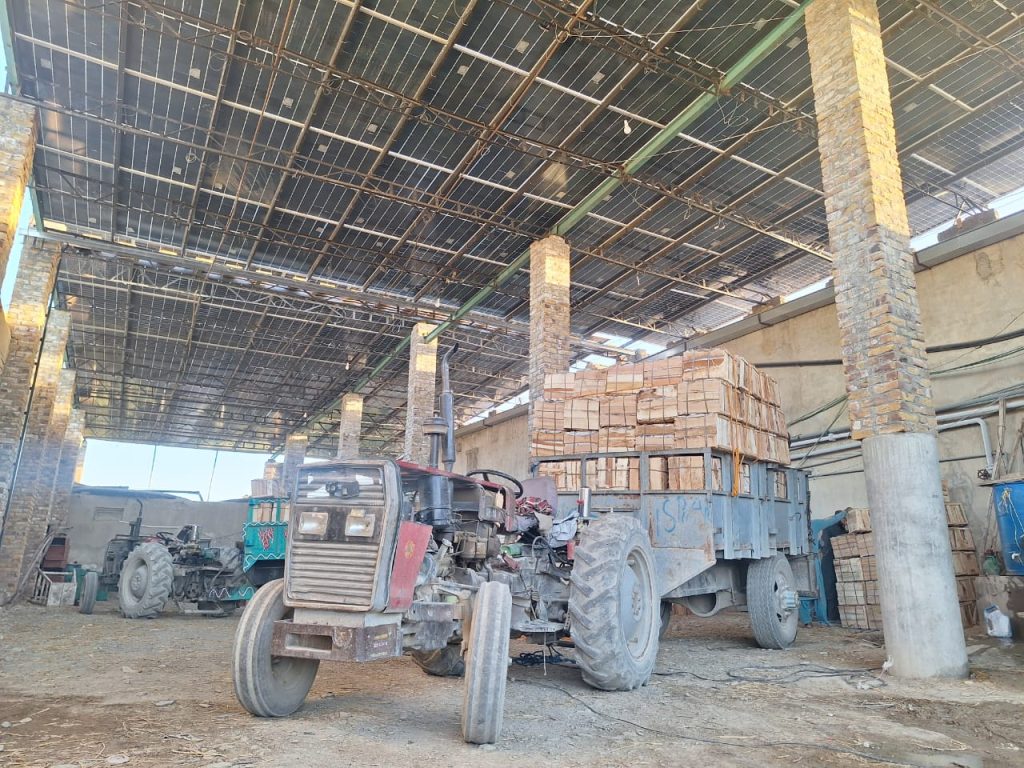
“We built this storage 20 years ago,” Iqbal says. “We keep apples in cold storage for months, sometimes up to five months, until market rates improve.”
Keeping the fruit for that long requires one thing above all else: reliable electricity, of which there is very little in the local supply grid. Instead of relying on the government, Iqbal says, he spends Rs90,000 a night on diesel to keep his refrigerators running because the electricity supply is unreliable. QESCO, he says, continues to send monthly bills even when the power is not available.
“We will pay our bills if electricity is provided properly. We have told officials many times, but the issue has not been resolved,” he says.
Balochistan is not simply a major fruit-producing province; for several crops it is the centre of Pakistan’s production. The latest federal crop statistics show that the province produced about 2.34 million tonnes of fruit in 2023-24. It accounted for roughly 95% of Pakistan’s apple production, with 798,143 tonnes, and almost 99% of grapes, with 193,176 tonnes.
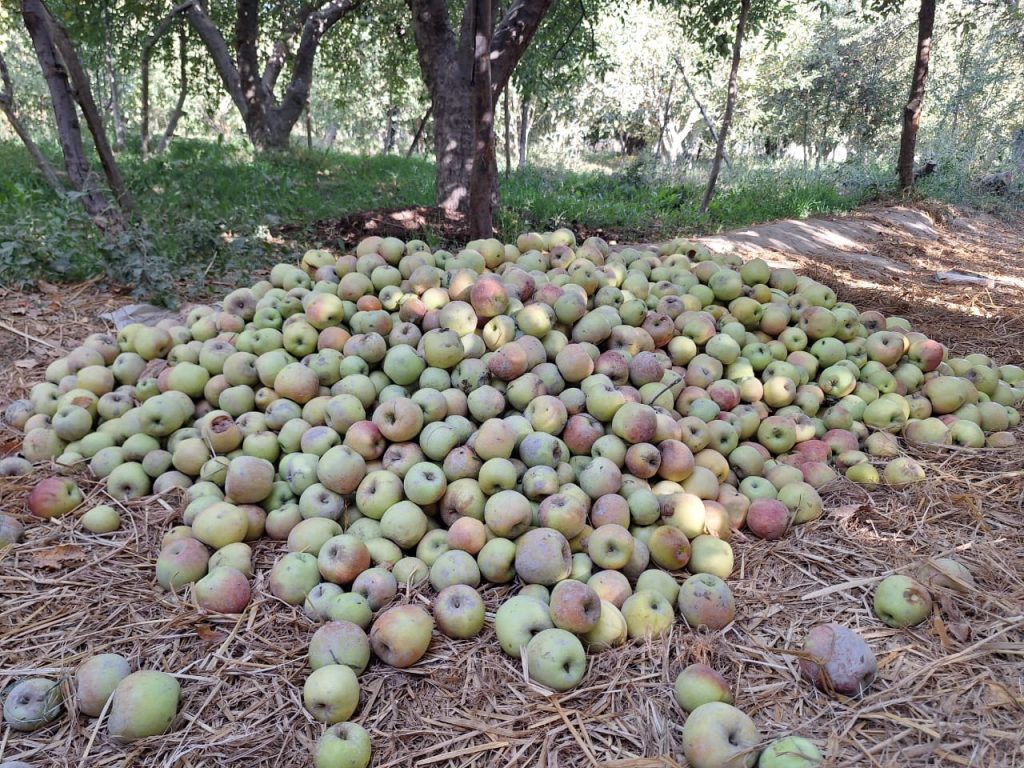
The province also produced 175,130 tonnes of apricots and 660,443 tonnes of dates. Much of this production comes from districts where horticulture is a major source of rural income, making fruit not just an agricultural crop but an important part of the local economy.
For such a perishable economy, what happens after harvesting is almost as important as what happens in the orchard. Cold storage allows growers and traders to hold fruit for weeks or months rather than being forced to sell immediately when markets are weak, helping them wait for better prices and reducing losses.
Pakistan has long faced substantial post-harvest losses because of weaknesses in handling, transport, storage and marketing. The Food and Agriculture Organization, citing Pakistan’s National Commission on Agriculture, has estimated that inadequate post-harvest facilities can result in 20 to 40% losses of fruits and vegetables.
More recent federal discussions on the country’s fruit sector continue to identify gaps in cold-chain facilities and post-harvest management as a major constraint on value addition and exports. In Balochistan, therefore, keeping the cold stores running is not a peripheral infrastructure problem. It is part of keeping a large part of the province’s fruit economy alive.
For a business built around preserving something perishable, therefore, the contradiction is difficult to escape. The fruit has to remain cold until the market improves, but the electricity needed to keep it cold is itself unreliable and expensive.
Iqbal has tried another way. Over the past two years, he has invested Rs24 million in solar panels and batteries. During the day, the cold store can run on solar power. At night, however, the problem returns because storing enough electricity remains expensive.
“We spent Rs24 million on solar, yet we still do not have reliable electricity,” he says. “During the day, we run on solar, but at night there is a storage problem.”
That experience captures the energy dilemma facing businesses across parts of Balochistan. Solar is increasingly being used because the existing power supply is not meeting people’s needs, but for businesses that cannot switch off when the sun goes down, solar alone is not yet enough.
Balochistan’s government is itself moving rapidly towards solarisation, although most of the programme so far has focused on agricultural tube wells. The federal and provincial governments have committed about Rs55 billion to solarise 27,000-plus agricultural tube wells, with the scheme involving the removal of transformers and other equipment once a connection is converted to solar. In May 2025, the Economic Coordination Committee approved a further Rs24.5 billion for the programme.
The provincial government’s current climate programme goes further. It identifies solar-powered cold-storage facilities as a potential way to reduce post-harvest losses and improve market access, alongside distributed small cold-storage units near agricultural production areas.

For growers and traders such as Iqbal, however, that need is already here. Balochistan depends heavily on agriculture and has long struggled with limited water, unreliable infrastructure and the distances between farms and markets. The Asian Development Bank describes agriculture as central to the provincial economy, employing nearly two-thirds of the labour force and supporting more than half the population. It also notes that water scarcity, drought and weak water infrastructure remain major constraints.
In Killa Abdullah, the pressures are visible even in the orchards.
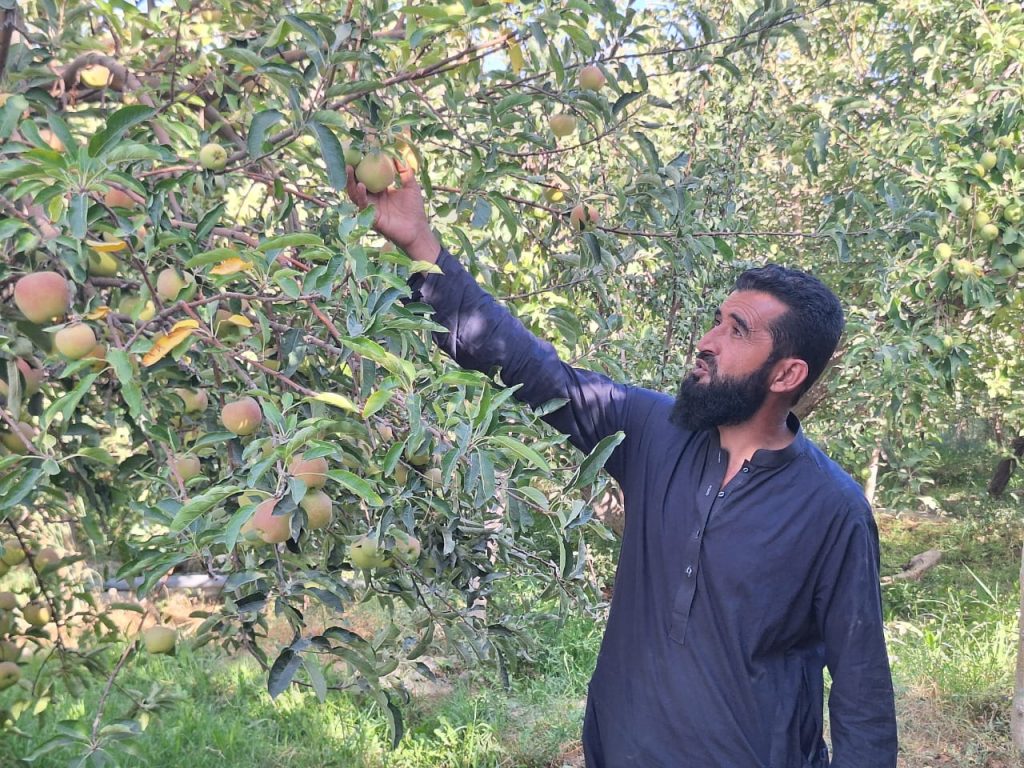
Iqbal’s grandfather began farming before moving into apple cultivation. His own orchard once had 1,500 apple trees. As groundwater levels fell, 1,200 were cut down. Only 300 remain now, producing about 500 crates of apples, with the fruit smaller than before.
His father, Haji Abdul Manan, remembers when wells in the area were only about 40 feet deep.
“Back then, water was drawn from wells about 40 feet deep,” he says. “Now it is much deeper. We didn’t know about fruit then; we grew vegetables. Then we started growing apples, which were very profitable. Now water is the problem.”
The pressures on the fruit economy do not end at the orchard. Border trade has also been disrupted. Manan recalls a time when their fruit moved through the cold store to Central Asia and Russia. Now the market is more uncertain, while the cost of keeping the fruit in storage continues to rise.
The same problem extends to nearby Chaman, where traders depend on cold storage to hold fruit and vegetables brought from Afghanistan and other parts of Pakistan until they can be moved across the border.
Olas Yaar Khan, senior vice president of the Chaman Chamber of Commerce and Industry, says the city has the potential to become a major trading hub but that unreliable electricity and disrupted trade have made it difficult to maintain cold-storage infrastructure.
A large cold-storage facility in the city has remained empty since cross-border trade was disrupted in October 2025, he says. Reliable electricity, he adds, would allow traders to preserve produce during border closures and other interruptions rather than being forced to sell quickly or risk losses.
The power problem is not confined to cold storage. The government’s decision to solarise agricultural tube wells is itself a response to the failures of the existing electricity system. According to the government, the programme is intended to provide farmers with cheaper and more reliable power while reducing the financial burden of subsidised agricultural electricity and the pressure on QESCO’s distribution network.
But converting one part of the agricultural economy to solar does not automatically solve the electricity needs of the rest of it.
In September 2026, the Balochistan Zamindar Action Committee was still raising concerns about electricity shortages in rural areas after solarisation. The complaints underline the unfinished nature of the transition: replacing one source of electricity with solar can solve a real problem, but it does not remove the need for reliable power infrastructure altogether.
There is another complication. Solar-powered tube wells reduce the cost of pumping water, but they can also make it easier to pump more of it. In a province where groundwater is already under severe pressure, that creates a new problem unless the energy transition is accompanied by water regulation. The Asian Development Bank has described groundwater as critically important in Balochistan but significantly over-abstracted in many areas.
For Iqbal, though, these larger questions are secondary to the immediate problem inside his cold store.
The solar panels have reduced his dependence on diesel during daylight hours. They have not eliminated it. The batteries he needs to carry that solar electricity into the night remain too expensive.
His situation therefore is not a simple choice between the grid and solar. The grid, when available, would reduce the cost of running the cold store. Solar has already reduced some of his dependence on it. Better and more affordable storage would allow him to use more of the solar power he has already paid for.
Until that happens, the generators keep running.