

August 11, 2025
By Rana Malhi
ISLAMABAD
The rights of religious minorities in Pakistan remain severely compromised despite constitutional protections and international obligations, according to the preliminary findings of two in-depth studies released in Islamabad on Monday, during a seminar marking August 11, National Minority Day. The event, organized by the Parliamentarians Commission for Human Rights (PCHR) under the European Union-funded Together for Tolerance: Strengthening Minority Rights and Inclusion project, brought together policymakers, rights advocates, and researchers to assess the current state of minority rights in Sindh and Punjab.
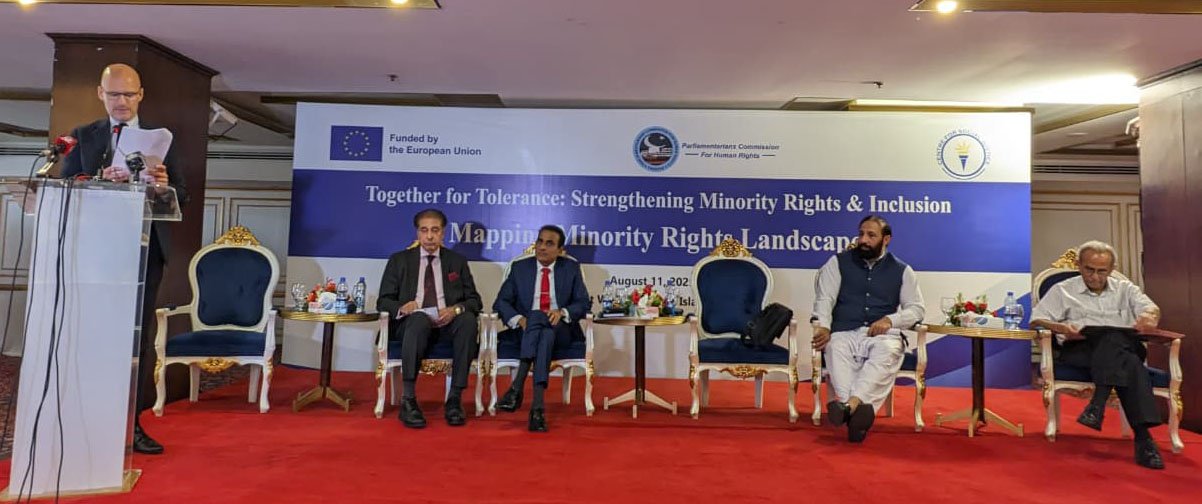
Conducted in partnership with the Centre for Social Justice (CSJ) the studies examined the civil, political, economic, social, and cultural rights of religious minorities, using a combination of official data analysis, policy audits, field surveys, and interviews with community members. Researchers mapped the implementation of minority-specific policies, initiatives, and affirmative actions at the federal level and within the two provinces, highlighting systemic discrimination, weak enforcement of laws, and gaps between constitutional commitments and lived realities.
Troubling findings
The findings paint a troubling picture: forced conversions are on the rise, particularly targeting minor girls from Hindu and Christian communities in Sindh and South Punjab, with victims facing significant legal obstacles, intense social pressure, and drawn-out judicial proceedings. Attacks on places of worship and minority graveyards remain frequent, often met with minimal or no state intervention. Law enforcement, especially in rural areas, is reported to either act under pressure from extremist groups or fail to respond altogether.
Political representation, though provided through reserved seats, was described as only ‘token’, with minority leaders co-opted rather than empowered to influence policymaking.
On the socio-economic front, the studies found that even the meagre five percent public sector job quota for minorities is rarely met, with over 70 percent of reserved positions unfilled. Many minority candidates are steered into low-grade sanitation roles regardless of qualifications, reinforcing occupational stereotypes.
Minorities are overrepresented in the informal labour market, where work is insecure and poorly paid, and in Punjab alone, 1.9 million children — many from minority families — are engaged in child labour. Education also remains a major concern: 44 percent of minority children in Sindh are out of school, compared to the national average of 27 percent, while 60 percent of minority students report facing discrimination, including denial of admission, segregation, and forced study of irrelevant religious content.
Housing and health security are equally troubling. The research notes that many minority communities live in substandard housing without legal ownership rights, making them vulnerable to forced evictions. Despite the Sindh Protection of Communal Properties Act 2016, attacks on minority-owned properties persist due to weak enforcement. There is also a lack of targeted health programs, and minority patients often face stigmatization in public facilities. Cultural suppression was also documented, with security threats and social pressures limiting the open celebration of religious festivals.
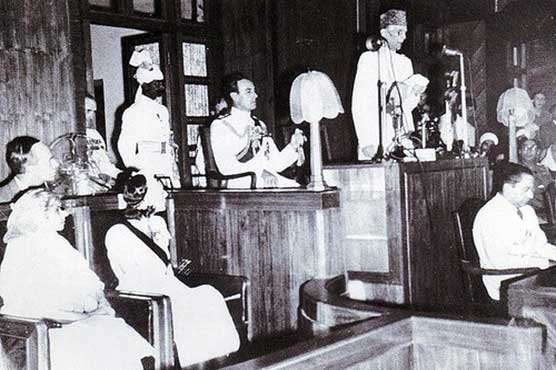
Speaking at the seminar, PCHR Executive Director Shafiq Chaudhry said, “In his August 11 address, Quaid-e-Azam Muhammad Ali Jinnah clearly stated that all citizens of Pakistan would be equal, with no discrimination based on religion or identity. Yet even today, minorities do not enjoy equal protection under the law or the full rights of citizenship, despite constitutional guarantees and Pakistan’s commitments under international agreements.”
Human rights activist and writer Abdul Hameed Nayyar added, “Minorities may be fewer in number, but they are an important part of the nation. If they are unhappy, it is not a good sign for the country. Their grievances must be addressed, they must be treated as equal citizens, and there must be a mechanism to identify their problems, find solutions, and take steps that assure them they belong as equals.”

They also call for targeted budget allocations, training for police and judiciary on minority rights, the removal of hate material from curricula, the inclusion of minority histories and religions in textbooks, and the creation of child protection mechanisms in schools.
Additional recommendations include ending bonded labour through rehabilitation programs and “Child Labour-Free Zones” in minority-concentrated areas, and holding officials accountable for failing to act in cases of violence or discrimination.
PCHR representatives said the complete findings would be shared with government bodies and civil society to press for urgent reforms. They emphasized that while legislative measures are critical, societal attitudes must also change if Pakistan is to meet its constitutional promises and international commitments to protect all citizens, regardless of faith.