

August 6, 2025
By Rehan Piracha
LAHORE
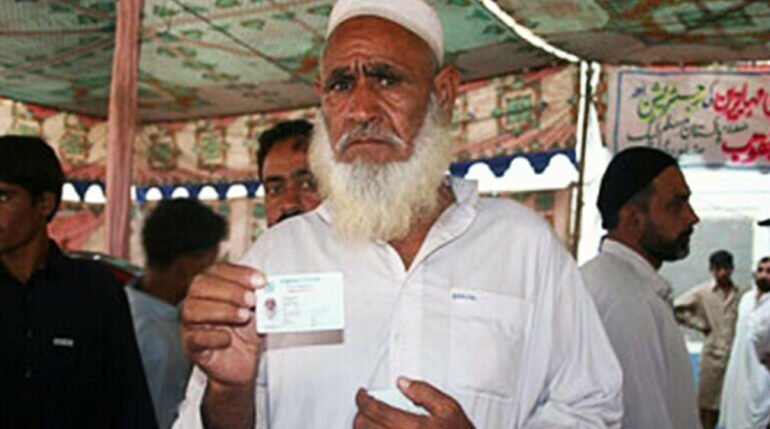
For over four decades, Pakistan has been home to millions of Afghans who fled war, persecution, and instability in their homeland. But the last legal lifeline for many of them—the Proof of Registration (PoR) card—has now expired, leaving 1.3 million refugees at risk of forced deportation by September 1.
The government’s decision not to extend the validity of PoR cards, which officially lapsed on June 30, has triggered panic among Afghan refugees. Many have lived in Pakistan for generations, built businesses, raised families, and integrated into local communities. Now, they face an impossible choice: return to a Taliban-ruled Afghanistan that many have never known or live in hiding, evading arrest and police extortion.
Desperate calls
The phone at SHARP’s refugee hotline has been ringing incessantly since July 31. On the other end of the line, voices crack with panic and desperation—Afghan families who have called Pakistan home for decades now facing an impossible choice: voluntary departure or forcible deportation by September 1.
“Most of them complain about distress, shock at the sudden repatriation measures,” says Mudassar Javed, CEO of SHARP, an organization that has registered Afghan refugees in Pakistan and operated emergency hotlines for their community. “Since decades, Afghan refugees say Pakistani authorities have never told them they would have to pack their business in Pakistan, and now they have given us no time to do so.”
The crisis began when Pakistan’s interior ministry announced that Proof of Registration (PoR) cardholders—the last category of Afghans legally residing in Pakistan without visas—had become “unlawful residents” after their cards expired on June 30. What followed was a bureaucratic death sentence for 1.3 million people, many of whom have never set foot in Afghanistan.
A generation without a homeland
Moniza Kakar, a Karachi-based lawyer assisting Afghan refugees, says many PoR cardholders have never set foot in Afghanistan. “PoR card holders are the oldest Afghan residents in Pakistan,” she explains. “Some of them still possess the ration cards given to Afghan refugees that arrived in the first wave in 1979.”
But the most heart-wrenching cases involve the next generation. “Many of the PoR card holders belong to the next generation born in Pakistan of Afghan refugees,” Kakar notes. “These refugees have never visited Afghanistan and don’t know anything about Afghanistan or the ancestral land of their parents.”
Unlike the more recent Afghan Citizens Card holders who maintained connections to their homeland, the PoR cardholders have built their entire lives in Pakistan. “They have no resources like land, businesses, houses in Afghanistan which they can utilize to rebuild their lives there,” Kakar emphasizes.
This distinction is crucial. While the Afghan Citizens Card holders were recent arrivals with links back home, the PoR cardholders represent families who fled the Soviet invasion and subsequent conflicts, establishing deep roots over four decades of Pakistani hospitality.
The machinery of deportation
The interior ministry’s August 4 letter to provincial authorities outlined the cold mechanics of mass deportation. “It has been decided that the voluntary return of PoR cardholders shall commence forthwith, while the formal repatriation and deportation process will take effect from Sept 1, 2025,” the official communication stated.
The letter instructed the National Database and Registration Authority (NADRA) to facilitate the “deregistration” of returning Afghans at transit areas and border terminals, while the Federal Investigation Agency (FIA) would support repatriation at designated border crossings. Provincial governments were directed to map all PoR cardholders and devise action plans for their removal.
Since the announcement, the crackdown has been swift and merciless. Javed reports that “around 1,448 Afghan nationals have been detained in cities like Rawalpindi, Islamabad and Jhelum and other cities in the last four days and sent to holding camps.”
The human cost of this bureaucratic efficiency is staggering. “The Afghan refugees are facing police action and warnings, and there have been huge incidents of extortion where these refugees have paid around Rs 80,000 to 90,000 allegedly to police personnel,” Javed reveals.
A system of exploitation
The deportation campaign has created a perfect storm for exploitation. Kakar describes how “these refugees have become an easy prey for law enforcement agencies like police and Frontier Corps paramilitary force and are a source of income for them.”
“There have been hundreds of complaints that Afghan refugees arrested in Karachi were forced to pay their handlers at each detention center on their way back during transportation to border with Afghanistan,” Kakar explains. “This has been the norm since the first crackdown launched in Karachi from November 2022—police and law enforcement extort money from Afghan refugees threatening them with arrests/detentions and later letting them off for money.”
Rights activist Khushal Khan, who has provided legal support to Afghan refugees, notes that the problems extend beyond PoR cardholders. “Afghan nationals with expired visas have complained that Pakistani authorities are not extending their visas for the last three to four months,” he says. “The Afghan nationals previously used to extend their visas through online system.”
This bureaucratic stranglehold has trapped even those with pending resettlement cases. “The resettlement cases of Afghan nationals have stalled and they are in continuous fear of being detained or arrested and forcibly repatriated to Afghanistan as police has no record to show that they are awaiting resettlement,” Khan explains.
The vulnerable exposed
Perhaps most disturbing is the gendered impact of the crackdown. As men go into hiding to avoid arrest, women and children are left exposed and vulnerable. “First time, the women and children are exposed as male Afghans have gone in hiding to evade detention and arrests,” Javed observes.
The consequences are devastating. “Afghan communities have internally reported an uptick in exploitation of young children and women. There are rising incidents of forced and child marriages, sexual exploitation and harassment,” he adds.
The fear is palpable throughout Afghan communities. “The refugees are afraid of being nabbed at police checkposts, border posts and hold-ups on streets and therefore reluctant to come out of their homes to work for livelihood for their families,” Kakar describes.
Economic devastation
The financial constraints imposed by Pakistani authorities add another layer of cruelty. “Pakistani authorities have placed a limit of Rs 50,000 cash limit that the refugees can take with themselves to their homeland,” Javed reveals—a pittance for families who have built businesses and accumulated assets over decades.
This represents not just personal tragedy but economic shortsightedness, argues rights activist Saba Gul Khattak. “Pakistan will only lose cheap and skilled Afghan labor, Afghan remittances to their families living in Pakistan, Afghan businesses and investments in Pakistan, rents Afghans pay but also earn ill will from the Afghans it has hosted for decades,” she warns.
The economic implications extend beyond immediate losses. “Many Afghans have been allowed to operate bank accounts in Pakistan. That money will also leave our banking system,” Khattak notes. “Culturally, Afghans have enriched us.”
International abandonment
The timing of Pakistan’s crackdown coincides with a global retreat from refugee protection. Khattak provides a sobering analysis of international trends.
“The international community is also undergoing changes. The genocide in Gaza is denied by the west. The US has sanctioned ICC judges as well as the UN rapporteur, Francisca Albanese.”
Under the Trump administration, the situation has worsened dramatically. “The US under Trump has withdrawn TPS (temporary protected status) from Afghans in the US and Trump has announced that he would be sending Afghans back to Afghanistan or to third countries. Some have been sent to places like Sudan and Panama, not exactly known for being bastions of human rights,” Khattak adds.
European nations have similarly retreated from their commitments. “Of the 36,000 Afghans Germany was to take, it only took 3,000 or so,” Khattak reveals. German institutions used bureaucratic pretexts to deny entry, including discrepancies in birth dates due to different calendar systems used in Afghanistan.
Even more cynically, European authorities deployed cultural tests as gatekeeping mechanisms. “Other cultural differences were also used to the disadvantage of Afghans, e.g., asking them to answer questions about their reaction to same-sex marriage of their children or the wife having an extramarital affair/relationship… obviously there could’ve only been one ‘correct’ response. If that was not given, case rejected for cultural reasons,” she points out.
The politics of expulsion
While no official explanation has been provided for the mass expulsion, analysts point to Pakistan’s deteriorating relationship with the Taliban government. “Primarily, Pakistan’s souring of relations with the Taliban regime may explain this policy move. Pakistan has used refugees as a bargaining chip before also,” Khattak suggests.
However, she warns that this strategy is fundamentally flawed: “With the Taliban, who do not value human rights, such methods are not going to provide Pakistan with the results it is hoping for. This is akin to shooting ourselves in the foot.”
The broader context is equally troubling. “The receding relevance of international law, rule of law principles alongside the popularity and rise of right-wing fascist policies makes it easy for Pakistan to ignore its own international obligations under the Convention against Torture, CEDAW and its own constitutional obligations to provide asylum to anyone at risk of persecution,” Khattak says.
A dangerous return
The destination awaiting deportees is hardly welcoming. Afghanistan under Taliban rule has seen a dramatic increase in imprisonment and human rights violations. “In Afghanistan, there is a reported increase in number of prisoners. In 2022, there were around 22,000 prisoners in Afghanistan but now around 40,000 prisoners in jails and makeshift detention centers in Afghanistan. The conditions at these Afghan jails/detention centers are appalling,” Javed reports.
This reality has not escaped international notice. The UNHCR expressed grave concern over Pakistan’s intentions, stating: “Given that those holding PoR cards have been recognized as refugees for decades, their forced return is contrary to Pakistan’s long-standing humanitarian approach to this group and would constitute a violation of the principle of non-refoulement.”
The UN agency acknowledged Pakistan’s generosity in hosting refugees for over 40 years but warned that forced returns would violate international law.
Stateless in limbo
Perhaps most tragically, the refugees face the prospect of statelessness. “Afghan refugees in Pakistan are nearing situation of stateless persons as Pakistan repatriates them and the Taliban government have shown reluctance in accepting and assimilating them in Afghanistan,” Javed explains.
This creates a nightmarish scenario where people who have lived in Pakistan for decades are expelled to a country that may not accept them, leaving them trapped in a legal and humanitarian void.
Khushal Khan notes that “due to the crackdown, most Afghan refugees are preferring to stay in Khyber Pakhtunkhwa,” likely due to ethnic and linguistic connections, but even there, they face constant fear of arrest and deportation.
The human cost
Behind the statistics and policy debates are real human stories—families torn apart, businesses abandoned, children who have never known any home but Pakistan being forced into an uncertain future in a country under Taliban rule.
The psychological impact is severe. Khattak identifies the refugees’ “biggest fear is that of arrest and humiliation. This will be to Pakistan’s own detriment as humiliation is passed on to the next generation.”
As September 1 approaches, the SHARP hotline continues to ring with desperate calls from families facing an impossible choice. Pakistan, which once proudly hosted the world’s largest refugee population, is preparing to close the final chapter on four decades of humanitarian protection.