Category: National

  • Shattering stereotypes: In conversation with Zanaya Chaudhry & Masooma Ali

    Shattering stereotypes: In conversation with Zanaya Chaudhry & Masooma Ali

    By Aitzaz Ibrahim & Mateen Ali

    Text by Xari Jalil


    In a big leap forward, 40 transgenders have been appointed as ‘Victim Support Officers’ in police service centers across Punjab – four of them in Lahore – to help eliminate discrimination and prejudice against transgenders in society and to bridge the gaps between police and the transgender community.

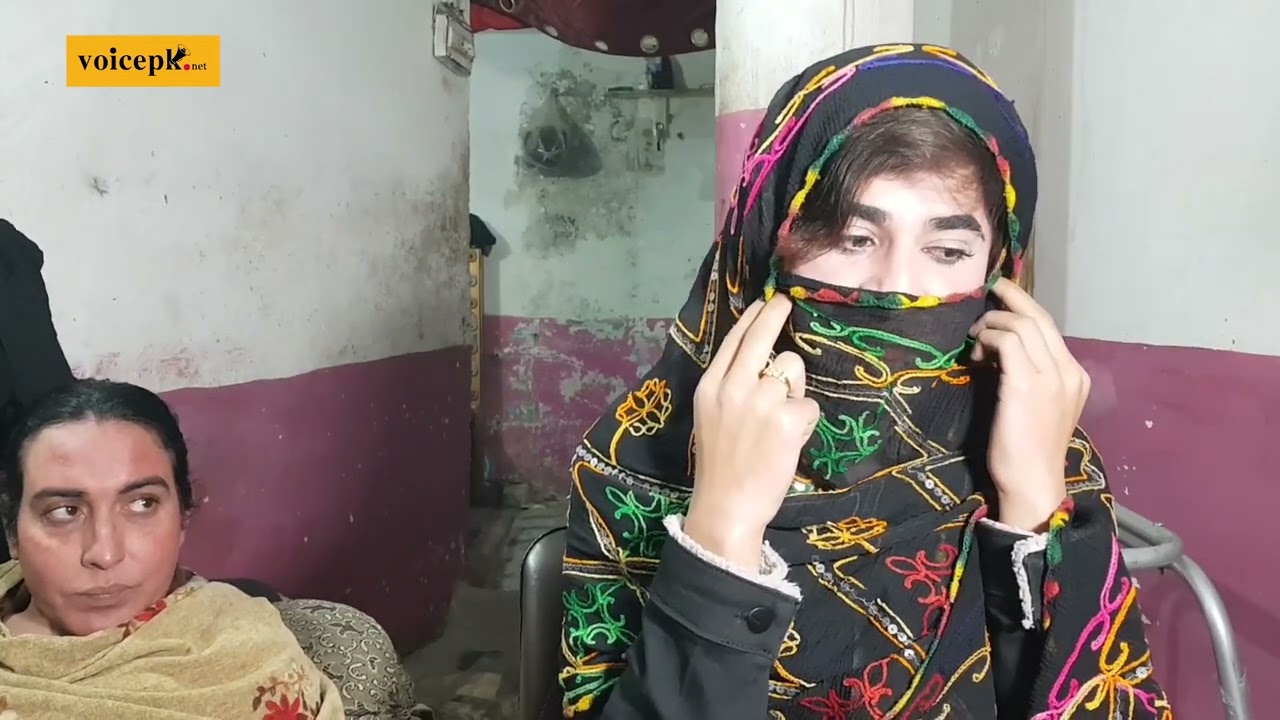
    Zanaya Chaudhry and Masooma Ali are among the trans women in Lahore, both of whom are working as VSOs at the Police Service Center in Liberty. Voicepk talks to them about their experiences and what challenges they face. 

    LAHORE

    It was not an easy journey for Zanaya Chaudhry or Masooma Ali to be where they are today. But hard work and dedication has paid off and today they are seen working as Victim Support Officers at the Liberty police service center. In Lahore a total of four transgenders have been given these jobs. One other Kashish Khan has been stationed at the Data Darbar Service Center while Azna Khanzadi is serving at the Laari Aada Service Center.

    For Zanaya it is work that she has strived for. She says she has been active for the rights and welfare of her community for many years. Talking to Voicepk, Zanaya says that she had not given much attention when she was not in the police, but since she joined the police force her position in her community has improved. She says that after being recruited as an officer in the police, a new journey of her life had begun, she has gained self-confidence, and she wants to do something for society, especially her community. She said that the journey to reach this place was not easy for them, but they endured all the difficulties to reach this point.

    “We receive a variety of cases from people who have been victims of crime, to those who are seeking something as simple as the birth registration of their child,” says Zanaya. “Vulnerable people are usually very afraid of going to the police station to seek help. But in this center, it is apparent to whoever walks in that the place is friendly and approachable, where people will accept you and not judge you. The staff is trained and sensitized.”

    Describing her duties as VSO, Zanaya said that her job is to resolve the incoming cases of women and the trans-community on a case to case basis.

    Traumatic childhood

    Despite the Punjab Police’s efforts to eliminate prejudice against transgenders, the trans community often faces taunts from the public and the police.

    “I never thought there was anything wrong with me,” says Zanaya. “It was others who made sure to tell me that I was ‘too feminine’ – I walk differently, and I was like a ‘khussra’ (transgender). I on the other hand had always thought of myself as a female. It was my parents who thought of what would happen to me in my future when I would be more vulnerable to problems in my life.”

    Zanaya’s parents began pushing her to become more man-like. “It was always like, ‘don’t walk that way’, ‘speak in a louder voice’, ‘don’t wave your hands when you talk’.

    School was similar.

    “They would let me enjoy my art classes but whenever there was sports, they would push me away [from the activities]. The teacher thought I would not be able to do well. I play badminton quite well now, but I still feel that gap that I used to feel back then when it comes to sports.”

    Worse, some of the male teachers would even sexually harass her and others like her. “You could not tell whether it was ‘good touch’ or ‘bad touch,” she says.

    “The type of touch is being discussed only now, especially after the Zainab case,” says Zanaya.

    A Societal Problem

    The biggest problem that the trans-community faces is the one related to their identity.

    “We are tax-paying citizens of the country,” she says. “But we find that we cannot present ourselves as we are. So I have tried to work on that a lot. We must explain to our community that our work does not only revolve around begging and prostitution. We must involve ourselves in other kinds of work and improve our lives,” she adds. “Even today there are many educational institutions which do not even have a check-box for a third gender. They do not include us in any policies or anything and they say that the khwaja sirah community does not study. How are we supposed to study? They say they accept us – but they don’t.”

    Society is not ready to digest this kind of reality, says Zanaya. So there is a lot of time for them to change.

    “At this point even women are still fighting for their rights,” she says. “Interaction between people is very important. Today if we are holding talks with cisgender people – males and females – its because we want that gap between us to end.

    “Many of the people who come here, sometimes with their children, talk to us very nicely and politely and they are happy too to see us here,” says Zanaya. “They are happy that we are not outside on the roads and instead are working and even facilitating them. Women who are uncomfortable with men find it easier to open up with us.

    ‘Don’t ever leave your family’

    Meanwhile, Masooma says that life took a strange turn when she took up police work.

    Masooma Ali has been working as a Vocational Support Officer at the Liberty Police Service Center for a year now. Before this, she worked in a private company.

    She says that initially she faced difficulties, but with time, people’s attitudes have improved.

    “The relationship between transgenders and the police is similar to a dog seeing someone with a stone in their hand,” she says. “Even if a police van passes by, khwaja sirahs tend to hide. Thankfully though we have sensitized our community to a large extent making them understand that the police mean well most of the time

    We become victims of violence from our homes,” says Masooma. “My message is that whatever happens, people should not leave their homes – whatever they must do to live there, they should do it. We have the same right to a family and a home as do our siblings.”

  • Baloch women: Soldiering through the Eye of the Storm

    Baloch women: Soldiering through the Eye of the Storm

    January 14, 2024

    By Fatima Hurriya


    ISLAMABAD

    “It has been almost eight years since my brother, Shabbir Baloch went missing in 2016. Since then, me and my family have been wandering on roads, searching for justice, without even a moment’s peace. We have gone from one high forum to the next, but nothing has made any difference.”

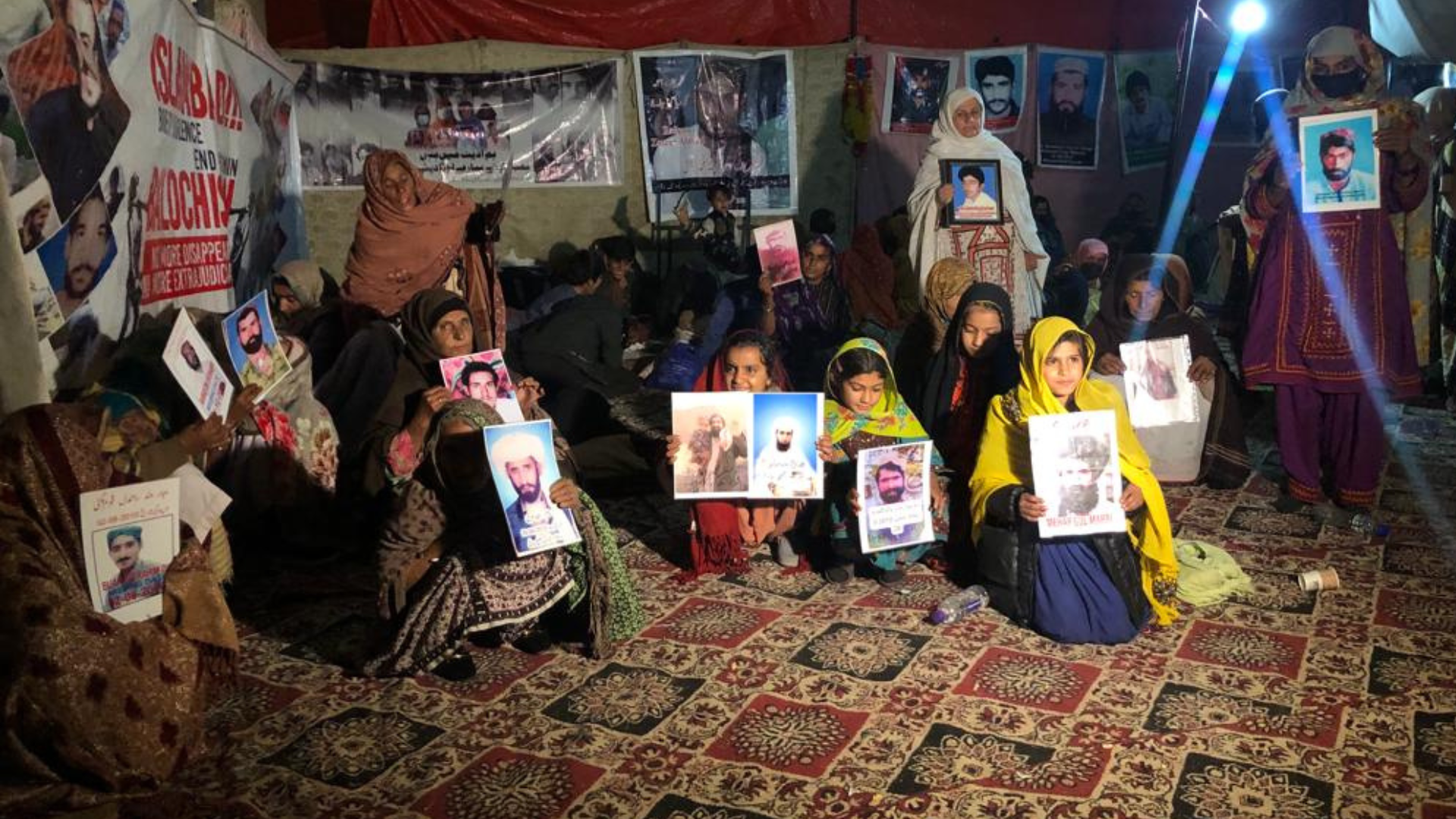
    Seema Baloch, is one of the many women who have been courageously marching on, trying to get her brother back. Aside many of the others, she has been with the Baloch Long March sitting in Islamabad’s harsh cold, in the camp outside the National Press Club (NPC). Her point? To highlight the pain that she and her family has been going through since Shabbir’s disappearance.

    Seema is one of the hundreds of Baloch women who are part of this camp – all of whom have lost their husbands, brothers, and sons in enforced disappearances, abductions or killings, from various areas of Balochistan.

    In November 2023, unprecedented videos surfaced on social media as these women, some accompanied by their children, took to the streets marching 1,600 kilometers – from the southern Kech district of Balochistan near the Iranian border – to Islamabad, the capital of Pakistan. They have clear demands: an end to enforced disappearances and extrajudicial killings, and accountability of those involved in extrajudicial killings of Baloch youth.

    Speaking on behalf of the others in the camp, most of whom speak Balochi and cannot converse in Urdu, Seema says that they have not come so far away from their homes to look at the capital city’s glitz and glamour; it’s large houses and high walls, and its high end shopping malls. Balochistan’s current scenario pales in comparison, where more than 60 percent of its people living below the poverty line, a serious lack of development of infrastructure, education, and many other basic needs. In fact Balochistan is the most vulnerable province in Pakistan, with a high prevalence of acute food insecurity and malnutrition and little or no access to health for women.

    “We have children and elderly women here with us whose health conditions have been deteriorating fast because of the cold weather, and we have no facilities like heaters or even doctors to cater to them,” says Seema. “Even then, these women are not ready to even move from their positions because they have a little hope left in them that maybe someone somewhere will show them mercy and listen to them and perhaps tell them what happened to their loved ones.”

    The women-led uprising in Balochistan has proven to be an effective strategy in confronting authoritarian power and exposing atrocities occurring in the province, although they have yet to gain global attention for standing up against human rights abuses in Balochistan.

    The restive Balochistan region is no stranger to protests, sit-ins, and large-scale demonstrations, but what makes the current protest demonstrations unique is the large number of women of all ages, who are participating in and leading the demonstrations to Islamabad. For a region that is conservative with tribal areas, this kind of movement is unique.

    Context

    The current movement began following the killing of a 24-year-old youth in Turbat Tehsil, the headquarters of Kech district, a region marred by militancy. The victim, identified as Balaach, was reportedly whisked away from his home on October 29. After nearly three weeks, he was presented before an anti-terrorism court on November 22, which granted an additional 10 days of remand for further investigation.

    Shockingly, between the night of November 22 and 23, he was shot dead. This incident sparked widespread anger, leading to a week-long protest in Turbat, where the family of the deceased and a massive crowd placed his body on the road at the Fida Hussain Chowk, and protested.

    National mainstream media, under pressure, has imposed a complete blackout of the coverage of the march. Nevertheless, this movement – which has been non-violent from the very first day- has still attracted not just media attention in Pakistan but also worldwide.

    Like Seema, another young girl Hifza also held a picture of her brother Changaiz Baloch who she says went missing in 2014. She says that her family heard from her brother a few times over the years but never saw him again.

    For many children, their fathers have always been a shadow for them. Nine-year-old Seerat says that her father, Mehar Gul Marri went missing in 2015 from Quetta, adding that she never even got to know him as at the time he was disappeared, she was yet to be born. There are many other children who have a similar story to hers in the camp.

    “If my father has committed a crime, he should be produced in a court and tried but I don’t understand why the law or courts even exist if this is what children like me have to go through,” says young Seerat.

    Safety

    Meanwhile, a counter-protest camp has also been set up near the protestors which has made them express their concern for safety in Islamabad. The Baloch protestors say the backgrounds of those spearheading the counter-protest are suspicious – even ‘criminal’. According to them, this is the latest move in a series of actions by the authorities against them to suppress their protest.

    Before this the protesters had to face roadblocks, initiation of legal action against some of them, sedition FIRs, and restriction of supplies to their camp in the capital.

    Despite this suppression, the Baloch protesters have maintained their peaceful stance, demanding a UN-led investigation into human rights abuses in Balochistan, an end to enforced disappearances and extrajudicial killings,

    Regardless of what unfolds next, these Baloch women have already made history with their heroic march towards the capital city and their determination against all odds.

  • Human rights in Pakistan worsened in 2023: HRW World Report

    Human rights in Pakistan worsened in 2023: HRW World Report


    January 12, 2024

    REPORT


    The Human Rights Watch released its world report on Thursday, where it has detailed the situation of human rights violations in countries across the world. In the report Pakistan also makes its way as one of the countries where there have been several rights violations during the year, with worse political and economic issues than the year before.

    A Look Back

    Former Prime Minister Shehbaz Sharif’s administration like others before it, cracked down hard on the media, non-governmental organizations (NGOs), and political opponents. Employing strict counterterrorism and sedition laws, the authorities aimed to silence peaceful critics. The government’s tenure concluded in August 2023, paving the way for caretaker Prime Minister Anwarul Haq Kakar’s interim leadership. Scheduled elections for November got delayed due to an ongoing census and constituency delimitation process.

    Religious Minorities

    Meanwhile, religious minorities suffered blasphemy-related violence, fostered in part by government persecution and discriminatory laws, intensified. Attacks by Islamist militants, notably the Tehrik-i-Taliban Pakistan (TTP) and Islamic State of Khorasan Province (ISKP), targeting law enforcement officials and religious minorities, killed dozens of people in 2023.

    The Pakistani government did not amend or repeal blasphemy law provisions that have provided a pretext for violence against religious minorities and left them vulnerable to arbitrary arrest and prosecution. The death penalty is mandatory for blasphemy, and dozens of people remained on death row as of late 2023. Since 1990, at least 65 people have reportedly been killed in Pakistan over claims of blasphemy.

    Members of the Ahmadiyya religious community continue to be a major target for prosecutions under blasphemy laws and specific anti-Ahmadi laws. Militant groups and the Islamist political party Tehreek-e-Labbaik (TLP) accuse Ahmadis of “posing as Muslims.” Pakistan’s penal code also treats “posing as Muslims” as a criminal offense. On July 25, a mob vandalized an Ahmadiyya place of worship in Karachi, Sindh province. On August 18, a mob attacked a factory owned by an Ahmadi in Lahore, accusing him of blasphemy. Instead of prosecuting the attackers, the authorities charged eight members of Ahmadi community with blasphemy.

    On August 16, 2023, several hundred people attacked a Christian settlement in Faisalabad district, Punjab province, after two members of the community were accused of committing “blasphemy.” The mob, armed with stones and sticks, vandalized several churches, dozens of houses, and a cemetery. While the police arrested 130 people alleged to have been involved in the attacks, residents told local rights activists that hours before the attack, the police warned them a mob was coming but claimed they could do nothing to stop it.

    Economic Crisis

    With poverty, inflation, and unemployment soaring, Pakistan faced one of the worst economic crises in its history, jeopardizing millions of people’s rights to health, food, and an adequate standard of living. The insistence of the International Monetary Fund (IMF) on austerity and the removal of subsidies without adequate compensatory measures resulted in additional hardship for low-income groups. Pakistan remained exceedingly vulnerable to climate change and faced rates of warming considerably above the global average, making extreme climate events more frequent and intense.

    In a positive development, the Sindh government attempted to rehabilitate those who suffered catastrophic losses in the 2022 floods by providing land titles and funds to construct houses for people who were previously landless. As of early August, there were 2.1 million eligible beneficiaries of this program.

    Freedom of Expression and Attacks on Civil Society Groups

    Government threats and attacks on the media created a climate of fear among journalists and civil society groups, with many resorting to self-censorship. Authorities pressured or threatened media outlets not to criticize government institutions or the judiciary.

    In the violence following the arrest of former Prime Minister Imran Khan, members of his political party, Pakistan Tehreek-i-Insaaf (PTI), attacked the offices of public broadcaster Radio Pakistan and the state-owned news agency Associated Press of Pakistan in Peshawar.

    On May 11, journalist Imran Riaz Khan was arrested as he was attempting to take a flight to Oman. Khan returned home on September 25; he has not been presented in court at any time since his arrest.

    Pakistan’s sedition law, based on a colonial-era British provision, is vague and overly broad and has often been used against political opponents and journalists. In March, the Lahore High Court declared the sedition law unconstitutional. The government filed an appeal in the Supreme Court against the decision and the appeal remains pending. However, the authorities continued to use sedition prosecutions. In August, Imaan Mazari-Hazir, a lawyer, and Ali Wazir, a political activist, were charged with sedition for a speech made in Islamabad. Imaan Hazir and Ali Wazir were subsequently granted bail.

    In August, the police arrested Fayaz Zafar, a reporter for the Pashto-language broadcaster Voice of America Deewa (VOA Deewa), following a magistrate’s order accusing him of using social media to spread “fake, offensive and hatred contents to defame and incite the public” against the government and law enforcement agencies. Zafar was later released.

    NGOs reported intimidation, harassment, and surveillance of various groups by government authorities. The government used its regulation of INGOs in Pakistan policy to impede the registration and functioning of international humanitarian and human rights groups.

    Violence against Women and Girls

    Violence against women and girls—including rape, murder, acid attacks, domestic violence, denial of education, sexual harassment at work, and child and forced marriages — are a serious problem throughout Pakistan. Human rights defenders estimate that roughly 1,000 women are murdered in so-called “honour killings” every year.

    The United Nations Children’s Fund (UNICEF) estimates that 18.9 million girls in Pakistan are married before the age of 18 and 4.6 million before 15. Many married girls are forced into dangerous pregnancies at a young age and pregnancies that are too closely spaced. Women from religious minority communities remain particularly vulnerable to forced marriage. The government did little to stop such early and forced marriages.

    There was nationwide outrage after a woman was raped at gunpoint in a park in Islamabad on February 2. Two weeks later, the Islamabad police claimed that both alleged perpetrators were killed in an exchange of gunfire while the police attempted to arrest them.

    In Punjab province, 10,365 cases of violence against women were reported to the police in the first four months of 2023, according to a local NGO. The actual number of incidents is likely to be much higher given barriers to reporting, harmful social norms, and ineffective and harmful responses by the police. Pakistan’s conviction rate for rape is less than 3 percent.

    Children’s Rights

    Over 6 million primary school-age children and 13 million secondary school-age children in Pakistan were out of school, most of them girls. Human Rights Watch found that girls miss school for reasons including lack of schools, costs associated with studying, child marriage, harmful child labor, and gender discrimination.

    Employment of child domestic workers remains prevalent despite attempts to prohibit it. In July, the case of Rizwana, a 14-year-old child brutally tortured for months while employed by a judge’s family, spotlighted the issue of abuse and mistreatment of child domestic workers. In February, an 11-year-old child domestic worker, Qabool, was beaten to death by his employer in Karachi.

    Child sexual abuse remains common. The children’s rights organization Sahil reported an average of over 12 cases daily of child sexual abuse across Pakistan for the first 6 months of 2023.

    Disability Rights

    A lack of awareness about mental health in Pakistani society contributes to the abuse of those with psychosocial disabilities (mental health conditions. Prisoners who ask for mental health support are often mocked and denied services. The prison system lacks mental health professionals, and prison authorities tend to view any report of a mental health condition with suspicion. Psychological assessments for new prisoners are either perfunctory or not done at all. The prevalence of the use of solitary confinement in Pakistani prisons poses additional risks for people with psychosocial disabilities.

    Terrorism, Counterterrorism, and Law Enforcement Abuses

    The TTP, Al-Qaeda, the Balochistan Liberation Army (BLA), the ISKP, and their affiliates carried out suicide bombings and other indiscriminate attacks against security personnel that caused hundreds of civilian deaths and injuries during the year. According to a Pakistani think tank, Pakistan Institute for Conflict and Security Studies (PICSS), there were 99 militant attacks in August, the highest number of attacks in month since 2014.

    Violence swept across Pakistan on May 9, 2023, after the police arrested former Prime Minister Imran Khan on corruption charges. Many of Khan’s supporters attacked police officers and set fire to ambulances, police vehicles, and schools. Among the places targeted were the military headquarters in Rawalpindi and houses of senior military officials.

    Following the clashes, the police arrested thousands of members of Khan’s political party, PTI, on charges of criminal intimidation, rioting, and assault on government officials. Many were charged under vague and overbroad laws prohibiting rioting and creating threats to public order; those accused of breaking and entering into restricted access military installations were tried in military courts violating principles of due process and fair trial.

    Sexual Orientation and Gender Identity

    Same-sex sexual conduct between men remains a criminal offense under Pakistan’s criminal code, placing men who have sex with men and transgender women at a higher risk of police abuse and other forms of violence and discrimination.

    Transgender women in Pakistan, particularly in Khyber-Pakhtunkhwa province, remained under attack. In May, the Federal Shariat Court ruled that provisions of the Transgender Act 2018 relating the right to being legally recognized by their self-perceived gender identity and the right of inheritance for transgender people were “un-Islamic.” This ruling caused great apprehension in the transgender community. The appeal against the Federal Shariat Court decision remained pending in the Supreme Court by the end of the year.

    The Sindh Human Rights Commission, an independent statutory body, issued guidance to police to stop harassing and arresting transgender people. The guidance said that offenses related to poverty and homelessness should be decriminalized, an important step toward changing discriminatory laws, policies, and public attitudes in Sindh province.

    Refugees

    In October, the government gave a 28-day deadline for “illegal immigrants” to leave the country, warning that law enforcement agencies would forcibly deport them. According to the Pakistani authorities, there are 1.73 million unregistered Afghans living in the country. The government justified the decision to forcibly deport Afghans by claiming that Afghan nationals were involved in most of the suicide bombing attacks in Pakistan in 2023. The UN High Commissioner for Refugees (UNHCR) responded to this in a statement saying, “any refugee return must be voluntary and without any pressure to ensure protection for those seeking safety.” The UN High Commissioner for Human Rights and UN independent human rights experts also raised concerns that Afghans in Pakistan have been subjected to arrests, exploitation, and undignified treatment.

    In 2023, Pakistani authorities continued to intimidate and harass Afghans living in Pakistan. Undocumented Afghans remained vulnerable to abuse by police and district administrations and faced difficulties in accessing employment and education.

    Economic and Social Rights

    In 2023, depreciating local currency, skyrocketing inflation, and the removal of subsidies for electricity and fuel without adequate compensatory measures made it difficult for many people in Pakistan to realize their economic and social rights. Pakistan’s central bank’s foreign exchange reserves decreased to a historic low of US$3 billion in January, an amount covering fewer than three weeks of imports. In July, Pakistan reached an agreement with the IMF for $3 billion that mandated the government remove energy and fuel subsidies, move to a market-based exchange rate, and increase taxes. This resulted in widespread protests against higher electricity bills, inflation, and food shortages.

    The economic crisis came amid the devastating economic cost of the 2022 floods.

    Nearly 37 percent of Pakistan’s 230 million people faced food insecurity as of 2018, yet only 8.9 million families received assistance to mitigate the impact of rampant inflation.

    Following the release of a Human Rights Watch report documenting the barriers to accessing health care in Pakistani prisons, including for prisoners with disabilities, Prime Minister Shehbaz Sharif ordered measures to improve sanitation and access to health care in Lahore central prison, including a dedicated hospital. He also vowed to initiate prison reforms throughout the country.

    According to the Federal Ombudsman Secretariat for Protection Against Harassment, statistics show that rates of sexual harassment at work have increased, with women disproportionately impacted. Despite the prevalence of sexual harassment at work, the government has not ratified the International Labour Organization Violence and Harassment Convention (C190), which requires comprehensive protections to end violence and harassment, including gender-based violence, at work.

    Key International Actors

    In July, the European Union proposed extending Pakistan’s Generalised Scheme of Preferences Plus (GSP+) status by another four years, enabling Pakistan to enjoy trade preferences and access to the European market.

    In July, United States Secretary of State Antony Blinken and Pakistani Foreign Minister Bilawal Bhutto met, noting “positive momentum” in Pakistani-US relations and agreeing to remain “constructively engaged to promote peace, security and development.”

    Also in July, Human Rights Watch urged Pakistan to make a submission to the International Court of Justice (ICJ) on the legal consequences of Israel’s prolonged occupation of the West Bank and Gaza. In August, Pakistan made a formal submission on the subject to the ICJ.

    Pakistan and China deepened their extensive economic and political ties in 2023, and work continued on the China-Pakistan Economic Corridor, a project consisting of the construction of roads, railways, and energy pipelines.


    Meanwhile the report fails to discuss the ongoing Baloch missing persons issues.
  • Targeted attack on four khawaja siras in Peshawar sparks outcry for justice

    Targeted attack on four khawaja siras in Peshawar sparks outcry for justice

    January 11, 2024

    By Kamran Ali


    PESHAWAR


    Despite the passage of three days, police have yet to trace the accused involved in opening fire and seriously injuring four khawaja sirah (transgenders) in Peshawar three days ago.

    On January 8, unknown masked men arrived on a motorcycle and shot at a group of trans women at Iqbal Plaza, within the limits of the Faqirabad police station. As a result, Shakeel (alias Shakeela), Hashim, Sajjad (alias Huma), Asim (alias Bindiya) were wounded and later shifted to the hospital for immediate medical intervention.

    According to Farzana, the President of the Transgender Association in Peshawar, all four have been discharged and are receiving treatment at home.

    Red light zone

    Hira is a khawaja sira who originally hails from Islamabad but is currently residing at Iqbal Plaza, a locality notorious for the number of transgender sex workers living in it. She says that around 300 members of her community live there and that they have been targeted in the recent past as well.

    “At least 10 khawaja sirah have been assaulted so far,” she told Voicepk. “Before this incident, our guru was also fired at but no action was ever taken. Two days after that, two or three young men in masks arrived on a motorcycle and fired on four of our guru’s students. They were badly injured.”

    Hira says that her community is unsure as to who was behind the attempted murder, but they are certain it was a targeted attack.

    “Our only demand is that we be provided security,” she says. “We want surveillance cameras set up, and for the police to respond quickly when such incidents occur.” She emphasizes that not only did the police take two hours to arrive at the scene of the incident on January 8, but taunted those khawaja sirahs who had reached out to them for help.

    As individuals, transgenders too have a right to safety and not to be chastised for the work they are forced into doing by none other than society itself.

    “We do not solicit anyone or force them to work at the Plaza,” says Hira. ” Everyone here comes of their own free will.”

    Hira laments that like the attempt on her guru’s life, this incident too will give no leads.

    “We do not know who shot at us and why, and since there are no CCTV cameras here, the accused will never be identified,” she says sorrowfully.

    Eight khawaja sirahs killed last year

    Cases of violence against trans people, reported from Khyber Pakhtunkhwa are at a worrying frequency. Many of them lead to fatalities. Peshawar’s khawaja sirah community believes that not only are attacks on the uptick, there is also a lack of will from the authorities to take concrete measures for their protection. Other than protection there is also a question of whether there is even room to talk about the rehabilitation of survivors.

    “My guru Kalajy was shot in the legs, and she still cannot walk,” Hira told Voicepk. 

    According to the Transgender Association in Peshawar, eight khawaja sirahs were killed while dozens were injured across KP last year.

    Trans community demands results

    Meanwhile, the President of the Association, Farzana, emphasizes that although dozens of cases regarding violence against the trans community have been registered, not a single accused in any of these incidents has served any penalty.

    “We have given the police three days. If they do not take any action within three days, we will make our own plans,” she declares.

    Regarding police performance in the investigation of crimes against khawaja sirahs, SSP Operations Kashif Aftab Abbasi expresses regret over the January 8 incident, and asserts that it is being investigated from all angles.

    “Our investigation team is working on this day and night, and we are hopeful that our efforts will bring the accused to justice,” he told Voicepk.

  • Increase in subsidized wheat prices spark protests across Gilgit– Baltistan region

    Increase in subsidized wheat prices spark protests across Gilgit– Baltistan region

    January 11, 2024

    By Mateen Ali


    LAHORE

    Demonstrations opposing the rise in subsidized wheat prices have marked their 14th consecutive day on Tuesday, as despite freezing temperatures, several people have obstructed major roads in the area while they sit-in.

    Meanwhile, opposition representatives in the GB Assembly have formally requested a session to deliberate on the financial and wheat crises facing the region.

    Opposition Leader Kazim Mesum, along with fellow members, has submitted a requisition in the GB Assembly to call for a session addressing the financial crisis and the increase in subsidized wheat rates. The document, endorsed by members from 10 opposition parties, urges the GB Assembly speaker to convene the session on January 11.

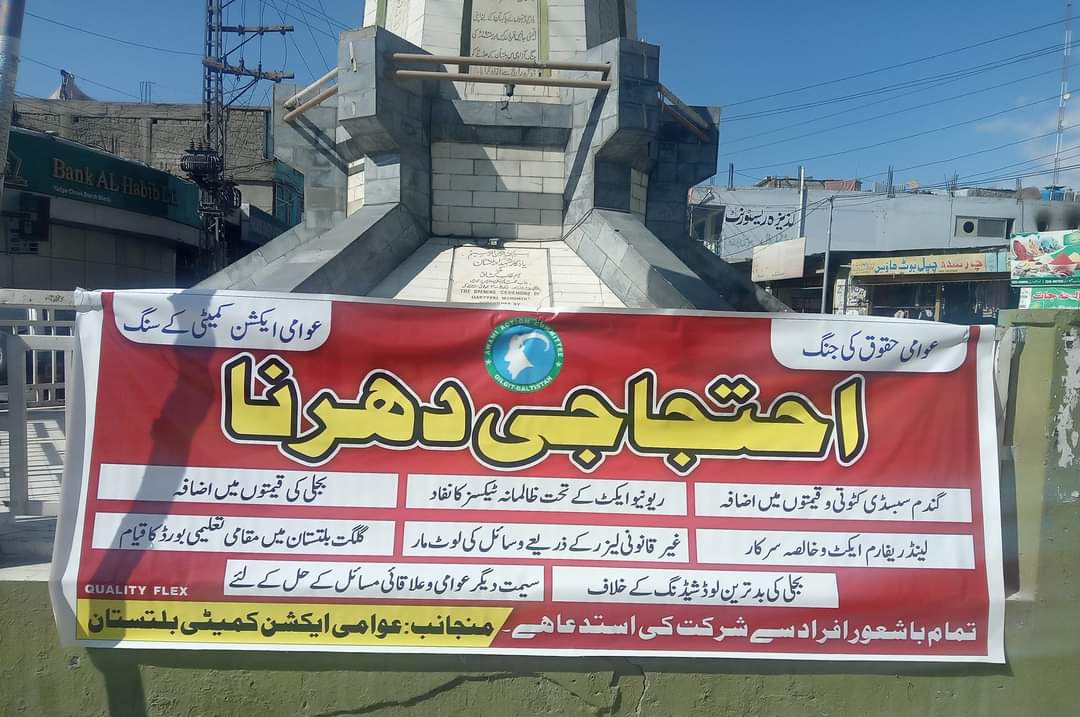
    Since the past two weeks, protests have erupted in all 10 districts of Gilgit Baltistan over the increase in the price of subsidized wheat from Rs20 to Rs36 per kilogram. Organized by an organization called the Awami Action Committee (AAC), protestors gathered in various locations including Skardu, Gilgit, Hunza, Nagar, Ghizer, Ghanche, Diamer, Astore, Shigar, and more.

    The AAC, which comprises members from various political groups, civil society organizations, trade unions, and tourism sectors, has put forward a set of demands from the government especially after talks and negotiations have failed after multiple attempts. They have vowed that they will continue their protests until their demands have been met.

    Demands

    The charter of demands includes the following:

    1. A reversion of the subsidized rate to the 2022 level.

    2. A suspension of the Financial Act 2023 and the abolishment of taxes on the people of Gilgit-Baltistan, citing they were not represented in the parliament.

    3. Addressing the worsening electricity crisis.

    4. Ensuring GB’s share in the NFC award and its inclusion in resource distribution like other provinces of the country

    5. To be given 80 percent royalty of the Diamer-Basha Dam’s net hydel profit and to be given water usage rights and more.

    6. Industry status for the hotel, transportation, and tourism sectors

    7. Establishing medical and engineering colleges, a women’s university in GB, and restoring traditional routes.

    Wheat Subsidy Issue

    Due to its remote location and mountainous terrain, GB has limited cultivatable land. Since the 1970s, it has relied on subsidies to meet its wheat demands.

    However, the rise in inflation has adversely affected wheat prices causing the government to increase the subsidized rate. The revision of the government’s policy has also taken into consideration the promotion of sustainable agriculture practices in the region.

    The reliance on wheat subsidies has also negatively affected local farming practices. Limited cultivatable land is being utilized to grow other local cereal crops that are impacting wheat production.

    This is not the first time that a protest motivated by wheat prices has erupted in GB. Similar protests have taken place in the past, especially in 2017 and 2022 against similar issues. But at this point, the continuous series of protests is starting to indicate an inability of the local and federal governments to reach a solution.

    Lack of representation in the parliament

    While Pakistan has administered GB since 1947, it does not hold provincial status and is part of a larger territorial dispute with arch-rival India over the Kashmir region.

    AAC alleges that major decisions like the implementation of the Finance Act 2023, the imposition of taxes on GB and the increase in wheat rates were unilateral government decisions, and the people of GB were not consulted. They also raised concerns about their ‘disputed status’ and that they lack representation in the parliament which has deprived them of their basic constitutional and political rights for 75 years.

    One of the demands is that GB be given a share in the NFC award which is used to distribute resources across provinces and territories of the country. However, issues in its provincial status have diversely affected GB’s chances of getting a fair share in the resource distribution programs of the country.

    Participation of the local population

    Meanwhile, the participation of local people in the movement has been growing with each passing day. Locals have found this as an opportunity to present their resentments with the political and economic situation of the country. Some issues that directly affect their lives include electricity shortage and a lack of educational institutions in the region especially universities for women and for the medical and engineering sciences.

    If their demands are not met, AAC and its supporters have announced they will cause more protests across GB.

  • Baloch rights activist calls for global support amid misinformation campaign

    Baloch rights activist calls for global support amid misinformation campaign

    January 10, 2024

    By Fatima Hurria


    ISLAMABAD

    As the protest sit-in, staged by family members of missing persons outside the National Press Club (NPC) under the banner of the Baloch Yakjehti Committee (BYC), enters its 48th day, more than 40 rights activists have been abducted from different areas of Balochistan in the midst of preparations to join the ongoing march.

    The BYC protest has also called on the United Nations, foreign ambassadors to Pakistan, journalists, researchers and and others to do everything in their power to make their voices heard, and provide them with protection by addressing their security concerns.

    “Just yesterday (January 9), two young men named Hassan and Jasum were abducted from Dazin, Tump, whereas earlier today, two other political activists identified as Mohammad Aslam Buzdar and Rasool Baksh Buzdar were abducted from Taunsa Shareef,” rights activist and one of the organizers of the BYC protest Dr. Mahrang Baloch announced in a press briefing today, January 10.

    Along with other members of the sit-in, she expressed concern over new cases of abductions, adding that this was only being done to intimidate the protesters. She also urged the state to address this development immediately.

    “We sit here with very limited resources but we are resilient. Ever since we came to Islamabad, we have made it clear that we are peaceful and are ready to negotiate with anyone. Our pain and struggles carry importance and extend beyond mere differences,” she added.

    The BYC also expressed grave concerns regarding the presence of a counter sit-in which is allegedly being spearheaded by individuals of questionable backgrounds. Dr. Mahrang further claimed that the counter-protest is yet another attempt by state authorities to intimidate and discourage their protesters, who comprise mainly women and children.

    In the face of threats to their lives, harassment and an internet blackout near the press club, protesting women and children are seeking solidarity from the international community and are continually appealing for attention toward the realities of Balochistan.

  • The Missing Persons ‘Missing’ Bill: A Timeline

    The Missing Persons ‘Missing’ Bill: A Timeline

    January 9, 2024

    By Xari Jalil


    LAHORE

    On Wednesday, January 10, the federal cabinet, led by the law minister, sat down to approve a reconstitution of its committee on enforced disappearances (COIED).

    The committee was reconstituted after former Interior Mnister Sarfaraz Bugti resigned and there was no chairman to lead the commission.

    The Baloch protestors have been airing their disappointment regarding Sarafaraz Bugti as chairman of the commission since the very first day. But even as the vacancy for the missing persons’ commission is yet to be filled, the missing persons’ issue in the corridors of power remains to be seen.

    Story of a Bill

    Earlier on January 9, the Senate Secretariat left many questions lingering in the air after it announced that a bill about enforced disappearances never went “missing” and was “returned to the National Assembly” after being passed by the upper house of Parliament.

    This came as a belated response to the queries of several lawmakers who had been asking what had happened to it ever since it was introduced and then passed by the National Assembly.

    The Criminal Law (Amendment) Bill 2021 was introduced in the National Assembly by the interior minister in June 2021. It was passed by the National Assembly on Nov 8 2021. Better known as the missing persons’ bill, it sought to criminalise the practice of “enforced disappearances” that was primarily affecting Balochistan and parts of Khyber Pukhtunkhwa, in particular, the merged districts.

    ‘Enforced Disappearances are Undemocratic’

    On August 30, 2021, speaking on the International Day of the Disappeared, then federal Minister for Human Rights, Dr Shireen Mazari had said on Monday that enforced disappearances were unacceptable in a democracy and the government was set to approve laws to make enforced disappearances a criminal offense.

    She had said that the Standing Committee of the National Assembly on Interior had approved a bill on enforced disappearances just a week ago.

    ‘Bill Gone Missing’

    But on January 3, 2022, Shireen Mazari said that the bill pertaining to enforced disappearances, passed by the National Assembly (NA), had now gone “missing”.

    “We had prepared the bill regarding missing persons and it was passed by the [relevant] standing committee and the National Assembly. But it went missing after it was sent to the Senate,” she said.

    Later, Dr Mazari had also claimed that she had been asked to appear at the ISI headquarters over the bill and that after the bill was tabled in the NA, it was referred to the interior committee where “invisible shadows” had tried to change its clauses. She said that the bill had ‘vanished’ on its way to the Senate.

    Initially drafted by the previous Pakistan Tehreek-e-Insaf (PTI) government and championed by former Interior Minister Sheikh Rashid Ahmed, the National Assembly had initially passed the bill in November of the preceding year. However, it had to be reintroduced to the assembly after the Senate passed it on Thursday with a few amendments.

    The Senate was now tasked once again with approving the bill to formalise it as an act of the parliament.

    A Second Passage for the Bill

    On October 22, 2022, the National Assembly passed, for the second time, a bill aimed at categorising enforced disappearances as a heinous crime. This followed the removal of a controversial section that prescribed penalties for individuals making false complaints.

    In response to protests from lawmakers, primarily from parties within the ruling coalition, Law Minister Azam Nazeer Tarar agreed to retract the contentious Section 514 from the Criminal Laws (Amendment) Bill, 2022.

    Following Tarar’s statement, Commerce Minister Naveed Qamar proposed an amendment to exclude the disputed section from the bill, which seeks to criminalise enforced disappearances through modifications to the Pakistan Penal Code 1860 and the Code of Criminal Procedure 1898.

    The Bill received unanimous approval from the house.

    ‘Breaking Parliamentary Tradition’

    Even after the second passage of the bill on enforced disappearances, it fell into parliamentary limbo. According to Senator Raza Rabbani, it broke parliamentary tradition and rules by passing amendments in the Senate’s amended version to its original bill.

    In January 2023, in a letter to National Assembly Speaker Raja Pervez Ashraf, Senator Rabbani of the Pakistan Peoples Party, who was also a former chairman of the Senate, pointed out the anomaly in the passage of the Criminal Laws (Amendment) Bill, 2022, relating to enforced disappearances that the National Assembly passed with additional amendments after the bill was already passed by Senate with amendments on October 21, 2022.

    ‘The Bill of 2022’ was transmitted to the Senate of Pakistan for consideration, Rabbani had said. The Senate passed the Criminal Laws (Amendment) Bill, 2022’ with amendments on October 20 and the bill was returned to the National Assembly for consideration, he added.

    “The National Assembly of Pakistan in terms of Article 70 of the Constitution of Pakistan, 1973, read with rule 154 of ‘the Rules’, considered the ‘Bill, 2022’, as amended and passed by the Senate and in an unconventional move, passed the said the bill with further amendments,” Rabbani pointed out in his letter to the NA speaker.

    Rabbani viewed that the bill could not be transmitted back to the Senate, as it is no longer a bill that has originated in the National Assembly in terms of Rule 120, of ‘the Rules’, and Article 70 of the Constitution. “The bill cannot be sent to a Joint Sitting of Parliament by the House in which it originated because the Member-in-Charge of the Bill chose to give notice and move a motion for consideration and passage of the Bill as passed by the Senate,” he added.

    Senator Raza Rabbani had also said the National Assembly had made a ‘new amendment’ while passing the bill as amended by the Senate, giving rise to a situation not provided for in the Rules. Therefore, the Speaker, using his residuary powers, should rule that the government may move a motion to rescind or withdraw the motion for the passage of the Bill, 2022, as amended.

    “The government may move a motion that the Bill 2022, as amended and passed by the Senate, be referred to the Joint Sitting of Parliament,” he suggested to the NA speaker in his letter.

    Rabbani had urged the NA speaker to expedite the legislative process of the bill as it was the most significant legislation in the public interest which could go a long way in mending the issue of enforced disappearances.

    ‘Where is the 2022 Bill?’

    In 2023, cases of missing persons rose. In August 12, 2023, PML-N Senator Irfan Siddiqui on the floor of the National Assembly (NA) asked Speaker Raja Pervaiz Ashraf to trace his missing bill which was sent to President Dr Arif Alvi for assent 14 months ago after being approved by both houses of Parliament.

    Siddiqui said after becoming a member of the Senate, he had prepared the bill to amend the Criminal Code, to bring this century-old law in line with the Constitution.

    During the PTI government, the Code of Criminal Procedure Amendment Act, 2022, was introduced in the Senate and received approval from the Senate’s standing committee on home affairs. On May 23, 2022, the Senate granted its approval, followed by the National Assembly on June 8 of the same year. Subsequently, on June 21, the bill was forwarded to the President’s Office for formal endorsement.

    Senator Siddiqui disclosed that he had raised the issue in Parliament, but the bill could not be located.

    In August 2022, the Presidency officially confirmed that it had not received such a bill. Senator Irfan Siddiqui penned a letter to the speaker, urging him to issue orders to locate the missing bill and to initiate an investigation to assign responsibility for its disappearance.

    Response by the Senate Secretariat: ‘The Bill is not Lost’

    Three years later, the issue of the “missing” bill resurfaced in the Supreme Court on January 2 during a hearing on enforced disappearances.

    Chief Justice of Pakistan (CJP) Qazi Faez Isa expressed surprise at the bill’s vanishing act from the Senate, particularly noting that it transpired during the PTI’s term in power.

    Consequently, the Senate is now obligated to revisit the approval of the bill in order to legitimise it as an act of parliament.

    But the Senate Secretariat has disclaimed any responsibility, asserting that the bill was sent back to the National Assembly after being approved by the upper house of Parliament over a year ago.

    A strange Situation

    Imaan Mazari, human rights lawyer, spoke about the situation briefly with Voicepk.

    “If the Bill did not go missing, [as the Senate secretariat says], why as per the Senate chairman’s own statement, was it placed before the Senate so belatedly?” she asks. “As per his statement it was sent to the Senate on November 10, 2021, after it was passed by the National Assembly two days ago. But the date according to him for it being tabled was July 29, 2022 – after the government changed.” she points out. “Apparently now, it has been sent back to the National Assembly again.”

    Meanwhile, a senator on the human rights committee said that there could be different reasons as to why the bill never came to the senate as it is being said.

    “The first assumption is that it was delayed by the National Assembly. If it got passed by the NA then it should have been transmitted to the Senate, he said while speaking on condition of anonymity. “Many bills which seem to belong with the Human Rights committee actually land somewhere else sometimes. This has happened with the Criminalization of Custodial Torture Bill. After that it was sent to the NA and was passed from there.”

    Presently, in Pakistan there is no law which defines “enforced disappearance”.


    How Cases are Lodged

    In numerous instances, superior courts or the Commission of Inquiry on Enforced Disappearances (CIED) instructed the relevant police stations to file First Information Reports (FIRs), and these cases are primarily registered under section 365 of the Pakistan Penal Code (PPC), which pertains to kidnapping or abduction.

    Initially in the Bill there was no provision related to the filing of a false complaint or false information about subjecting a person to enforced disappearance. Later a provision was added to the bill to declare it a penal offence punishable by up to five years imprisonment with a fine up to Rs500,000.

    The proposed law has the insertion of a new section 52B in the PPC for defining an “enforced disappearance”.

    “The term enforced disappearance relates to illegal and without lawful authority arrest, detention, abduction or any other form of deprivation of liberty by an agent of the State or by person or group of persons acting with the authorisation, support or acquiescence of the State, followed by a refusal to acknowledge the deprivation of liberty or by concealment of the fate or whereabouts of the disappeared person, which places such a person outside the protection of the law.”

    Meanwhile, Section 365 of the Pakistan Penal Code already criminalises unlawful abductions and deprivation of liberty.

    There are some like senior PPP leader and former Senator, Farhatullah Babar who differ on this Bill saying it is more of a political statement as the Bill has nothing new to offer. Farhatullah Babar has also been calling for a new and comprehensive legal architecture to address the issue.

    Bodies Dealing with Enforced Disappearances

    The primary international legal framework addressing such actions is the International Convention for the Protection of All Persons from Enforced Disappearances, adopted by the UN General Assembly on December 20, 2006. This convention became effective on December 23, 2010. Nevertheless, Pakistan has neither signed nor ratified this agreement.

    Other than this, two UN bodies — The Committee on Enforced Disappearances and the Working Group on Enforced or Involuntary Disappearances (WGEID) — monitor and collaborate where possible to assist states and people in tackling the issue of “enforced disappearances”.

    The working group had undertaken a 10-day visit to Pakistan in Sept 2012 and had also put forward several recommendations in its report.

    One of the important recommendations was: “A new and autonomous crime of enforced disappearance should be included in the Criminal Code, following the definition given in the 2006 Convention on the Protection of all Persons against Enforced Disappearances, and with all the legal consequences flowing from this qualification.”

  • Baloch protestors supported by rallies and demonstrations across the world

    Baloch protestors supported by rallies and demonstrations across the world

    January 8, 2024

    Video: Aitzaz Ibrahim
    English Text: Xari Jalil


    LAHORE

    Rallies and demonstrations in support of the Baloch solidarity march and sit-in have been held all over the world over the past many days. The Baloch sit in organized by the Baloch Yekjehti Committee (BYC) is being held in Islamabad outside the National Press Club.

    To stand up for the rights of the people of Balochistan, and in support of the Islamabad si-in, there have been protests and rallies in parts of the United States, the United Kingdom and Canada.

    Meanwhile, as the Baloch protestors continued their sit-in for the 18th day, in the bitter cold of the capital city, another camp was set up right opposite organized by the Balochistan Martyrs’ Forum, which also provided heaters and warm bedding to the protestors. They also played famous songs that have been sung for the Pakistan Army.

    WASHINGTON, D.C

    On Sunday, a large protest was held outside the White House in Washington DC. The Baloch community demonstrated in solidarity with the Baloch protesters of Pakistan. The demonstration was organized by the US chapter of the Baloch National Movement (BNM).

    TORONTO

    In Toronto, the Baloch, Sindhi and Pashtun communities converged to protest in favor of the demonstration in Islamabad. The youth from the Baloch diaspora community also held a conference on the on-going issue.

    The ongoing protests in Pakistan by Baloch women have galvanized the Baloch youth across the world, including those born overseas. The Canadian Baloch youth hosted a conference yesterday which I had the opportunity to address. They asked how they could help and get involved.

    LONDON

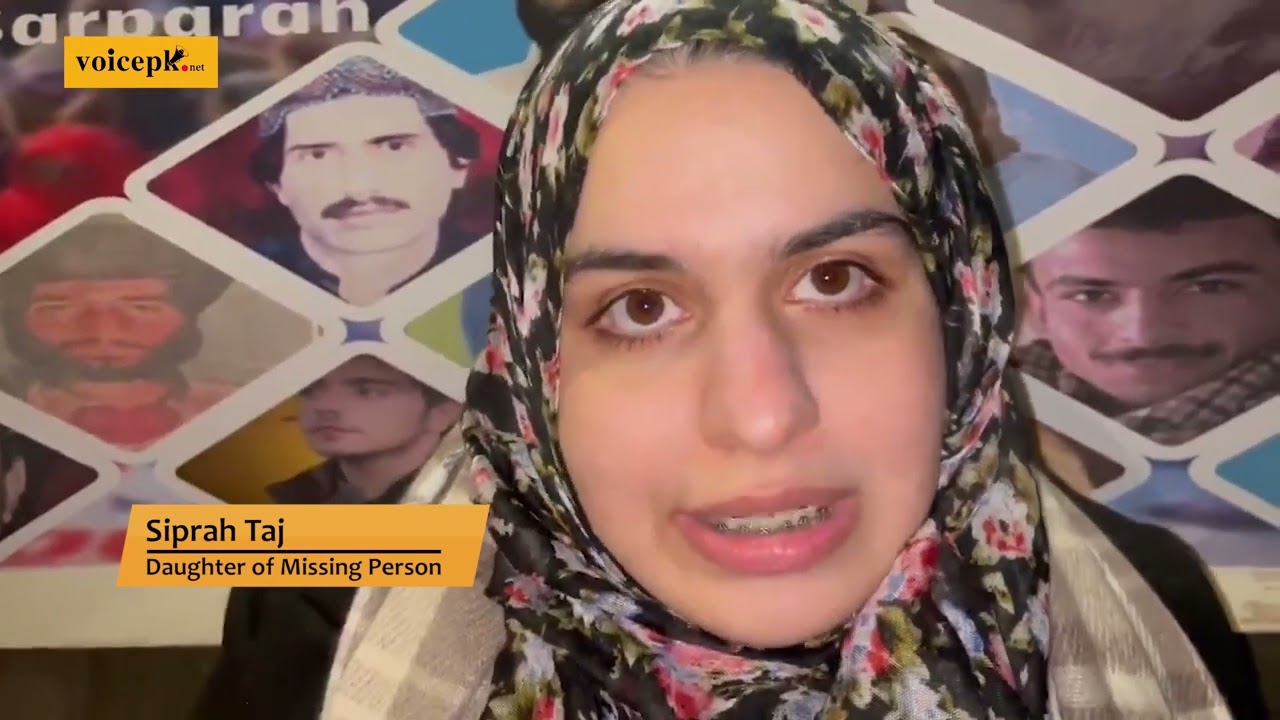
    The family of businessman Mir Taj Mohammad Sarparah, along with the support of the rest of the Baloch community, staged a sit-in for five days, which the authorities tried to stop with the help of aerial firing.

    Sarparah went missing in 2020. the sit-in continued for fail staged a sit-in for the past five days in Yakijati, which was called off after a final protest.

    Taj Muhammad’s daughter said that it has been more than three years since her father disappeared, but nothing has been found about him yet – she appealed to the British government and the United Nations to investigate the matter and carry out an inquiry.

    PROTESTS ACROSS PAKISTAN

    On the other hand, protests were recently held in Balochistan University in Pakistan and in Karachi’s Malir area to show solidarity with the Baloch protesters, where the demonstrators demanded a stop to enforced disappearances and to recover already missing persons.

    Meanwhile, the camp set up by the Balochistan Martyrs’ Forum in Islamabad was visited by the Former Caretaker Minister of Sports, Balochistan, Jamal Raisani.
    Raisani told the media that the purpose of the camp was to organize in solidarity with the Baloch who had been killed by extremist organizations in Balochistan. He demanded the establishment of military courts in Balochistan and also demanded that the Supreme Court withdraw the decision declaring combined courts unconstitutional.

    BACKGROUND & CONTEXT

    Protestors from Balochistan had originally arrived in Islamabad from Turbat in the form of a long march against the extrajudicial killing of Balach Maula Bakhsh, who had been in the custody of the Counter Terrorism Department (CTD) and was killed in an encounter. The long march was taken out against enforced disappearances in Balochistan as well as killings by death squads. Later after reaching Islamabad the long march participants were subjected to torture and arrests by the Islamabad police.

    However ever since the Islamabad High Court ordered the release of all the arrested protesters and gave an order not to harass the protestors, the protests have been continuing for the last 18 days. The protesters are demanding that a United Nations’ fact-finding committee visit Balochistan and make inquiries regarding the matter of enforced disappearances, and also push to make an immediate recovery of all missing persons.


  • Complete blackout of social media sites amid PTI’s virtual fundraiser

    Complete blackout of social media sites amid PTI’s virtual fundraiser

    January 8, 2024

    Muhammad Junaid


    Lahore: 

    A nationwide disruption of social media platforms was reported on Sunday night as the Pakistan Tehreek-e-Insaaf (PTI) held a virtual fundraising telethon ahead of the February 8 general elections. According to Netblocks, an independent global internet monitor, access to multiple major social media platforms, including X (formerly Twitter), Facebook, Instagram, and YouTube, was blocked.

    The U.K.-based watchdog noted that this was consistent with “previous social media filtering events which have all been imposed during opposition party rallies or speeches by opposition leader Imran Khan”.

    Blanket Ban 

    The PTI, on Sunday, announced that it would launch its manifesto and a virtual fundraiser for elections at 9:00 pm. However, around 6:00 pm, users started complaining about internet services being slow and not being able to access social media platforms. After online disruptions, PTI urged its supporters to join the fundraising campaign using VPN.

    Social media users and activists took to X to condemn the internet disruptions in the country, terming them a violation of Pakistan’s constitution.

    Speaking separately to Voicepk, digital rights activist Usama Khilji further dilated upon the situation and said that the imposition of a blanket ban like this was a violation of democracy and the constitution.

    “Our constitution gives us the right to freedom of access to information, the right to education and right to livelihood- all of which depends on digital access,” he said. “It is also useless to ban sites like this because ultimately people use proxy or VPN in order to access the banned sites. And what is the point of this ban? Are political parties not allowed to campaign?”

    Khilji added that there was no transparency either as to who was carrying out this ban—was it the Ministry of Information Technology or the PTA?—it remained unclear.

    The PTI denounced the caretaker government for suspending social media platforms and targeting its virtual events.

    This is not the first time authorities have resorted to such tactics. In a similar incident last month, internet services were disrupted during a PTI virtual power show.

    In an interview to AFP, Netblocks Director Alp Toker said, “Such nation-scale social media targeting political activities is almost unprecedented at this scale— Venezuela is one other country that has used similar measures to limit opposition speeches and rallies.”

    In July last year, Surfshark, a virtual private network company headquartered in Lithuania, ranked Pakistan third in the world over internet restrictions in the first half of 2023.