Category: National

  • Islamabad High Court asks government for report on judges’ appointment

    Islamabad High Court asks government for report on judges’ appointment

    August 10, 2026

    By Hashir Ahsan


    ISLAMABAD

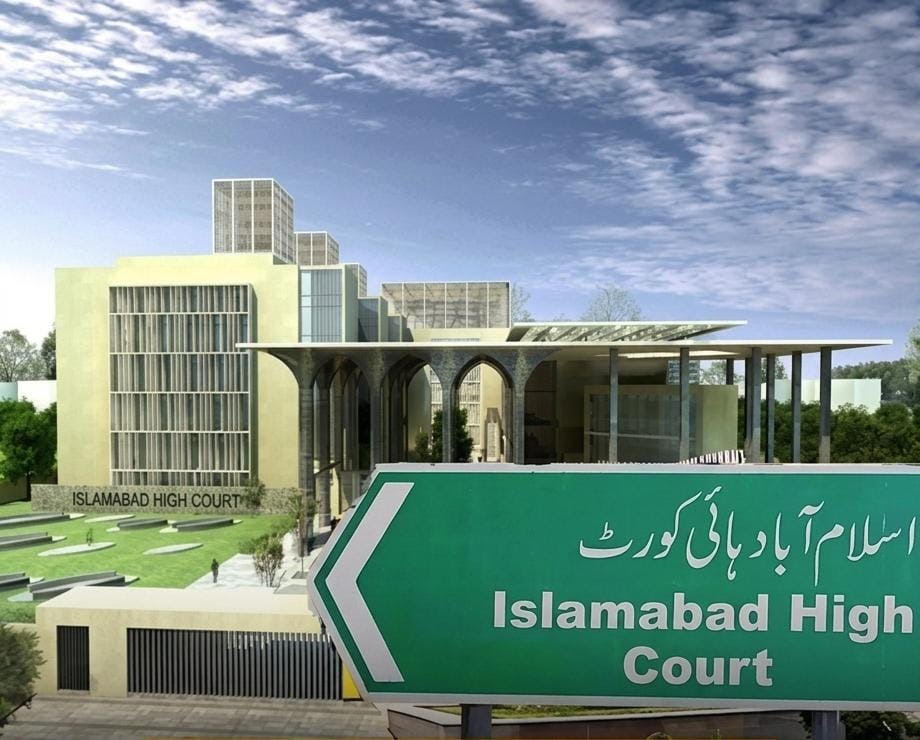
    The Islamabad High Court (IHC) has asked the federal government and the Law Ministry to submit a written report on why the President hs not approved the summary for the appointment of new judges and has also called on the Attorney General of Pakistan to assist the court.

    During the hearing of Luqman Zafar’s petition, Justice Arbab Muhammad Tahir expressed sharp displeasure with the federal government, asking what the government was doing and whether it had any interest in the matter at all.
    “The court had assumed that the government would fulfill its responsibility, but this has not happened,” he said, and asked what stage the summary was actually at and whether anyone knew. He pointed out that confirmations for Sindh and Peshawar High Court judges, already approved by the Judicial Commission, had also been stalled, and said the matter coud not just be left sitting indefinitely. He noted that it had already been 18 days, well past the earlier 15-day mark.
    The petitioner’s lawyer, Zahid Asif Chaudhry, argued that the Constitution is very clear about what happens once the time limit passes, and that the President could not simply ‘sit on the summary indefinitely’. The Additional Attorney General added that at this point, the President could not even reject the summary anymore. The court asked the federal government to respond by the next day and adjourned the hearing.
    In its written order, the court directed the federal government and the Law Ministry to submit a written report by the next day, and issued notice to Attorney General Mansoor Usman Awan to assist the court. It asked the Additional Attorney General to ensure that the federal government and Law Ministry submit brief reports detailing exactly when the Prime Minister sent the summary to the President, and explaining what action, if any, was taken on it afterward. The case will be heard again tomorrow.
    The petition filed in the Islamabad High Court asks the court to direct the President to approve the confirmation of additional judges already serving in the superior judiciary. Lawyer Luqman Zafar Chaudhry filed the petition on Wednesday through his counsel Zahid Asif Chaudhry, challenging President Asif Ali Zardari’s delay in approving the summary sent by the Prime Minister. The summary includes recommendations for appointing new judges and confirming additional judges currently serving in the High Courts.
    The petition states that the Judicial Commission of Pakistan, headed by the Chief Justice, completed the constitutional process and approved recommendations for judges’ appointments on July 20 and 21, after which the Prime Minister sent the summary to the President under Article 48 of the Constitution. Since then, the President has neither approved the summary nor sent it back, but has held onto it without any constitutional justification. The Constitution gives the President a limited role in the judges’ appointment process.
    The recommended judges were supposed to take their oath on July 27, but because the President has not approved the summary, that ceremony could not take place and has been postponed indefinitely.
    The petition argues that Article 48 of the Constitution requires the President to act on the Prime Minister’s advice, and the only exception allowing him to send the advice back for reconsideration must happen within 15 days — there is no provision in the Constitution for an indefinite silence or delay. By holding onto the summary, the petition argues, the President is effectively turning a limited, time-bound constitutional duty into an informal veto power or indefinite delay, which goes against the principle of judicial independence.
    Citing earlier Supreme Court rulings, the petition argues that the process of appointing judges should be transparent, based on mutual consultation, and completed within the set time frame, without unnecessary interference from the executive. It says the shortage of judges in the superior judiciary is affecting the delivery of justice, causing delays in case decisions, and impacting citizens’ basic rights.
    The court has been asked to order the President to approve the summary immediately, and to declare his failure to act despite the 15-day constitutional deadline having passed as unlawful. The petition also asks the court to seek clarification from the President’s office on when exactly the summary was received and the reasons for the delay.
  • Article 19-led coalition urges Pakistan to reverse restrictions on free expression

    Article 19-led coalition urges Pakistan to reverse restrictions on free expression

    August 6, 2026

    By Xari Jalil


    ISLAMABAD

    ‘ARTICLE 19’, an international organisation that advocates the movement for freedom of expression, along with a coalition of Pakistani and international civil society organisations, have called on the Pakistani government to end what they describe as an ‘escalating crackdown on freedom of expression’, and warning that growing restrictions on journalists, lawyers and human rights defenders are undermining fundamental rights and democratic accountability.

    In a joint statement addressed to Prime Minister Shehbaz Sharif, Information Minister Attaullah Tarar and Law Minister Azam Nazeer Tarar, the organisations expressed alarm over what they said was an increasingly restrictive environment for independent journalism and civic engagement.

    The groups said recent actions by the authorities reflect a broader pattern of using legal and administrative measures to curb dissent and limit public debate. According to the statement, laws and policies framed around national security, public order and misinformation have increasingly been used against journalists, activists and government critics.

    The coalition argued that such measures are incompatible with Pakistan’s constitutional guarantees of freedom of expression and the country’s international human rights obligations.

    The organisations also voiced concern over increasing pressure on media outlets, criminal proceedings against journalists, online censorship and the use of cybercrime legislation to target individuals for expressing critical views.

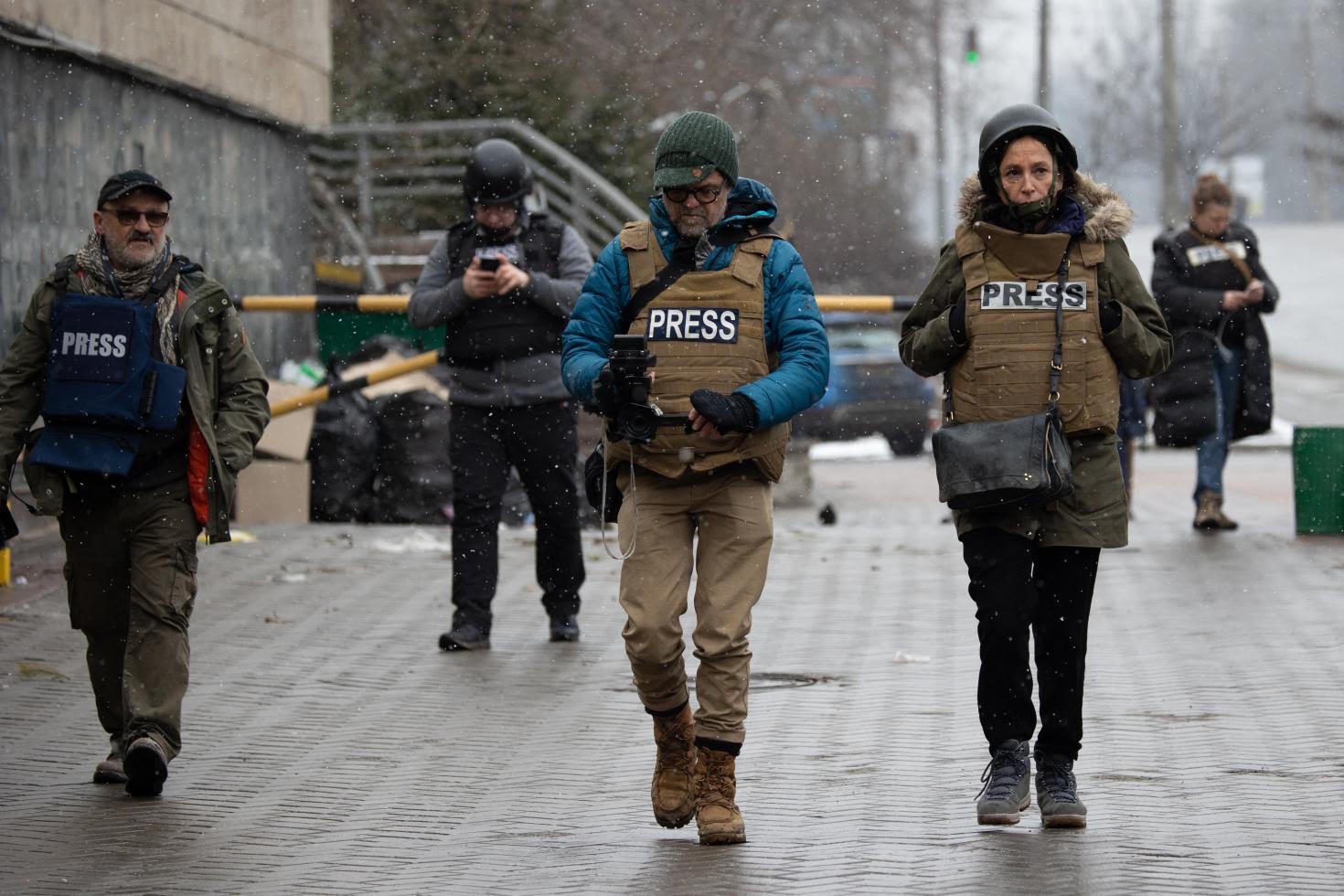
    The statement comes amid controversy over recently introduced Foreign Media Facilitation Guidelines, which require foreign journalists and Pakistani reporters working with international media organisations to obtain official approval before travelling outside Islamabad, Lahore and Karachi for reporting assignments. Press freedom groups have criticised the policy, saying it places additional barriers on independent reporting, while the government says the guidelines are intended to facilitate and regulate media access.

    Calling for immediate action, the coalition urged the government to ensure that journalists, lawyers and human rights defenders are able to carry out their work without intimidation, harassment or fear of prosecution. It also called on the authorities to review laws and policies that, it said, have been used to restrict peaceful expression and access to information. The organisations said safeguarding free expression is essential to democratic governance and urged Pakistan to uphold its commitments under both domestic law and international human rights standards.

    Digital Media Alliance of Pakistan (DigiMAP) condemns move by govt

    The Digital Media Alliance of Pakistan (DigiMAP) has condemned the federal government’s newly issued guidelines restricting the movement of foreign journalists and Pakistani journalists affiliated with international media organizations, calling the measures a serious threat to press freedom, transparency, and democratic values.

    In a joint statement issued Thursday, DigiMAP President Sabookh Syed and Secretary General Adnan Amir urged the government to immediately withdraw the notification, arguing that it imposes unnecessary obstacles on journalists performing their professional duties and undermines the constitutional principle of freedom of expression. The statement comes amid growing criticism from media rights organizations over the government’s new framework governing foreign media operations in Pakistan.

    Restrictions on reporting

    According to DigiMAP, the notification not only limits the movement of foreign correspondents outside designated cities without prior permission but also extends similar restrictions to Pakistani journalists working for international media organizations.

    The organization said the measures would make independent reporting from different regions of the country increasingly difficult, particularly when journalists are unable to travel freely to locations where important events are unfolding.

    “Journalists cannot effectively perform their professional duties if they are prevented from accessing areas where important developments take place,” the statement said. “Restricting media access damages public trust, discourages transparent reporting, and sends an unfortunate message to the international community.”

    The criticism follows the government’s publication of the “Guidelines for the Facilitation of the Foreign Media and Their Associates Working in Pakistan,” which require registration and, in many cases, government clearance for reporting assignments outside Islamabad, Lahore, and Karachi. The Ministry of Information has maintained that the guidelines are intended to create a transparent and accountable framework rather than restrict media freedom.

    DigiMAP said the new policy comes at a time when Pakistan is already facing international scrutiny over media freedom and argued that the government should instead facilitate responsible journalism and demonstrate its commitment to transparency and accountability.

    The organization also warned that the restrictions could have direct consequences for Pakistani journalists employed by international news organizations. It said reporters who are unable to travel and report from different parts of the country may face professional setbacks and financial hardship if they cannot fulfill their reporting responsibilities.

    The alliance further argued that limiting journalists’ ability to gather information independently could reduce public access to verified reporting and weaken confidence in the free flow of information.

    Calls for withdrawal

    DigiMAP called on the federal government to withdraw the notification immediately and begin meaningful consultations with representative media organizations before introducing policies that affect journalistic work.

    “The free flow of information is a cornerstone of every democratic society. Pakistan’s image will be strengthened not by restricting journalists, but by ensuring openness, transparency, and respect for media freedom,” the statement said.

    The organization reaffirmed its commitment to defending press freedom and said that if the notification remains in force, it will consult media stakeholders and consider democratic and legal avenues, including peaceful advocacy and protest, to protect journalists’ rights.

    DigiMAP’s statement adds to a growing list of objections from Pakistani and international press freedom organizations, which have argued that the new guidelines risk increasing bureaucratic control over news gathering and discouraging independent reporting across the country.

  • IHC bars NCCIA from harassing Asad Toor, summons investigating officer in inquiry over notices

    IHC bars NCCIA from harassing Asad Toor, summons investigating officer in inquiry over notices


    August 6, 2026

    By Hashir Ahasan 


    ISLAMABAD:


    A petition was heard today in the court of Justice Khadim Hussain Somroo of the Islamabad High Court filed by journalist and YouTuber Asad Ali Toor, against notices issued to him by the NCCIA.  During the inquiry, the court stopped the investigating officer from harassing Toor and ordered that officer to appear in court personally.

    Toor’s lawyer, Attaullah Kundi, told the court that his client is willing to join the inquiry but doesn’t want to be arrested, since he’s been accused of spreading fake and false information. The judge asked which specific news report was being called “fake.” The lawyer explained it was about a report Toor had shared, quoting a journalist, regarding the medical condition of PTI’s founder (Imran Khan). After hearing this, the court summoned the investigating officer in person and adjourned the case.

    In his petition, Toor says he is a professional journalist who has worked in the field since 2005 and currently runs a digital news platform called “Asad Toor Uncensored,” where he reports on courts, the constitution, government actions, human rights, and press freedom. He also mentions that he received the Netherlands Embassy’s “Human Rights Tulip Award 2024″ on 17 December 2024 for his work on press freedom and democratic rights.He says the NCCIA sent him three notices in total:Notice 1received July 29): Told him to appear on July 31 at 11 AM, but gave no details of any complaint or accuser — just a vague mention of fake/fabricated information.” Toor challenged this in court and also wrote to NCCIA asking for the written complaint and evidence. This one, for the first time, gave details — referring to a July 26 vlog about Imran Khan’s health and detention conditions.

    The complainant was listed only as “through State,” with no actual name. Toor claims this notice was dated the same as Notice 1, so it couldn’t have been a proper response to his letter or a compliance with the court’s earlier orderwhich had directed NCCIA to first share the details of allegations and then give him reasonable time final notice, issued August 3.

    Despite Toor submitting a detailed written response with evidence on August 4, NCCIA gave him just 24 hours’ notice to appear in person, again without naming the complainant, and threatened one-sided action and prosecution under Section 174 PPC if he didn’t show up.Toor’s lawyer says his client offered to submit answers and appear online/via video link, but the NCCIA officer refused and insisted on physical appearance.

    Toor’s team argues that giving only 24 hours goes against the spirit of the court’s earlier order, and that threatening arrest despite his full cooperation amounts to an attack on press freedom citing Articles 19 and 19A of the Constitution،He has asked the court to declare all these notices illegal and void, direct NCCIA to disclose full details of who complained against him, and stop any coercive action or arrest.


  • IHC reserves verdict on maintainability of petition over delay in judges’ appointments summary

    IHC reserves verdict on maintainability of petition over delay in judges’ appointments summary

    August 6, 2026

    By Hashir Ahsan


    ISLAMABAD:

    The Islamabad High Court has kept its decision reserved on whether a petition can be heard. The petition was filed against the President for not approving the summary on judges’ appointments.

    The case was heard by Justice Arbab Muhammad Tahir.

    Advocate Zahid Asif Chaudhry appeared on behalf of the person who filed the petition, advocate Luqman Zafar.

    Zahid Asif Chaudhry said the Judicial Commission meeting was held on July 20 and 21, and it made its recommendation there. He said 15 days have now passed, and that according to his information the government is about to issue the notification. He asked the court to call for information on this.

    On the court’s order, the request in the petition was read out. The court asked whether such a petition can be issued against the president of Pakistan. The lawyer said that after the president’s approval, the law ministry usually issues the notification, but the law ministry can also issue the notification without the president’s approval. The court remarked that the case being referred to did not involve a similar situation.

    The lawyer argued that the summary for approval of judges’ appointments was sent to the president of Pakistan, and that there are reports the government is about to issue the notification for the judges’ appointment. He asked the court to seek details of this summary. The court asked whether this request was made in the petition, and the lawyer said yes, it was.

    The court asked him to show a judgment in which directions were given to the president, and asked which authority is responsible for issuing the notification. The lawyer said a judgment exists in which directions were given to a parliamentary committee. The court again asked him to show a judgment where the president himself was given directions, and asked him to give any example where a writ was issued against the president.

    The lawyer asked if the court had seen any judgment about Article 48 of the constitution, and asked whether approving the summary is a discretionary power. The court again asked him to show any judgment of any court where the president was given a direction. The lawyer said the nomination of judges is sent by the prime minister to the president for appointment, and that the president’s office is a ceremonial one. The court again asked him to show a court judgment on this point.

    The lawyer said his request is that fifteen days have passed, and if the president does not give approval, then the relevant authority should issue the notification. He said the president has no power other than to approve. The court asked him again which authority is the competent one. The lawyer said the law ministry issues the notification, and requested that the court ask the federal government, the prime minister’s office and the law ministry for their response, and ask them what the status of the summary is.

    The court asked him directly whether a writ can be issued against the president. The lawyer said he is only asking that the government be asked first, and that there are reports the government will issue the judges’ appointment notification within 48 hours. After this the court reserved its decision on whether the petition is fit to be heard.

    The petition filed in the Islamabad High Court asks that the president be ordered to approve the confirmation of additional judges who are already serving in the higher judiciary. Advocate Luqman Zafar Chaudhry filed the petition on Wednesday through his lawyer Zahid Asif Chaudhry. It challenges the delay by President Asif Ali Zardari in approving the summary sent to him by the prime minister. The summary includes recommendations for appointing new judges and for confirming additional judges already working in the high courts.

    The petition says that the Judicial Commission of Pakistan, headed by the Chief Justice of Pakistan, completed the constitutional process and approved the recommendations for judges’ appointments on July 20 and 21. After that the prime minister sent the summary to the president under Article 48 of the constitution. The petition says the president has so far neither approved the summary nor sent it back, but has held it without any constitutional reason. It says the constitution gives the president only a limited role in the appointment of judges.

    The oath taking ceremony for the recommended judges was supposed to take place on July 27, but because the president did not approve the summary, the ceremony could not be held and has now been postponed indefinitely.

    The petition says Article 48 of the constitution requires the president to act on the prime minister’s advice, and that the only situation where the president can send the advice back is for reconsideration, and that too within 15 days. It says the constitution gives no room for staying silent or delaying the decision for an unlimited time. It says that by holding back the summary, the president is turning a limited, time bound constitutional duty into a kind of veto power or into an unlimited delay, which goes against the principle of judicial independence.

    The petition refers to earlier Supreme Court judgments saying that the process of appointing judges should be transparent, based on mutual consultation, and completed within the fixed time, without unnecessary interference from the administration. It says the shortage of judges in the higher judiciary is affecting the delivery of justice, causing delay in the decisions of cases, and affecting the basic rights of citizens.

    The petition asks the court to order the president to approve the summary immediately, and to declare it unlawful that no action was taken even though the 15 day constitutional period has passed. It also asks the court to seek an explanation from the president’s office about when the summary was received and what the reasons for the delay are.

  • Nearly 11 children a day: Pakistan records 1,914 child abuse cases in first half of 2026

    Nearly 11 children a day: Pakistan records 1,914 child abuse cases in first half of 2026

    August 6, 2026

    By Iqra Manzoor


    LAHORE

    Nearly 1,914 cases of child abuse were reported across Pakistan between January and June 2026, according to the latest Six Months Cruel Numbers report released by Sahil, a non-profit organisation working on child protection since 1996.

    The report is based on data collected from 81 English, Urdu and regional newspapers across all four provinces, as well as Islamabad Capital Territory, Azad Jammu and Kashmir, and Gilgit Baltistan. It tracks cases of child sexual abuse, abduction, missing children and early marriages reported in the press during the first six months of the year.

    The number marks a slight decline from the 1,956 cases recorded during the same period last year.

    “On average, close to 11 children were reported as victims of abuse across Pakistan every single day during the first six months of 2026.”

    Of the total cases, 1,015 involved child sexual abuse, while 558 were cases of abduction. Another 101 cases involved children reported missing, and 35 involved child marriages. The report also recorded 98 cases of pornography linked to sexual abuse, and noted that 49 of the reported cases involved infants found abandoned by the roadside.

    Girls more affected, but boys make up a significant share

    Girls accounted for 58% of the victims and boys for 42%. In cases specifically involving pornography following sexual abuse, however, the pattern was reversed: boys made up 59% of victims compared to 41% girls.

    image.png

    Children aged 11 to 15 most at risk

    The 11-15 age group was the most vulnerable, accounting for 598 of the reported cases, or roughly 31% of the total. This was followed by children aged 16-18 (356 cases) and those aged 6-10 (329 cases). Ninety-five cases involved children aged five or under. In 487 cases, the victim’s age was not mentioned in the reporting.

    image.png

    Abduction tops the list of crime categories

    Broken down by crime category, abduction was the most commonly reported offence, making up 29% of all cases, followed by rape and sodomy combined at 28%. Missing children accounted for a further 7% of cases. The report also recorded smaller numbers of cases involving a combination of offences, such as abduction with rape, gang rape, incest, and child marriage, among others.

    image.png

    Most abusers known to the victim

    The data shows that in 43% of cases, the abuser was someone known to the child or their family, while strangers were involved in 34% of cases. In the remaining 13%, the abuser’s identity or relationship to the victim was not specified in media reports.

    “Taken together, categories such as acquaintances, relatives, fathers, uncles, religious teachers and neighbours far outnumber strangers, underlining that most abusers are people already inside a child’s circle of trust.”

    Nearly half of all cases, 45%, took place at the victim’s own home, and 18% occurred at the abuser’s residence. Only 3% happened in open fields, while the location was not specified in 21% of cases.

    Punjab accounts for majority of cases

    Geographically, Punjab accounted for 80% of all reported cases, followed by Sindh at 15%. The remaining 5% were spread across Khyber Pakhtunkhwa, Balochistan, the federal capital, AJK and GB.

    Out of a total of 89 districts covered in the report, ten stood out as the most vulnerable. Faisalabad recorded the highest number of cases at 337, followed by Multan (185), Lahore (121), Gujranwala (111), Kasur (110), Rahim Yar Khan (97), Rawalpindi (78), Vehari (70), Sialkot (64) and Toba Tek Singh (61).

    The report also found that 57% of cases were reported from urban areas compared to 43% from rural areas.

    image.png

    Most cases registered with police

    According to the report, 89% of the reported cases were formally registered with the police. In 11% of cases, the registration status was not mentioned in media reports, while seven cases remained unregistered. In one case, police reportedly refused to register a complaint.

    Sahil has been working on child protection in Pakistan since 1996, with a focus on preventing child sexual abuse and providing legal support to survivors and their families. The organisation compiles its Cruel Numbers report twice a year using media monitoring as its primary data source, meaning the actual number of cases is likely higher than what is captured through newspaper reporting alone.

    image.png

  • More control for international media as Kashmir coverage irks authorities

    More control for international media as Kashmir coverage irks authorities

    August 5, 2026

    By Hashir Ahsan


    ISLAMABAD

    Following the disapproval of the media coverage of the elections in Kashmir, the Ministry of Information and Broadcasting has now issued some new rules for the international media. Under these rules, journalists working with international media must get a No Objection Certificate (NOC) before traveling to any city outside Islamabad, Lahore, and Karachi for news coverage.

    The new instructions are six pages long. They apply to television, newspapers, digital media, and social media. So far, no clear response has come from international media organizations or Pakistani journalists working with them. Many members of the Islamabad Press Club also work for international media, but the Press Club has also not shared any official response to these new rules.
    According to the new policy, all foreign media organizations, companies, and institutions working in Pakistan, as well as everyone connected with them, must complete accreditation. This includes journalists, media owners, media professionals, freelancers, sponsors, fixers, assistants, and other related people.
    For trips to Abbottabad and Murree for tourism or other approved visits, the External Publicity Wing will issue an NOC within three working days after receiving a journalist’s request.
    The new rules apply to all foreign print, television, digital, social media, and web based platforms operating in Pakistan. Every journalist working with an international or foreign media organization must register through the External Publicity Wing’s online registration and accreditation portal.
    All companies, organizations, and production houses in Pakistan that provide any kind of service to foreign media must also register with the ministry. People living in Pakistan who are not journalists but provide services to foreign media must also register.
    The registration will not be an official government status. It will only serve as a journalistic identity. After registration, journalists must apply online for a press accreditation card by submitting all required documents.
    Accreditation can be given on a yearly basis or for a temporary period. Temporary accreditation can be valid for up to three months.
    Journalists with an accreditation card will have easier access to government media events and government offices. If a journalist changes their media organization or their accreditation expires, the card must be returned.
    The External Publicity Wing will have the authority to suspend or cancel registration or accreditation. This can happen if a person is involved in a crime, submits fake documents, or acts against Pakistan’s sovereignty, security, peace, or public order.
    The new rules also state that the NOC will be issued based on the news story. In emergency situations, an urgent NOC may be provided for immediate news coverage.
    Voicepk tried to get comments from different political leaders about these new rules, but they were unable to respond because of their personal commitments.
    “The new guidelines for foreign journalists in Pakistan are quite worrying,” says Iqbal Khattak, Executive Director of the international media watchdog Freedom Network. “The ministry did not provide an explanation as to why it issued the guidelines now, but it is certainly aimed at blocking the free movement of both foreign journalists and Pakistani journalists working with foreign outlets—which is critical for independent reporting,” he said.
    Khattak noted that the new rules are likely to put local journalists at risk. If a report produced NOC, contains content the government dislikes, it could expose the journalists who worked on the story to danger.
    “I think these measures will reflect poorly on Pakistan’s commitment to defending freedom of expression, especially given the commitments the state and government have made at various international forums,” he added.
    He suggested that the motive behind the notification stems from foreign media coverage of public unrest and the general elections in Azad Jammu and Kashmir. “The guidelines appear to aim at ensuring foreign journalists do not enjoy the freedom to move and report freely in Pakistan.”
  • Imran Khan’s 3 year incarceration: PTI’s major action plan, fresh wave of arrests, & global concern

    Imran Khan’s 3 year incarceration: PTI’s major action plan, fresh wave of arrests, & global concern

    August 5, 2026

    By Hafiz Ullah Storai Sherani

    Additional Reporting by Aitzaz Ibrahim (Lahore) & Shokat Korai (Karachi)


    ISLAMABAD/LAHORE/KARACHI

    Marking three years of imprisonment for Imran Khan, the former Prime Minister of Pakistan and the founder of Pakistan Tehreek-e-Insaf (PTI), his party planned holding nationwide protests on Wednesday August 5, with the main rally taking place in Peshawar, the central city of Khyber Pakhtunkhwa, this evening.

    Chief Minister of KP, Sohail Afridi, declared the Peshawar rally the largest in the province’s history, stating that the party leadership will present a complete and final action plan for the movement to free Imran Khan.

    “Those who overthrew a democratic government in April 2022 thinking that Imran Khan’s party would be finished will realize today the reality of the situation.”

    Meanwhile, former Speaker of the National Assembly, Asad Qaiser condemned the treatment of the PTI founder.

    “Over the three years, Imran Khan was kept in a dilapidated cell, extreme heat, and the mental torture of solitary confinement, where alleged medical negligence also resulted in damage to the eye,” he said. “The party’s electoral symbol was taken away, thousands of workers were arrested, and instead of accepting the public mandate of the February 8 elections, unelected individuals were imposed.”

    Asad Qaiser emphasized that meaningful negotiations with Imran Khan, fresh free and fair elections, and the establishment of a neutral Election Commission were the only solutions for political and economic stability in the country.

    On the other hand, Imran Khan’s son, Kasim Khan, who resides abroad, criticized the government and the system in a fresh interview with the US TV channel CNN.

    “The government has adopted an extremely harsh attitude against all types of protests over the past few years because it is functioning like a military dictatorship,” he said. “Therefore, they have no hesitation in using their power to suppress any free voice or protest. They have also taken people hostage, but I hope this political struggle will prove successful in making an impact.”

    Wave of arrests

    According to the PTI leadership, obstacles have been set up at various places across the country today to block PTI rallies and protests on Wednesday, while reports of arrests are circulating. According to PTI leader Junaid Akbar, when workers departed from Dera Ismail Khan yesterday for the protection and reception of Aleema Khan (Imran Khan’s sister), the Punjab government arrested former PTI district president Gul Malook Khan and his companions under 3 MPO and transferred them to Mianwali Jail.

    On the other hand, leaders of the National Dialogue Committee have approached the Islamabad High Court. This committee mainly comprises political figures who were previously part of Imran Khan’s party, but due to various political differences or having to leave PTI, are now aside from the main party. These include Fawad Chaudhry, Imran Ismail, Barrister Saif, and others who have filed a petition in the IHC through Advocate Faisal Farid Chaudhry seeking permission to meet Imran Khan and Bushra Bibi in Adiala Jail.

    Speaking to the media outside the court, Fawad Chaudhry spoke about the meeting.

    “A meeting with Imran Khan cannot happen without the consent of the establishment. Our approach is different; we want to move things forward through dialogue. The establishment needs to listen to us and Imran Khan needs to understand our point of view. We are friends of Imran Khan and are concerned about the treatment meted out to him in jail.”

    “We have repeatedly told the government and the establishment that no major decision for Pakistan can be made without dialogue and including Imran Khan’s input,” said Barrister Saif. “We request the establishment to facilitate us so that the atmosphere of confrontation and tension can be reduced.”

    72-year-old Imran Khan was removed from power in April 2022 through a no-confidence motion in parliament, after which severe political restrictions were imposed on his party. Imran Khan was first arrested on May 9, 2023, while he has been continuously detained since his re-arrest on August 5, 2023.

    Lahore protest

    On Wednesday, Lahore also saw PTI party workers stage a demonstration for the release of their leader outside the Aiwan-e-Adl. However this was met with a crackdown by the police. According to PTI leaders, around 20 workers were taken into custody from outside Aiwan-e-Adl during the protest. Some of those protesting were lawyers who were also taken into custody.

    Speaking to Voicepk, Farhat Khalid, Additional General Secretary, PTI (Central Punjab), said that this was an important day as they had gathered in huge numbers for their leader Imran Khan. “However as soon as we collected here, they tried to sabotage us, we faced a police crack down almost at once. The police arrested our workers, including women, But we will continue to stand with Imran and Pakistan – this has not affected our passion.”

    She said they would continue to stand in solidarity until their leader was released. She said that the call was given across Lahore for everyone to particpate and all the provincial leadership was present. “But there was an atmosphere for intense fear al around,” she said. “We have looked past that and have recorded our protest despite the pressures we are facing.

    She said that the workers were ready to also travel to Peshawar where the main rally was being held.

    A private television court reporter, Natiq Rehan, who was covering the demonstration, was also allegedly assaulted by police and taken into custody before being released following the intervention of fellow journalists. PTI said those detained included Member of the National Assembly (MNA) Mubeen Arif Jutt and Members of the Provincial Assembly (MPAs) Tashakkul Abbas Warraich, Hassan Iqbal Butt, and Owais Warraich. Police has not immediately commented on the allegations or confirmed the reported detentions.

    Background: Arrest of workers and military courts

    The crackdown on PTI came after the protests of May 9, 2023, and November 26, 2024, thousands of workers and leaders were arrested. While some have been released, anti-terrorism cases are registered against many workers, and several workers have also been sentenced by military courts.

    In 2024, the UN Working Group on Arbitrary Detention declared Imran Khan’s imprisonment political and illegal. Although he was acquitted in the Cipher and Iddat cases in January 2025, he and his wife Bushra Bibi were sentenced to 14 years (7 years for Bushra Bibi) in the Toshakhana/NAB case, and in December 2025, they were sentenced to 17 years each in another case related to state gifts.

    In a recently issued statement, Amnesty International, has said that Pakistani authorities have been depriving Imran Khan of the right to a fair trial for the last three years.

    ‘He has been kept in illegal solitary confinement and has been deprived of his family for 8 months and his lawyers since December 2025,” read the statement. “Furthermore, his eyesight has been severely affected.’

    Amnesty demanded his medical examination, restoration of meetings, and an end to solitary confinement.

    In December 2025, the UN Special Rapporteur on Torture also described the poor conditions of Imran Khan and Bushra Bibi’s imprisonment as below international standards.

    An international journal (NIKKEI Asia) wrote in its special report that “despite three years of imprisonment, Pakistan’s ruling class has failed to diminish Imran Khan’s public influence, and the ruling coalition’s expectation that the former prime minister would be forced into a deal for his release has been proven wrong.”

    The current government and key members maintain the position that all cases against former Prime Minister Imran Khan are entirely within the judicial domain and contain no element of political revenge. The government’s stance is that no one in the country is above the law and all decisions are being made by an independent judiciary on merit. The government is ready for talks for political stability, but unconstitutional demands will not be accepted under any circumstances, while PTI’s protest calls have been termed an attempt to spread chaos against the economy and national security.

    Karachi protest

    For the third time in just six days, the gates of the Karachi Press Club (KPC) have been closed to those who wish to express their views. A venue long regarded as a symbol of free expression has, on three separate occasions, become inaccessible whenever protests against government policies were expected. The same happened on Wednesday when the protest by the PTI was announced.

    On Wednesday, long before any PTI supporters had gathered, the roads around the Karachi Press Club presented a deserted appearance. Barricades stood where demonstrators would ordinarily assemble, while the familiar space outside the press club fell silent. Protesters had yet to arrive, but the restrictions were already in place, raising questions about whether the response was aimed at maintaining public order or preventing dissent before it could even begin.

    KPC’s first closure came on July 31, when all roads leading to it were blocked ahead of a protest announced in support of the Joint Awami Action Committee (JAAC). Access to the club’s premises was denied not only to demonstrators but also journalists faces restrictions.

    The same measures were repeated on August 2, with the Press Club once again sealed off and restricted to express.

    “The right to peaceful assembly and freedom of expression are guaranteed in principle,” said a member of the press club off the record. “Yet, in practice, restrictions appear to come into force whenever demonstrations are expected against the government or actions of the authorities. The message  being given to us is that protests are acceptable—provided it is not directed at those in power.”
  • Ahead of National Minority Day, communities highlight ongoing challenges

    Ahead of National Minority Day, communities highlight ongoing challenges

    LAHORE

    National Minority Day (August 11), is not a day of celebration, but a day of demand, agreed particpants in an event organized recently by the Urdu Church of Holland. The event brought together social activists, church leaders and primarily those from the Christian community of Pakistan. They called for equal citizenship, protection, fair representation and complete implementation of minority rights in Pakistan, gathering under the theme “Voice, Rights, Respect and Unity,” .

    The conference focused on the continuing challenges faced by not just Christians but all the other religious minorities in Pakistan. Instead of holding a conventional celebration, the participants used the occasion to raise demands for equal citizenship, equal rights, equal opportunities, protection and justice for every minority community.

    The event brought together prominent Pakistani Christian intellectuals, human rights advocates, pastors, educators, and community leaders, who delivered informative speeches on issues affecting minority communities and proposed practical recommendations for positive change.

    Social activists Aneel Khan and Gulraiz Sandhu presided over and hosted the conference. As the gathering was held in a Christian setting, Azeem Masih led the worship, while Evangelist Sunny shared a message from the Bible. Elder Emmanuel and Elder Morris led the congregation in prayer.

    The guest speakers addressed a wide range of social, political and human-rights issues affecting religious minorities in Pakistan. Shaross Saleem spoke about the importance of Minority Day and the need to use the occasion to renew the struggle for dignity and equal citizenship. Yasmeen Kennedy paid tribute to the Christian heroes who served Pakistan and sacrificed for the rights of minority communities. Aroosh Zulfiqar highlighted the responsibilities of Christian youth and encouraged young people to become educated, organised and actively involved in community development.

    Pastor Imran Gill addressed the issue of Pakistan’s national census and stressed the importance of the accurate registration and representation of religious minorities, while Ijaz Zulfiqar discussed religious discrimination within the education system and the barriers faced by minority students. Moon Samuel called for the direct election of minority representatives instead of their selection through political parties, arguing that the current selection system is a major tool used to weaken the political voice and representation of minorities.

    Mr. Joseph Janssen spoke about the persecution of Christians and other religious minorities in Pakistan citing references of incidents of the forced abduction and conversion of underage girls, as well as concerns regarding the misuse of Pakistan’s blasphemy laws. The five per cent employment quota for minorities, and its importance and the continuing shortcomings in its implementation was also discussed by Noble Tariq. He called for effective monitoring and transparent enforcement of the quota. Likewise, Shahzad Ghori raised concerns over the unfair allocation of development funds for minorities in Pakistan and called for fair, transparent and needs-based distribution of public resources.

    The conference called for several solutions as a conclusion. They said that with each passing year the demands remained the same.

    Screening of documentary film held

    Meanwhile prominent minoirty rights activist organization Centre for Social Justice (CSJ) held a screening of its documentary film, ‘A Separation Refused’, highlighting the movement for the restoration of the joint electorate in Pakistan. The event was held in Lahore.

    The 20-minute documentary film was produced by CSJ and directed by award-winning director Dawood Akhtar Murad, and traces the culmination of the separate electorate system across the history of Pakistan as well as the movement for the restoration of the joint electorate system, especially during the 1990s to 2001. The film chronicles the efforts of civil society organizations, political leaders, faith communities, and human rights advocates who campaigned for equal citizenship and inclusive democratic participation for religious minorities.

    Using historical accounts and personal testimonies, the film illustrated how sustained advocacy contributed to democratic reforms and continues to inspire efforts towards equality, pluralism, social cohesion, and the protection of constitutional rights. Featuring over a dozen interviews, it brought together insights from Hina Jillani, Cardinal Joseph Coutts, Dr. Charles Amjad Ali, Dr. Yaqoob Bangash, and other prominent voices offering diverse perspectives youth, clergy and a parliamentarian.

    The screening was followed by an interactive panel discussion which explored the progress made towards equal citizenship and the continuing challenges to the democratic participation of religious minorities in Pakistan.  The panelists, intellectual Wajahat Masood and CSJ Executive Director Peter Jacob, answered questions.

    While addressing the participants, Wajahat Masood, said that democracy is based on the principle of equal citizenship and that the categorization of citizens into majorities and minorities reflects a constitutional anomaly. “Institutionalizing such divisions weakened democratic systems and undermined the principle of equal political participation,” he said referring to the separate electorate system.

    In response to a question on the rationale behind the documentary, Peter Jacob, said that the importance of the movement warranted a careful reading of the history.

    “The film was developed to preserve authentic accounts of the struggle for the restoration of the joint electorate and to address competing interpretations of history and misunderstandings,” he noted. “There is a need for constitutional reforms to strengthen equal citizenship.”

    He called for a review of Articles 41 and 91 of the Constitution, to remove precondition of religious affiliation for the offices of the President and Prime Minister, implementation of Article 22(1) of the constitution of Pakistan that guarantees unbiased education.

    In the open discussion, participants talked about the message of documentary film highlighting constitutional rights, democratic inclusion, should be screened more widely through universities, arts councils, mainstream media, and other public platforms to encourage informed dialogue and greater public awareness. They stressed that equal citizenship is not solely the concern of religious minorities but a shared national responsibility, and called for greater participation and support from the majority community in future advocacy and dialogue.

    At the end the participants reaffirmed a shared commitment to advancing constitutional rights, equal citizenship, participatory democracy, and peaceful coexistence through collective action.

  • Asad Toor summons case: Failure to provide specific charges is misuse of PECA says journalist community

    Asad Toor summons case: Failure to provide specific charges is misuse of PECA says journalist community

    July 30, 2026

    Hafizullah Storai Sherani


    ISLAMABAD:

    Against the backdrop of an ongoing crisis surrounding press freedom and freedom of expression in Pakistan, reaction continues to pour in from journalistic circles and human rights organizations regarding the notice issued to prominent journalist Asad Ali Toor by the National Cyber Crime Investigation Agency (NCCIA) for July 31.

    The NCCIA has directed Asad Ali Toor to appear at its Cyber Crime Reporting Centre in Islamabad on Friday, July 31, to record his stance. According to the agency, this action has been initiated under Section 26-A of the Prevention of Electronic Crimes Act (PECA), which pertains to the dissemination of unverified or fabricated information. The summons warns that failure to appear at the designated time will result in ex-parte legal proceedings.
    A central issue raised in this matter is that the notice issued by the NCCIA fails to specify which particular report, post, vlog, or piece of information formed the basis of this legal action against Asad Ali Toor. The notice contains only a generalized allegation of “dissemination of false information,” without providing any specific material, details, or supporting evidence.

    Following receipt of the notice, Asad Ali Toor shared a copy of the document on the social media platform X, expressing regret over once again being targeted under the ambit of PECA by the state.


    This development has elicited strong condemnation from senior journalists, the National Press Club (NPC) Islamabad, and human rights activists.

    Senior journalist Matiullah Jan termed the move highly condemnable and shameful, stating that threatening a journalist with arrest through a notice without clear allegations amounts to weaponizing the law. He questioned,

    “When an accused is not even provided details of the specific charges, how can they assist in an inquiry? They need to know what kind of evidence to present in their defence.”
    He further added that such “copy-paste” notices are designed to deprive the accused of an effective defence, ensuring that the process itself serves as a punishment and a path to arrest, rather than resulting in a fair, open, and transparent trial.

    Prominent journalist Samiullah Yousafzai expressed solidarity with Asad Ali Toor, writing,

    “Journalism and freedom of expression are the oxygen of a free society. Stay strong, brother Asad Toor. May Allah be your supporter and grant you courage.”

    Officials of the National Press Club Islamabad also characterized the action as an exercise to suppress voices and create hurdles in independent journalism, demanding an immediate end to the punitive use of laws like PECA against media personnel.

    This new notice comes at a time when the institutional framework for cybercrime handling in the country has been reorganized. The NCCIA was recently established as an autonomous and empowered authority after abolishing the Cyber Crime Wing of the Federal Investigation Agency (FIA) to address internet-related offenses and legal violations.

    It is worth noting that previously, in February 2024, the FIA detained Asad Ali Toor based on a report by a high-level Joint Investigation Team (JIT) formed to probe an alleged smear campaign against the judiciary. He spent several weeks in custody before the Islamabad High Court granted him bail in March 2024. Meanwhile, in May 2021, unidentified armed men broke into his residence, assaulted him, and interrogated him regarding his journalistic sources—an incident that sparked widespread outrage both nationally and internationally.


  • ‘Stolen Girls’: Data from new report shows average victim of forced conversions is only 12 years old

    ‘Stolen Girls’: Data from new report shows average victim of forced conversions is only 12 years old

    July 29, 2026

    By Xari Jalil


    LAHORE

    A comprehensive data dossier unveiled at the European Parliament a few days earlier, has exposed a systematic, nationwide pattern of abduction, forced religious conversion, child marriage, and sexual violence targeting minority Christian girls across Pakistan.

    The report titled ‘Stolen Girls’, was presented by minority rights activist Joseph Janssen, under the Jubilee Campaign, “A Vital Voice Campaign”, documents 210 verified cases occurring between 2019 and 2025, revealing a structured cycle of legal evasion, documentary fraud, and state-sanctioned impunity.

    Key findings & statistical overview (2019–2025)

    The investigative report reveals that forced conversions are not isolated criminal acts, but a widespread crisis driven by institutional loopholes and organized exploitation.

                 FORCED CONVERSIONS BY YEAR (2019–2025)
       
      50 ┤                                   44 (21.0%)
      40 ┤                                      ┌──┐            40 (19.0%)
      30 ┤            28 (13.3%)                │  │ 26 (12.4%) ┌──┐     31 (14.8%)
      20 ┤               ┌──┐       14 (6.7%)   │  │    ┌──┐      │  │        ┌──┐
      10 ┤               │  │          ┌──┐     │  │    │  │      │  │        │  │
       0 ┴───────────────┴──┴──────────┴──┴─────┴──┴────┴──┴──────┴──┴────────┴──┴────
                        2019       2020        2021     2022      2024       2025
    

    Geographic Breakdown: Punjab as the Epicenter

    Out of 210 documented cases, 88.60% (186 cases) occurred in Punjab Province, followed by Sindh with 10.50% (22 cases), and Khyber Pakhtunkhwa with 1.00% (2 cases).

    Ten “hotspot districts” account for 86.40% (173 cases) of all reported occurrences:

    • Lahore: 53 cases (25.2%)

    • Faisalabad: 39 cases (18.6%)

    • Gujranwala: 16 cases (7.6%)

    • Karachi: 14 cases (6.7%)

    • Sheikhupura: 13 cases (6.2%)

    • Kasur & Islamabad/Rawalpindi: 9 cases each (4.3%)

    • Bahawalpur & Sialkot: 7 cases each (3.3%)

    • Okara: 6 cases (2.9%)

    Extreme age disparities & minor victimization

    The findings highlight that children bear the overwhelming brunt of these crimes. Over 83% of victims are minors under the age of 18 years. The report reveals that 134 children between 14–17 years (63.8%) were made victims of this crime, 41 children below 14 years (19.5%); while above 18 years, there were 35 victims (16.7%).

    Shockingly the average age of the victims was around 12.8 years, while the average perpetrator age was 35.8 years (ranging from 21 to 60 years). The age gap is extreme and the average age gap was recorded to be 23 years, with several documented cases exceeding a 30-year age gap between the child and perpetrator.

    Mechanics of documentary fraud: Erasing identity

    The report exposes three primary mechanisms utilized by abductors, registrars, and local religious entities to bypass child protection laws and judicial scrutiny:

    Mechanism Statistical Impact Execution Method
    Age Falsification 92% of cases

    Victim’s true age (average 14.8 years) is explicitly fabricated to 18, 19, or 20 years (average 18.7 years) on marriage contracts (Nikah Nama) to bypass Child Marriage Restraint laws.

    Identity Obliteration 96% of cases

    Victims are forcibly assigned new Islamic names (e.g., Ayesha, Fatima, Khadija, Zehra, Haleema, Amna, Zainab, Tayyaba) on conversion certificates, stripping away their religious heritage and rendering legal tracking by parents nearly impossible.

    Seminary & NGO Exploitation Systematic

    Religious certificates are routinely issued by unauthorized local political actors, religious organizations, and unregulated welfare NGOs operating outside statutory legal frameworks.

    Documented evidence & case studies

    The report details official documentation, legal filings, and marriage contracts that demonstrate systemic administrative failures:

    Maria Shahbaz, 13, Lahore

    The case was registered at Nawab Town Police Station under PPC Section 365-B (abduction). However it ended dismally for the parents of the girl. Despite a defective marriage certificate (Nikah Nama), lacking an official identity card number (CNIC) and falsely listing the 13-year-old child as a self-sufficient adult, court rulings awarded legal custody of the minor girl to her purported husband/abductor rather than her parents. [The case on basis of a review petition was readmitted recently in Islamabad High Court.]

    Yarosha Saleem, 11, Sheikhupura

    The report reveals the case had a delayed police response. Police delayed registering an FIR (No. 1569/24) for six months following her abduction from Ferozewala. Eventually filed under PPC Section 498-B (forced marriage) and Sections 4 & 5 of the Child Marriage Restraint Act.

    Laiba Sohail, 10, Faisalabad

    The marriage contract recorded Laiba’s date of birth as 20-04-2007 (fabricating her age to make her appear as an adult). The document lacked her mandatory national identity card number (CNIC) and fraudulently described her as ‘self-sufficient’.

    Conversion certificates via welfare organizations & political groups

    Nisha Abbas (Age 14 — Lahore) – Converted by the New Muslim Welfare Association Pakistan, assigned the Islamic name “Maryam,” and was falsely declared 18 years old.

    Chashman Kanwal (Faisalabad) – Issued a conversion certificate by local political/religious group Pakistan Sunni Tehreek (Sahiwal branch), renaming her “Ayesha” and declaring her an adult.

    The 6-Stage Pattern of Abuse & Impunity

    [1] ABDUCTION ──► [2] FORCED CONVERSION ──► [3] MARRIAGE CERTIFICATE
    Kidnapped or Coerced/threatened Fabricated Nikah Nama
    lured away to convert issued
    │
    ▼
    [4] SEC 164 STATEMENT ──► [5] COURT PROCEEDINGS ──► [6] IMPUNITY
    Coerced testimony Courts accept forged Perpetrators go
    before Magistrate docs & coerced statements free; child retained


    The report identified a six step systemic cycle that denies justice and perpetuates impunity. At the first stage, according to this, the child kidnapped or groomed, and lured away from her home, school, or workplace. This is abduction.

    Forced conversion of the girl follows, where she is pressured, threatened, or coerced into converting to Islam. In the third stage a marriage is forcibly conducted, and a fabricated Nikah Nama is generated.

    In the fourth stage, coerced while under the perpetrator’s control, the victim is brought before a magistrate to state under Section 164 (CrPC) that she left home voluntarily and everything that followed came about of her own free will.

    In the fifth stage, court proceedings are revealed to overlook evidence of the age and of coercion and courts routinely accept the recorded statement and fraudulent marriage documents..

    In the last stage is that if Legal custody is handed to the abductor, perpetrators face no penalty, and the child’s identity remains erased.

    Urgent Demands & Policy Recommendations

    The report highlights dozens of missing minority girls whose whereabouts and living conditions require urgent governmental and legal clarification, including Maria Shahbaz, Nisha Abbas, Amber Nadeem, Sataish Mariam, Jessica Ashfaq, Saneha Sharif, Saneha Meghwar, Radha Bheel, Kajol Meghwar, and Najo Kohli, among others.

    To break this repeating cycle, human rights advocates presented seven actionable demands to international lawmakers and Pakistani authorities:

    Criminalize coerced conversion: Enact strict statutory legislation specifically defining and penalizing forced religious conversions.

    Void underage marriages: Nullify all marriage contracts involving children under the age of 18 without exception.

    Mandatory electronic age verification: Mandate official government identification (such as NADRA birth records) as the sole legal standard for age verification prior to issuing marriage contracts.

    Judicial & law enforcement accountability: Conduct independent investigations into police inaction and court rulings that validate fraudulent documents.

    Protect survivors: Establish safe shelters (Dar-ul-Aman), legal aid, and psychological rehabilitation independent of perpetrator influence.

    Judicial safeguards: Ensure statements taken under Section 164 CrPC are conducted free from intimidation or abductor control.

    Institutional training: Implement mandatory training programs on child protection laws for judges, police officers, and marriage registrars (Nikah Registrars).