

June 8, 2026
By Farhan Tariq, Ahmed Saeed
RAWALAKOT/ISLAMABAD
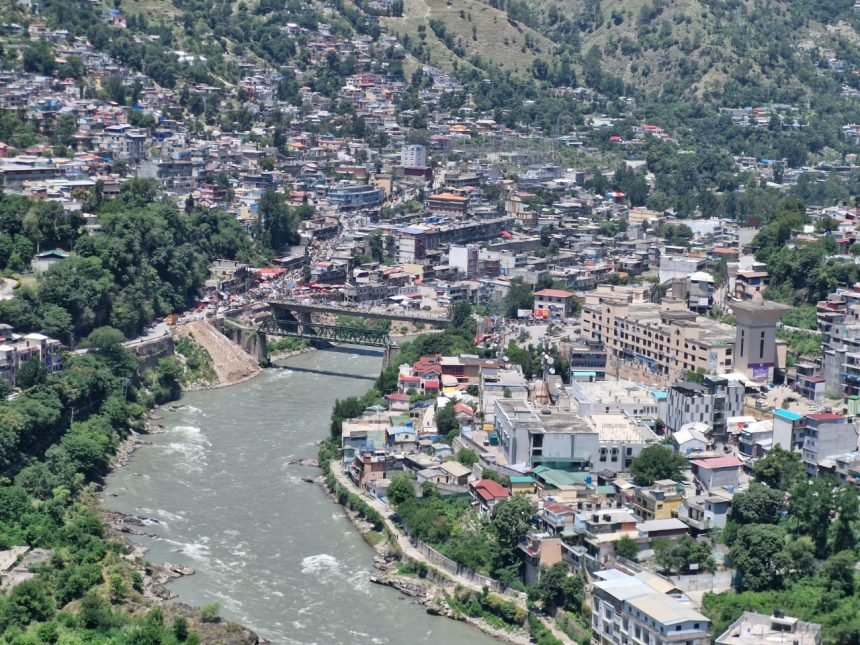
At least eight people, including five civilians and three police officials, were killed during clashes between security forces and the supporters of the Joint Awami Action Committee (JAAC) in Rawalakot (Kashmir), on the night between June 7 and June 8, informed Sardar Waheed, the Commissioner of Poonch Division.
However, a police official speaking on condition of anonymity, put the death toll to at least 10 people, including six civilians and four police personnel. He cautioned that the actual number of casualties could be higher.
Section 144 has been imposed in Rawalakot and Muzaffarabad, with local authorities using loudspeaker announcements to urge residents to remain indoors and keep children away from protest sites.
Mobile phone and internet services remain suspended across Azad Jammu and Kashmir, making independent verification of developments difficult.
Shooting at Burma Bridge
The violence began late on the night of June 6 when a group of JAAC leaders and supporters was returning to Rawalakot from a conference in Khaigla, around eight kilometres from the city.
When interviewed, representatives of JAAC claimed that unidentified armed men opened fire on the convoy near Burma Bridge, injuring a committee member and killing Shahzaib Habib, a close associate of the group’s leadership.
JAAC leader Umar Nazir, in a video statement is seen clearly blaming security forces for the attack.
“The FC and police attacked us, as a result of which our companion Shahzaib Habib has been martyred,” he said.
Following the killing, JAAC supporters took custody of the body from CMH Rawalakot and staged a sit-in outside the hospital. Family members said they would not proceed with the burial until those responsible were arrested.
Police have registered an FIR against unidentified persons in connection with the incident.
Hospital access restricted
Local journalist Ajmal Shaheen said he was unable to obtain official casualty figures from CMH Rawalakot after Rangers personnel stationed at the hospital prevented him from entering.
According to Shaheen, he was asked to leave his contact details and was told that a senior officer was unavailable.
An X-ray technician at a private clinic, speaking on condition of anonymity, claimed that Army medical personnel had taken over operations at the hospital and that access for outsiders had been restricted.
These claims could not be independently verified.
Residents also reported that shelling by police continued in parts of the city until Monday morning.
March in Muzaffarabad to proceed
Despite the violence, JAAC has announced that its planned June 9 long march on Muzaffarabad will proceed.
In statements issued after the clashes, committee leaders said the crackdown would not force them to withdraw their protest campaign.
Background to the crisis
The Joint Awami Action Committee is a coalition of traders, transporters, lawyers, students and civil society groups that has led major protest movements across Azad Jammu and Kashmir since 2024.
The movement first gained prominence in May 2024 when large-scale demonstrations over electricity tariffs and wheat prices brought much of the region to a standstill. At least three protesters and one police official were killed during clashes with law enforcement agencies.
Following those protests, the federal and AJK governments announced reductions in electricity and flour prices. However, several other demands remained unresolved.
In September 2025, JAAC launched another region-wide protest campaign based on a broader charter of demands. Fresh violence erupted in Muzaffarabad and surrounding areas before an agreement was signed on October 4, 2025, between the committee, federal ministers and the AJK government.
The government says it has implemented most of the agreed demands. JAAC disputes that claim.
After the expiry of the implementation deadline in January 2026, tensions resurfaced. On May 11, the committee presented eight additional demands. Negotiations again broke down on May 30 after JAAC formally demanded the abolition of 12 refugee seats in the AJK Legislative Assembly.
Dispute over refugee seats
The 53-member AJK Legislative Assembly includes 12 seats reserved for refugees from Indian-administered Jammu and Kashmir who settled in Pakistan after 1947.
JAAC argues that these seats allow Pakistan’s major political parties to influence electoral outcomes and government formation in Azad Kashmir.
The government and most political parties reject that position.
An All Parties Conference held in Muzaffarabad on June 4 unanimously opposed the demand for abolishing the seats. JAAC and PTI boycotted the meeting.
Prime Minister Faisal Mumtaz Rathore said the committee had been asked to postpone its June 9 protest to allow further consultations but declined to do so.
On June 7, the AJK Supreme Court issued an advisory opinion on a presidential reference, ruling that the refugee seats are protected under Article 22 of the AJK Constitution and cannot be removed through executive action.
The court stated that constitutional amendments must be made through the constitutional process and not under pressure.
Ban and crackdown
On June 5, the AJK government formally declared JAAC a proscribed organisation under the Anti-Terrorism Act 2014 and placed it in the First Schedule of the law.
More than 70 people associated with the organisation were subsequently arrested.
Authorities also issued a travel advisory urging tourists to avoid visiting AJK until June 20 and deployed additional police and Rangers personnel in sensitive areas.
Prime Minister Rathore ruled out negotiations with what he described as “agents of chaos”, while Federal Minister for Parliamentary Affairs Tariq Fazal Chaudhry accused the committee of creating instability despite government efforts to address its demands.
PTI criticised the ban and called for political and constitutional means to resolve the dispute.
As of Monday afternoon, Rawalakot remained under Section 144, casualty figures remained disputed, and tensions across Azad Jammu and Kashmir showed no signs of easing.