

May 11, 2026
By Shaukat Korai
KARACHI
The midnight knock
In 2026 the trouble began long before the first placard was raised. In a move that sent shockwaves through the activist community, the Karachi police moved to silence the movement at its source. Sheema Kirmani, the renowned classical dancer and social activist whose name is synonymous with the struggle for women’s rights, found herself not on a stage, but in a police station after being roughly handled. The authorities arrested the leadership and attempted to seal the gates of the Karachi Press Club, preventing a pre-march press conference – a preemptive strike against the very idea of gathering.
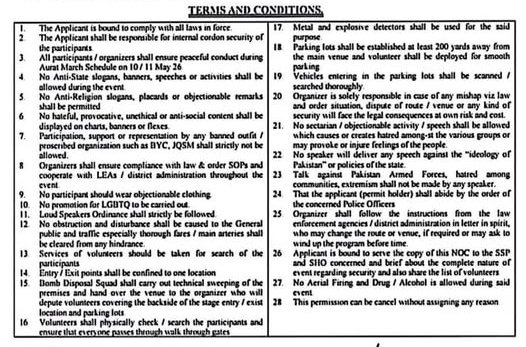
When the state finally relented, they did so with a “conditional NOC”—a piece of paper that felt more like a muzzle than a permit. The conditions were surreal: instructions on how the women should dress and a strict directive not to critique state policies. It also announced that the march organizers could not invite activists from “proscribed” groups like the Baloch Yekjehti Committee (BYC).
Massive banners draped across the venue screamed a simple, defiant fact: THE MARCH WILL TAKE PLACE, (March tou hoga). According to the organizers, attempts were made to stop the Women’s March this time.
Resistance
Despite the intimidation, the marchers gathered on main Seaview Road on Sunday. Although it was International Mother’s Day, the sentiment was far broader than traditional celebrations. Women from all walks of life, members of the transgender community and other gender minorities, human rights defenders, and socio-political figures began to pour into the streets. Sheema Kermani, undeterred by her recent detention, was also there. The air filled with the rhythm of the dhola, the chants of “azadi” (freedom), and the vibrant movements of tableaux that told stories of domestic struggle and public triumph. Amidst the slogans on the placards, one of the most seen was that for freedom of speech. Kirmani said that the demands of the Aurat March are very basic, including the right of women to speak, the end of outdated customs like Karokari, and an end to violence against women.
She said that she has been marching for eight years, but this year, the participants of the Aurat March have faced pressure, violence, and arrests, but despite this, women will continue to fight for their rights.
She said that half of the country’s population is women and if the political leadership wants their votes, women must be given their constitutional and human rights. She said that those involved in the murder and violence of women should be brought to justice, but due to weak investigation and shortcomings, most of the accused escape.
Criticizing the PECA Act, Sheema Kirmani said that it has become a law that affects every citizen. According to her, freedom of expression is being restricted and actions are being taken against those who express their opinions on social media. Anyone can be removed at any time. She termed the 28 conditions included in the NOC unacceptable and said that imposing conditions related to clothing is against fundamental freedoms.
The banners also included demands to eliminate corruption, gender based violence, clamping down on free speech, and granting fundamental rights to deprived sections.
The fight for the mic
The Prevention of Electronic Crimes Act (PECA) has become the new frontier of the struggle, not just for the press but for any citizen. The activists condemned th draconian law as a ‘digital cage’.Farieha Aziz, a prominent rights activist, and other leaders from the Human Rights Commission of Pakistan (HRCP) moved through the crowd, chanting against PECA and a shrinking horizon.
“The space for expression that existed in this country earlier? The rulers want to eliminate that too,” Aziz warned. Her words resonated with a crowd that had just seen their leaders arrested for merely trying to speak to the media.
She said that the state is also trying to eliminate the scope for freedom of expression. She said that restricting the march through NOC is actually an attempt to suppress the public voice and start a dangerous tradition of “language restriction” which is growing in the country as citizens are being prevented from speaking, protesting and expressing their dissent. Attempts are being made to stop people so that people do not come out, it has been made a tradition not to let people speak, this has been happening in Islamabad Press Club as well, now it is happening in Karachi Press Club as well, she added.
The march evolved into more than being just about gender – it became about social justice at large, and a fundamental right to exist and dissent in a society meant to be democratic. The march was aimed at deprived classes including working class, the missing persons and those who had been silenced.
Voices that won’t be muffled
As the procession moved forward, the irony of the government’s conditions became clear. The government had told them not to talk about state policy, yet every step they took was a critique of it. They had been told what to wear, yet their very presence in the public square was a reclamation of their bodies and their agency. Among the various demands echoing through the streets was a specific, poignant call for justice: the demand for the freedom of Imaan Mazari and her husband Hadi Ali Chattha.
As the sun began to set over Karachi, the “atmosphere of fear” that the state had tried to cultivate seemed to evaporate, replaced by a collective roar.
The organizers were clear: the state could enforce their laws through restrictive NOCs or draconian laws like PECA, but they could not suppress the emotions at ground level.
Actvists highlighted that the fact that the march was taking place, proved that voices could not be suppressed through fear, arrests, or any laws either.
HRCP leader Qazi Khizr said that the Constitution of Pakistan gives every citizen the right to protest and express their opinion, but the government tried to restrict the Aurat March through strict conditions of NOC. He also objected to the condition included in the NOC which allegedly mentioned preventing members of banned organizations from participating.
Qazi Khizr said that demands like protection of women and prevention of murder cannot be anti-state in any way. According to them, incidents of violence and murder against women are increasing at an alarming rate every day in the country, while slogans like “My body, my will” are presented in a wrong context, although its main purpose is to give women power over their lives and decisions.
Organizers and participants of the Aurat March said that despite creating an atmosphere of fear and pressure, the march is proof that voices cannot be suppressed. Participants said that youth and women will not remain silent on state policies and will continue to protest and struggle for their rights, no matter how many restrictions are imposed.
The march also demanded the release of lawyer and social activist Imaan Mazari and her husband.
There were several known activists who attended the march including Sajida Baloch (organiser Aurat March), Maha Ali Kazmi (Singer), Rania Jamaly (Participant), Zehrish Khanzadi (Transgender), Mehnaz Rehman (Aurat Foundation), and Luke Victor (Activist).