

May 9, 2026
By Rehan Piracha
LAHORE
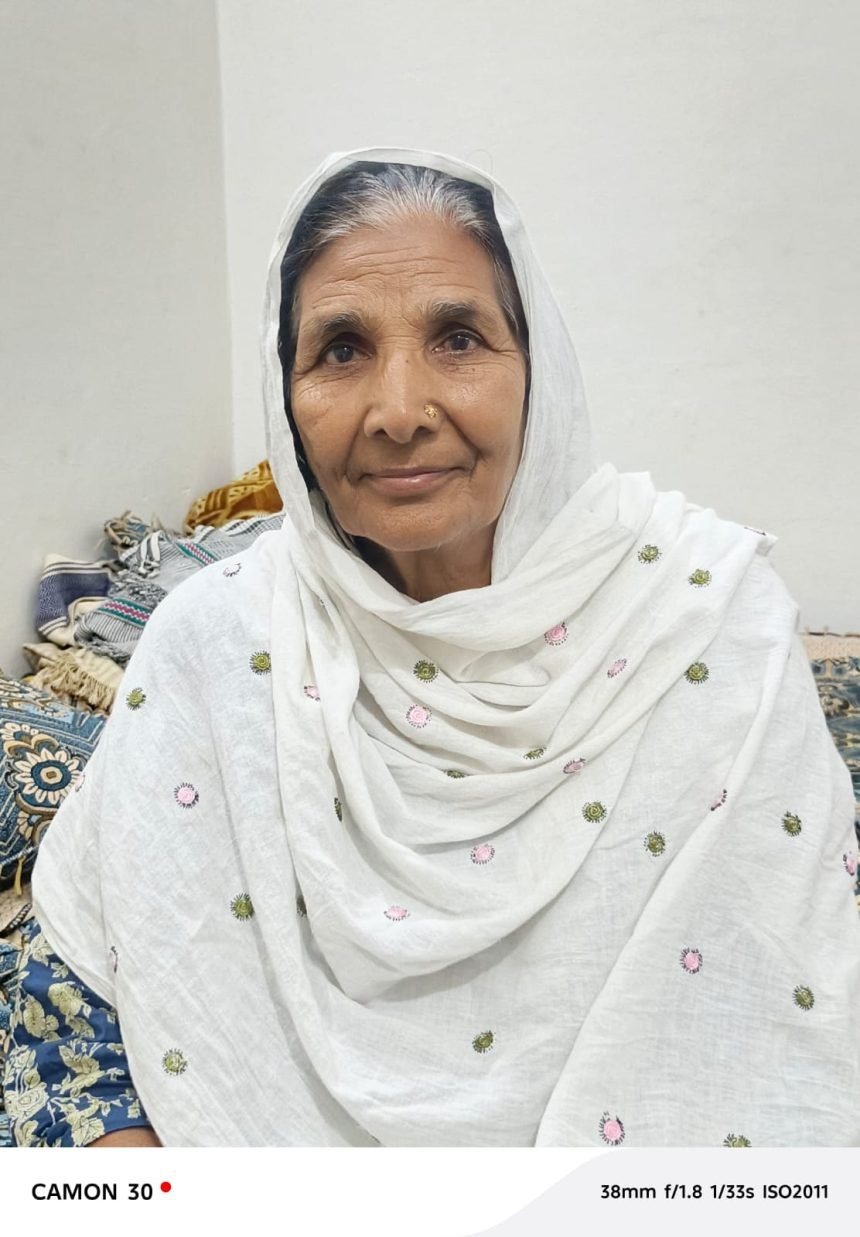
At 54, Kulsoom Akhtar has spent most of her adult life managing her village’s affairs. For 18 years, she served as Sarbarah Lumberdar, acting village headwoman. She was first deputised by her ailing, elderly father, and became the permanent successor upon his death in 2020. But the revenue bureaucracy of Lodhran district had other ideas.
A six-year legal battle followed, wounding through assistant commissioners, district collectors, the Board of Revenue, eventually landing at the Lahore High Court. Each stage set a new variation on the same theme: why this woman should not hold the post.
On May 7, the Lahore High Court finally put it to rest. In a landmark ruling, Justice Raheel Kamran Sheikh directed authorities to appoint Kulsoom Akhtar as the permanent lumberdar of Chak No. 360/W.B. in Tehsil Dunyapur, Lodhran district. The attempts to disqualify her on the basis of community affiliation were declared to be arbitrary, self-contradictory, and legally unsustainable.
A lifetime of service, dismissed on paper
Legal battle
Rather than accept the revised recommendation, the District Collector invented a finer distinction. Yes, all candidates were Gujjars — but within the Gujjar community, he argued, there were sub-castes. The male candidate, Muhammad Azam, belonged to the Gujjar Khari sub-group, which the Collector deemed numerically superior. On that basis, the marks Kulsoom Akhtar had been awarded under the “Community” head were withdrawn, and redistributed to her male rivals. The merit ranking flipped. In November 2022, Muhammad Azam was appointed permanent lumberdar.
She appealed to the Board of Revenue Commissioner, who remanded the matter back to the district level. But Muhammad Azam filed a revision application. In August 2024, the Member (Consolidation), Board of Revenue, Punjab, reversed the remand and reinstated Azam’s appointment. Kulsoom Akhtar took the matter to the Lahore High Court.
The court’s verdict
Her counsel, Syed Jawad Shahid Naqvi, argued that awarding her zero marks under the “Community” criterion was not merely unfair — it was logically incoherent. Kulsoom Akhtar’s own father had been the permanent lumberdar of the same village until his death. If the lineage now used to disqualify her had truly placed her outside the village’s dominant community, how had her father ever been appointed in the first place?
Justice Raheel Kamran found the argument decisive. In an eight-page judgment, he held that the concept of “community” in the lumberdar selection criteria is meant to assess whether a candidate belongs to the principal tribe or social group, whose standing would enable effective discharge of the role — not to permit the “endless fragmentation of a recognised tribe into narrower and narrower sub-castes until a candidate is rendered ineligible for any marks whatsoever.”
The District Collector’s reasoning, the judge wrote, was “intrinsically self-defeating.” The revisional authority at the Board of Revenue had compounded the error by affirming the Collector’s conclusion without independently examining whether the sub-caste bifurcation had any basis in the applicable rules.
On the broader principle, Justice Raheel Kamran was unequivocal: “This Court cannot remain oblivious to the contemporary constitutional ethos of equality, inclusion and fair participation of women in public life. No provision of law has been shown which disentitles a woman from holding the office of Lumberdar. On the contrary, where a female candidate otherwise satisfies the relevant criteria and demonstrates competence, experience and acceptability, her candidature must receive the same objective consideration as that of any male contestant… Any latent bias, direct or indirect, which diminishes a woman’s candidature for reasons unrelated to merit, cannot be countenanced.”
Both the District Collector’s 2022 order and the Board of Revenue’s 2024 order were set aside. Revenue authorities have been directed to issue the formal appointment notification within 30 days of receiving a certified copy of the judgment.
‘She never gave up’
Meanwhile, Kulsoom Akhtar’s son, Athar Gujjar, says that the family welcomed the judgment and described his mother as a woman of ‘exceptional resolve’.
“She performed the function of a village headwoman in a predominantly patriarchal society for over two decades,” he told Voicepk, “while also raising four children.” He said the family hoped the ruling would open doors for other women in similar positions across rural Punjab.
Kulsoom Akhtar will be the first female lumberdar in Tehsil Dunyapur — a distinction that took 18 years of unpaid public service and six years of litigation to formalise.