

April 13, 2026
By Xari Jalil
LAHORE
After two members of Quetta’s Hazara community were killed by unidentified gunmen on Sunday, the community is questioning their security. The unprecedented attack also left at least three others in critical condition. The Hazaras – who predominantly belong to the Shia sect – have been left shattered, afraid and angry since the incident especially since the intense violence faced by the community for a long time, had faded away over the past few years.
Those who have been killed by the firing are Moosa Khan and Ahmad Ali, while those injured are Rajab Ali, Chaman Ali, and Jafar Ali.
After the incident the Balochistan Chief Minister Sarafaraz Bugti took to X and posted his condmnation of the incident.
“Taking serious notice of the tragic firing incident in Quetta’s Hazar Ganji, the Interior Department has sought an immediate report from the Interior Department and IG Police. This cowardly and reprehensible act cannot be tolerated under any circumstances. I share equally in the grief of the affected families and have directed that the injured be provided with the best and immediate medical assistance. Peace-disrupting elements will never escape the grip of the law. The state will take action with full force against those who toy with the lives and property of innocent citizens.”
But the dissatisfaction of the government’s overall indifference among the Hazara community is strong.
Political issues
Chairman of the Hazara Democratic Party (HDP), Khaliq Hazara, spoke to Voicepk, strongly condemned the incident and those behind it, but also criticized the government towards the Hazara community’s security issues.
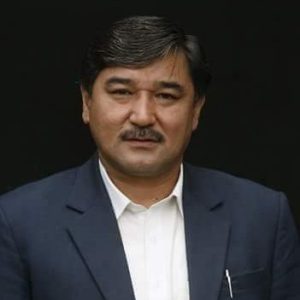
“There is no ‘security’ here,” he said. “”There is no ‘government’ here, just outside forces that do as they please. Even the person who should have won the seat from this area has not been given his due seat. Instead some other person who does not even have the votes and the support was given the seat. But if you ask him about this incident against the Hazaras and he will have no idea what you are talking about.”
Khaliq is referring to MPA Abdul Samad Khan Gorgage, who contested the general elections in 2024 as a candidate from the PPP, and reportedly secured above 9000 votes, while his runner-up was Qadir Ali of Hazara Democratic Party secured over 5000 votes.
“When we talk to the authorities about providing us with security, they offer that we shift main business centers such as the sabzi mandi or other markets to the other end of town,” complained Khaliq. “Is this the way to handle our safety issues? Should we just move everything away and alienate the Hazara community leaving them to fend for themselves?”
Khaliq adds that for the past five or six years there had been no violent incidents.
“This is actually not the first incident,” he said. “A similar attack took place in March and we realized at that time there was tension between Iran and Saudi Arabia. An man identified as Jan Ali Hazara, who owned a tire shop – was killed by unknown armed motorcyclists, also in the Hazar Ganji area of the district. No one took reponsibility but some people said Daesh was behind it. We have never had any pro-Iranian elements, because we identify as Pakistani, but only because we belong to the Shia community they target us to create sectarian conflict.”
Liaquat Ali, a political worker also mentions the incident that took place some time ago, killing Jan Ali Hazara, an elderly man who owned a tyre shop.
“It was the exact same way in which he was killed,” he says. “For 30 years the Hazaras have been living in fear of being ethnically cleansed and yet not even one perpetrator has ever been arrested or punished by the police.”
Regional tensions
In 2021, MPA (HDM) Qadir Nayel, raised the point of security in the assembly. He said that many people from the community had been killed, shedding the blood of innocents like ordinary vegetable sellers, students and even women. In the assembly session he had highlighted that the Iranian revolutions of had had negative effects on the community.
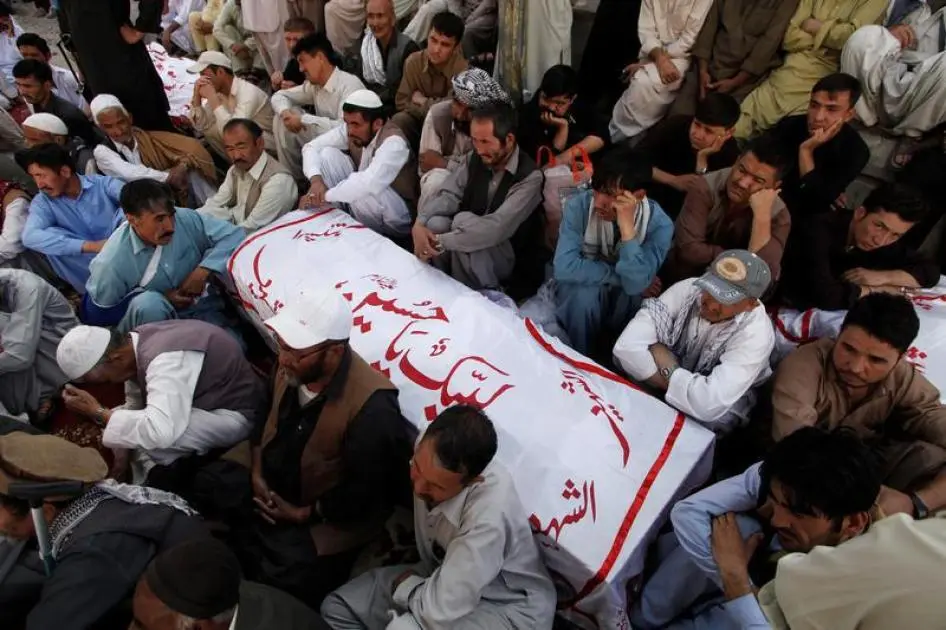
In 2021, a massacre of the Hazara community in Machh led to a massive protest where they blocked roads. This time the target was coal miners in the Bolan district, who were predominantly Hazaras. At least 11 coal miners were shot dead after armed men barged across the coal field in Machh. The assailants took the miners to nearby mountains, and shot them. Four were seriously wounded.
Hazar Ganji itself has been a locality where many Shia Hazaras have been targetted in the past. In 2019, at least 20 people were killed and 48 injured in a blast believed to be targeting members of the Hazara community in Quetta’s Hazarganji market.
“The killings of the Hazaras had reached a peak before stopping, in fact there has been little violence since some time now,” says Habib Tahir, who heads the Balochistan chapter of the Human Rights Commission of Pakistan (HRCP). “Before this hundreds of people were being killed during one incident.”
Previously, terrorist organisations like the Lashkar-e-Jhangvi or Lashkar-e-Taiba have accepted responsibility for conducting attacks on Hazaras.
For instance in March 2012, eight people were killed in Quetta. In the first attack, assailants opened fire on a bus full of passengers travelling from Hazara Town towards Quetta city. They fled before they were caught while those they attack lay bleeding to death on the roadside. Before this, in September 2011, a group of men and women travelling to Iran were stopped by armed assailants. The attackers told the women, children and the driver of the bus, who was not Hazara, to remain inside.
All the men and boys were taken out of the bus, lined up on the road outside and shot. Twenty nine (29) people were killed in this massacre on the highway. The incident took place in Mastung, near the border with Iran.

In January 2013, at least 100 people were killed and 170 wounded in suicide bombings at Quetta’s Alamdar Road. A month later, over 70 were killed as yet another bomb ripped through a crowded market in the provincial capital’s Akhtarabad neighbourhood. In June the same year, more than a dozen people died when a bomb exploded inside a bus carrying students of the Sardar Bahadur Khan Women’s University, followed by a gruesome suicide attack and an exchange of gunfire at the Bolan Medical College Hospital’s emergency ward where the victims were transported.
Similar incidents were reported in various cities of Balochistan, including Mastung, Noshki, Hanna Valley, Taftan, and Ziarat.
Now as the sensitivity in the region has increased, the vulnerability of the Shia-Hazara community has also increased proportionately.
“Obviously many of the terrorist elements must still be around, silently underground,” says Habib Tahir. “But Daesh has operatives across the region it is not limited to just local ground.” But he asks rhetorically, “Whenever it is needed, Daesh is activated, when it is not then it keeps a low profile,” without saying who is behind these decisions. However Tahir adds, that none of the anti Hazara organizations were active until the tensions in Iran began.
Sunday’s incident
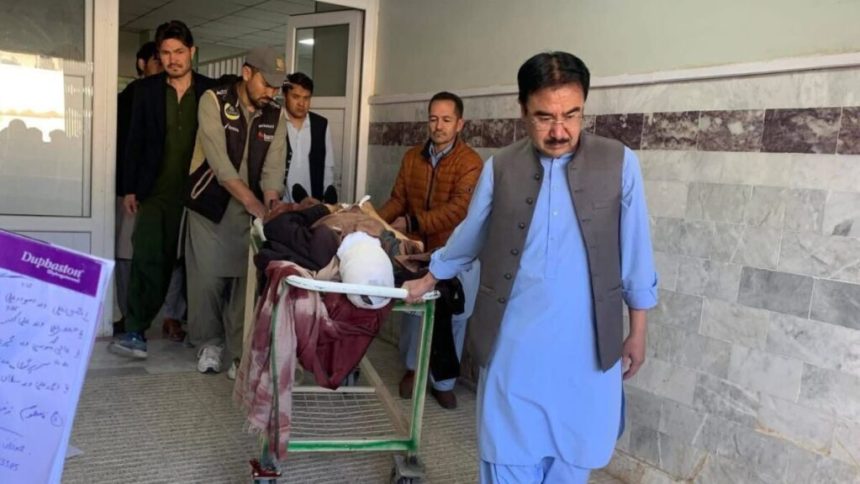
Liaquat Ali, a political worker, who is from the Hazara community told Voicepk that the vegetable sellers were travelling in a rickshaw on their way from a wholesale vegetable market of Hazara Ganji, when they were shot at. The incident took place on the morning of April 12. According to reports by eye witnesses, the assailants opened fire on the victims before fleeing the scene.
All five passengers were from the Hazara community and residents of the Brewery neighborhood in Quetta.
“We do not know who is behind this,” he said. He added that active militant groups in Balochistan included the BLA, TTP and Daesh however he said none had accepted responsibility of the incident.
Meanwhile in Sunday’s incident, the police has announced the killing of the four men recently as a targetted killing, but no attribution was given to any organization or gangs.
4 Killed as Deadly Attack Targets Hazara Community in Quetta, Pakistan
At least four members of the Hazara community were killed in a tragic attack by unidentified gunmen in Quetta, Balochistan, Pakistan.
The incident occurred on Sunday morning (12th April) in the Sabzi Mandi… pic.twitter.com/bV9gLg2Dhb
— Aamaj News English (@aamajnews_EN) April 12, 2026
“They were going back to Hazara town and when they reached the Akhtarabad area … unknown armed men riding motorcycles opened fire at the vehicle, killing two on the spot and injuring three others,” senior police officer Muhammad Khair Sumalani told media after the incident.
Soon after the shooting, police and paramilitary personnel rushed to the site and moved the bodies and the injured to hospital.
In the aftermath of the attack, the Hazara community blocked the western bypass, suspending all traffic. Local administration deployed a heavy contingent of security forces to the area to avoid any untoward incident as officials negotiated with protesters to open the road. The government maintains that no one has claimed responsibility for the killings, but that the police have launched an investigation and a search operation to find the attackers.
The Hazarganji area has been the site of numerous past attacks, including bombings and shootings that have targeted vegetable sellers. Hazaras are disproportionately targeted by sectarian violence as they are easily identifiable due to their distinctive physical appearance.
Meanwhile, a report released by the National Commission for Human Rights (NCHR) in 2018 stated that 509 members of the Hazara community were killed and 627 were injured in various incidents of terrorism in Quetta from January 2012 to December 2017.