

March 25, 2025
Staff Report
LAHORE
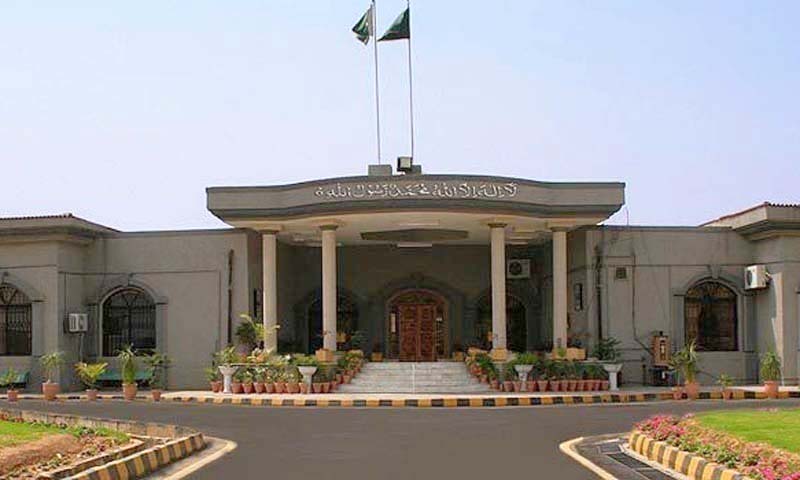
The Islamabad High Court (IHC) conducted a hearing on Tuesday on a petition demanding a judicial commission to investigate alleged evidence fabrication in blasphemy cases. Proceedings were live-streamed according to the court’s March 21 directive.
Presiding Justice Sardar Ejaz Ishaq Khan oversaw arguments regarding what petitioners term an ‘organized blasphemy blackmail racket’, marked by sharp exchanges over the commission’s necessity.
Sajjad Akbar, representing the alleged racket member Shahzad Khan, challenged the commission’s formation, citing that the Punjab Police has disavowed its own January 2024 Special Branch report (which first exposed the gang’s modus operandi) before the Lahore High Court.
In January 2024, the Special Branch revealed that a suspicious gang was trapping young people in blasphemy cases and extorting money in collusion with some Federal Investigation Agency (FIA) officials. The report recommended that a probe be launched to “dig out discreet activities of the gang.”
The counsel argued that the Fact Focus website that published an investigative news story based on the Special Branch report is accused of spreading disinformation and already banned by the Pakistan Telecommunication Authority. He argued that the petitioners were the family members of the accused individuals rather than the accused themselves.
He contended that dual proceedings (existing trials of the accused in addition to the commission) were untenable in the law. The petitioners claimed that their family members were entrapped by sharing content on Facebook but the FIA in its investigation concluded that the accused had uploaded blasphemous content themselves on the platform, the counsel argued.
Lastly, the counsel argued that if the FIA had not intervened in such complaints, public vigilantism could have erupted, leading to mob violence. When Justice Khan questioned, “Then who should act if not the FIA?” the lawyer insisted a commission was unnecessary since parallel trials were already underway.
Justice Khan emphasised that counsels should focus on whether a commission is justified, stating: “Don’t make me into a commission—let me decide based on the case’s merits.”
The hearing will resume tomorrow with arguments from Kamran Murtaza, who is representing Hafiz Ehtasham, another member of the alleged blasphemy business gang. Hafiz Ehtasham is the complainant in four cases of blasphemy.
In the last hearing, the court expressed dissatisfaction over the government’s response to the petition, terming it slow and incomplete. The matter, which affects hundreds of lives, has seen little progress since the initial directive was issued on Sept 13, 2024.
The court highlighted the interior ministry’s failure to provide a definitive statement on whether an application for constituting an inquiry commission had been received or not. Similarly, the Federal Investigation Agency had also not clearly stated whether the evidence in question had been fabricated or planted.
A key document in the petition is a January 2024 report from the Special Branch of Punjab Police, which suggests that individuals have been deliberately targeted and falsely accused of blasphemy as part of an organised blackmailing scheme.
These allegations, first raised in September last year, claim that young men and women have been entrapped in false blasphemy cases for the purpose of coercion and extortion. According to petitioner’s counsel Usman Warraich, the Special Branch report reveals a disturbing pattern of abuse that demands urgent legal scrutiny.
The petitioners have arrayed the National Commission on Human Rights (NCHR) as respondent for publishing a comprehensive report in October last year about its investigation into blasphemy cases from 2023 to 20224. The NCHR, represented by the AGHS Legal Aid Cell, has furnished its report to the court. The NCHR report on blasphemy cases had called on the government to constitute a joint investigation team into the motives and actions of private entities involved in the entrapment and exploitation of individuals accused of blasphemy.