

Sept 7, 2024
By Asmatullah Niazi
Since its inception, Pakistan has never seen a decline in population growth. In fact, it has always faced pressure from rapidly increasing population.
At the time of the fall of the eastern wing of Pakistan (now Bangladesh) in 1971, the eastern wing was far ahead in headcount, with a population of nearly 68,376,204 (growth rate 1.24 percent). In contrast, the population of the western wing (present-day Pakistan) was lower, at 60,878,781 (growth rate 2.68 percent). This resulted in a sharp decline in headcount in Bangladesh and a rise in Pakistan.
The United Nations projected that Pakistan’s population would surpassed the 240 million mark in 2023, and might touch 245 million by July 2024 – and further impact the already under-pressure resources.
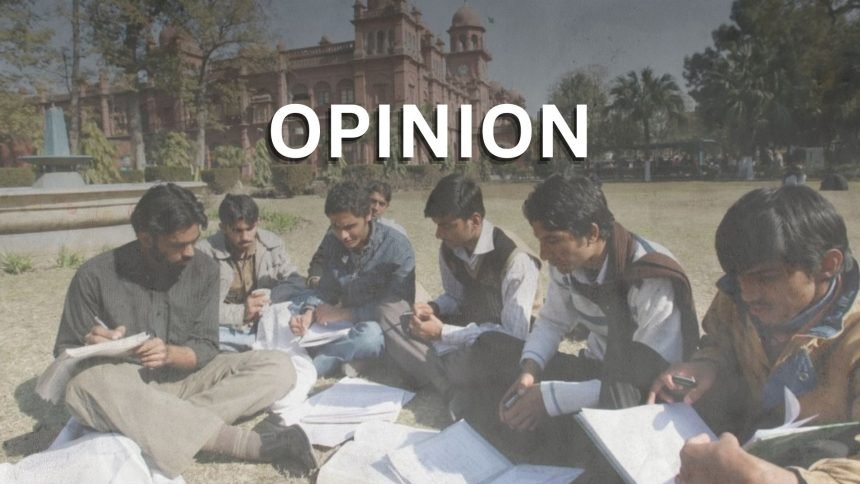
The UN report suggested that out of 240 million population, two third of the population would be based on youth aged 24 or below. “The phenomenon known as a youth bulge arises when advances in medical care lead to a decline in infant mortality rates, while concurrently, high fertility rates persist,” the UN report explained.
This factor is resulting in serious demographic challenges in utilising the energetic human resource by creating jobs and employment opportunities. However, successive governments, both democratic and dictatorial, have failed to utilise this rising young population due to various reasons – a lack of planning, expansion in private and public sector industries and corporate sector, new avenues of growth in the economy. Also, favoritism and nepotism in the already constrained employment market further hindered opportunities for the youth in the country. They eventually turned against parliamentary democracy in Pakistan.
Instead of taking concrete measures to handle the phenomenon of the ‘youth bulge,’ the successive governments adopted gimmickry, like laptop schemes, cell phone distribution, yellow cab schemes and other such schemes. This resulted in economic turmoil as well as a brain drain particularly in 2019 and 2020.
The ‘Pakistan Migration Report 2024,’ compiled by the Centre on Migration, Remittances, and Diaspora (CIMRAD) at the Lahore School of Economics, reveals that 300,000 young people migrated from Pakistan in 2021, which surged to 862,000 in 2023.
While raising alarm bells, the report says, “The irregular migration remained a concern, especially in Europe in 2022, making Pakistanis one of the top 10 nationalities entering Europe illegally.”
Only 15 percent of Pakistani asylum applications succeed, and 14.3 percent of repatriation orders were executed in 2021, the report states.
Currently, about 2.3 million freelancers are working from Pakistan, and earning a reasonable and respectable income, using laptops and Internet. However, in the last many weeks, slow Internet has heavily impacted their workload. They might lose their jobs if the authorities do not address the issue.
The Pakistan Software Houses Association (P@SHA) warned in mid-August that the country’s economy could lose up to $300 million due to Internet disruptions caused by the imposition of a national firewall. Such scenarios are driving the young population towards growing disillusionment with the already weakened parliament and parliamentary democracy. The ‘miltablishment’ is increasingly overtaking a share of resources not only from the youth but also from the entire population.
Former senator Farhatullah Babar raised a serious argument during a recent public talk in Islamabad. He said, “They [youth] are disheartened and frustrated with parliamentary democracy, and it’s a new element in Pakistan. Don’t look at their numbers, they might be few, but their slogans and narrative are catchy and attracting others and gaining ground.”
He further said, “Investigations against former spy chief Faiz Hameed are a result of infighting within the institution though, but there should be a demand for terms of reference for the inquiry, and its scope should not be limited to the May 9, 2023 incidents but broadened to how he was interfering and controlling the parliament and the judiciary through former CJP Saqib Nisar. This might restore people’s trust in politics and democracy.”
General Secretary of National Party Jan Muhummad Buledi pointed out that the PPP, PML-N and PTI not only failed to establish democracy but also ignored youth in their constitutions – “Instead of looking towards the people, the ruling and opposition parties look towards the military establishment.”
Pakistan is victim of military dictatorships, where parliament and parliamentary norms could not be strengthened. Dr Atif Mian, who is professor of Economics, Public Policy and Finance at Princeton University, distinguishes Pakistan from rest of the countries in South Asia. He says, “Pakistan is not a typical developing country. It differs ‘systematically’ from countries at similar levels of income per capita. Pakistan invests a third less than the average country at its income per capita. Pakistan’s child mortality rate is way higher, and literacy rate significantly lower. Its female labor force participation rate is less than half that of developing countries at similar income level.”
He adds, “114,000 more children die every year in Pakistan – children who would not have died had they lived in another country with similar income level like Bangladesh. There are 17.3 million additional illiterate adults living in Pakistan – individuals who would have been literate if they had lived in another equally poor country. There should have been 16.6 million more women in the labor force if Pakistan had the average female labor force participation for its level of income”.
On an optimistic note, the creation of space not only in politics and the political system but also in materialising the potential of youth in the national economy, through heavy investment in tapping their true strength, will restore the confidence of the youth and nurture sizable, developed, and trained human resources, yielding fruitful results.
The writer is a senior broadcast journalist. He can be reached at asmatniazi@gmail.com
X (twitter) @AsmatullahNiazi