

August 07, 2026
By Iqra Manzoor
LAHORE
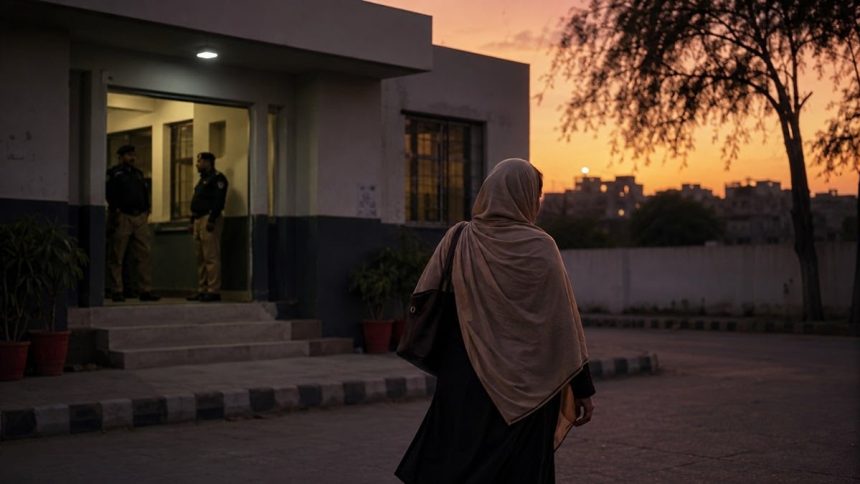
A day after Lahore Police issued new standard operating procedures (SOPs) regarding complaints, inquiries and investigations involving women at police stations, DIG Operations Kamran Faisal has clarified that the directive does not amount to a blanket ban on women’s access to police stations after sunset.
“The statement has been portrayed in a wrong way and there is no ban on women in police stations after sunset.” — DIG Operations Kamran Faisal
The clarification comes after the SOPs — issued in the wake of the alleged rape of a woman inside Ghaziabad police station — drew sharp criticism from lawyers and women’s rights advocates, who called the move regressive and warned it risked restricting rather than protecting women’s access to justice.
What the SOPs actually say, DIG clarifies
Speaking exclusively to Voicepk, DIG Faisal said the SOPs were never meant to bar women from police stations at night. “The statement has been portrayed in a wrong way and there is no ban on women in police stations after sunset,” he said. “The SOP was there to ensure that the complaints of women should be prioritized and that a woman who is required to come to the police station for an inquiry or investigation purpose should be summoned in the daylight and that the presence of a lady constable with the woman complainant or accused should be ensured.”
He explained the reasoning behind the directive: “The ratio of complaints by women at the police stations is higher than that of men, and these complaints also include minor crimes like online fraud or theft, so the SOP was for this situation. Of course, if there’s going to be an emergency situation, every citizen has the right to come to the police station at any time to get their complaint registered as an FIR, and there is no second thought on this — no woman is stopped from coming to the police station at night.”
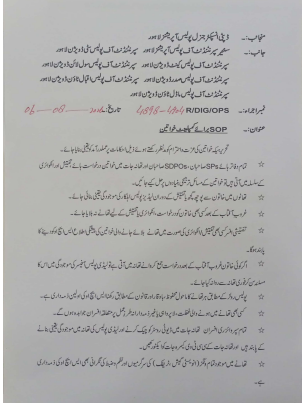
The SOPs notification, provided to Voicepk by Lahore Police, outlines the following directives issued by DIG Operations:
- All SPs, SDPOs and police stations should prioritise complaints regarding investigation and inquiries for women’s issues.
- During any investigation or inquiries at police stations involving women, the presence of a female constable should be ensured.
- After sunset, no woman should be summoned at the police station for a complaint, inquiry or investigation.
- Investigation Officers have to inform the SHO of the police station if any woman is summoned at the police station for investigation or inquiry purposes.
- If any woman comes to the police station to register her complaint after sunset, her issue should be listened to in the presence of a female officer and she should be sent from the police station immediately.
- Every police station’s environment should be safe, dignified and in accordance with the law, according to police rules, and this should be the responsibility of the SHO of the police station.
- Any negligence, carelessness or irresponsible behaviour/action, the concerned officers will be responsible for it.
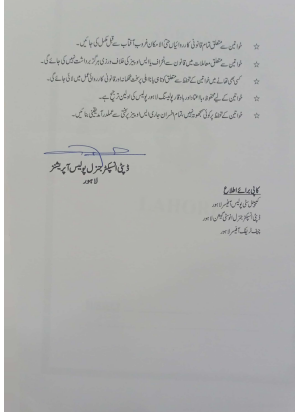
- All supervisory officers are bound to check the duty rosters and ensure the presence of lady police at police stations, and CCTV cameras have to remain active.
- The SHO is responsible for all the activities and discipline of all the wings of the police station (Investigation, Traffic).
- All legal proceedings involving women should be completed before sunset.
- Any violation of law or SOPs concerning matters related to women will not be tolerated.
- Any negligence or incompetence relating to women’s safety at any police station will result in a strict departmental inquiry.
- Protective, safe, reliable and dignified policing is the first priority of Lahore Police.
- No compromise on women’s safety; all officers are required to strictly ensure the SOPs.
Faisal said the two incidents had also contributed to his decision to issue the new SOPs, though they were not the only reason behind the directives. He linked the SOPs to the alleged custodial deaths of two women at Lahore’s Township police station in early August 2026 after being handed over by local residents on theft allegations, and the alleged rape of a mentally disabled woman inside Ghaziabad police station on August 2, 2026, allegedly by an assistant sub-inspector.
He added that the mass suspension of all 78 staff members at the Ghaziabad police station was intended to serve as a deterrent.
SOPs are not enough on their own
Shabbir Hussain, an advocate of the Supreme Court and senior law associate at AGHS told Voicepk the SOPs were a step in the right direction but far from sufficient. “The issuance of these SOPs is a welcome step but they should not be mistaken for a complete or adequate response. Experience has repeatedly shown that policies and SOPs, however well drafted, do not by themselves prevent abuse. Unless they are rigorously implemented, closely monitored and consistently enforced, they risk becoming little more than a procedural or symbolic response to serious institutional failures.”
“The alleged rape of a mentally disabled woman inside a police station demonstrates that the real issue is not the absence of written procedures but the failure to ensure compliance with them. It reflects serious deficiencies in supervision, command responsibility and institutional accountability. In these circumstances, the issuance of SOPs alone cannot restore public confidence or guarantee the safety of women and children in police custody or at police stations.”
“The issuance of SOPs alone cannot restore public confidence or guarantee the safety of women and children in police custody or at police stations.” — Shabbir Hussain, Advocate, Supreme Court / AGHS
The advocate said the SOPs also fall short on protections for the most vulnerable. “While the SOPs contain important procedural directions regarding the treatment of women complainants, they do not adequately address the additional safeguards required for children and other vulnerable persons. Specific child-sensitive policing protocols, mandatory safeguards during interactions with minors and clearly defined accountability mechanisms are essential.”
They outlined what should accompany the SOPs going forward: “Alongside strict implementation of these SOPs, there must be regular training on gender-sensitive and child-friendly policing, mandatory presence of female police officers during all interactions with women and children, an absolute prohibition on any woman or child being dealt with by a lone police officer, effective CCTV coverage and real-time monitoring, designated interview rooms and active supervisory oversight to ensure that these safeguards are followed in practice.”
On accountability, the advocate was direct: “Responsibility cannot end with the individual accused officer. Failures of prevention, supervision, reporting and command must also be investigated and officers who fail in their supervisory duties should be held accountable through appropriate disciplinary and where applicable, legal proceedings.”
“Ultimately, public confidence will not be restored by the issuance of SOPs alone. It will be restored only when those SOPs are translated into everyday policing through effective implementation, independent oversight, meaningful accountability and a clear institutional commitment that violations will attract swift and proportionate consequences, regardless of the rank of those involved,” they said.
“Illogical and horrifying”
Sabahat Rizvi, advocate of the Supreme Court and the former secretary of the Lahore High Court Bar Association, was far more critical of the directive itself. “This directive or SOP by the DIG is completely illogical and horrifying for women’s rights. Such notification should not have been issued in the first place which has later to be clarified,” she said.
“This directive or SOP by the DIG is completely illogical and horrifying for women’s rights.” — Sabahat Rizvi, Advocate, Supreme Court
Rizvi argued the police response went in the wrong direction entirely. “Instead of raising awareness and sensitising police on women’s rights, they are restricting women’s access to the police stations. The right to protection is a constitutional and fundamental right of every human, and women are also human, so why treat women differently?”
She also took issue with how the directive was framed. “The term ‘sunset’ is itself problematic in this context — Are we still living in the cave age? Should women stop getting out of their homes after sunset? Reforms are needed and police need to be sensitised regarding this. The Ghaziabad police station case is, I believe, a custodial rape, and it has very strict implications in every country.”
Rizvi said the problem extends beyond individual officers to the culture within police stations. “Even women police constables torture women in police stations and do not follow the protocols in accordance with the law, so there is a need to address the issue from its roots — such SOPs are not going to help anyway,” she said.