

July 29, 2026
By Rehan Piracha
LAHORE
Despte an ongoing security operaion in Balochistan, militants continue to target police personnel across the province, with a senior officer having been abducted and killed in Barkhan district recently.
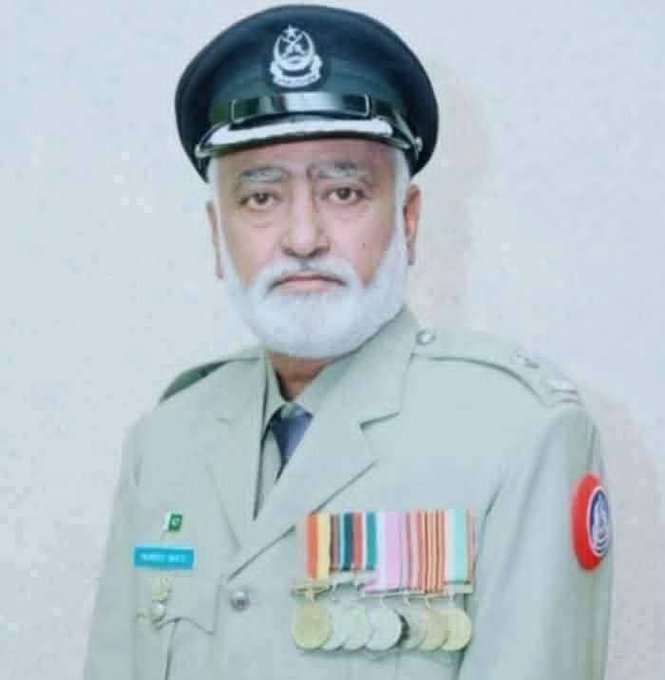
Deputy Superintendent of Police (DSP) Mureed Bugti was traveling from Rakhni to Barkhan in his private vehicle, when unidentified armed men intercepted him. The gunmen abducted the officer along with his security guard and later shot him dead, said provincial authorities.
Funeral prayers for the martyred officer were offered at AC Ground in Sui, where the SP of Dera Bugti, tribal elders, and members of the public gathered in large numbers to pay tribute.
Babar Yousafzai, advisor to the Home Department, honored the slain officer in a post on X, writing that DSP Bugti “fought bravely against the terrorists of Fitna al-Hindustan until his last breath” and refused to surrender his weapon before his death.
Curfews imposed amid rising attacks
Separately, authorities imposed a three-day curfew across Nushki district on Tuesday following an attack on a security forces’ checkpoint. An indefinite curfew also remains in force in parts of Mastung district, where militants have repeatedly targeted travelers and security personnel along the Quetta–Karachi highway.
According to a Home Department notification, the Nushki curfew is to take effect from 8 p.m. Tuesday until 8 p.m. on July 31, with a complete ban on leaving homes or moving without permission. Public gatherings, processions, and non-essential travel have also been prohibited, though the Deputy Commissioner has been authorized to grant exemptions to government employees and medical, rescue, and utility staff.
A rising toll on police forces
Police personnel have increasingly borne the brunt of militant violence in the province. At least 27 officers were killed in the July 6 attack on the Ziarat checkpost and the clearance operation that followed. In response, authorities launched Operation Shaban, a security offensive aimed at dismantling militant networks across Balochistan. Officials say 143 militants have been killed since the operation began, and intelligence-based operations against armed groups continue.
Speaking on condition of anonymity, a police official who has served as a sub-divisional police officer in Balochistan told Voicepk that attacks on police have risen sharply because militants now view the force as a soft target.
“Previously, the militants and insurgents used to target mostly paramilitary and army personnel in Balochistan, but now they regularly attack police personnel, considering them part of the state apparatus — which was not the case before,” he said.
He described the security situation in the province as akin to a full-blown insurgency, one for which the police are ill-equipped. Unlike other security forces, he noted, police cannot retreat into fortified stations; they are typically the first responders to any incident, which leaves them exposed.
According to the official, authorities and security institutions have adopted a defensive posture, with personnel largely avoiding hot-pursuit operations that could result in casualties. “There are no-go areas in the province, and militants now take over small towns for two to three days,” he said.
The killings have also drawn public protest. Families of policemen martyred in the deadly attack held a sit-in at Quetta’s Koyila Phatak for nine consecutive days, keeping the martyrs’ bodies with them throughout the protest. The families demanded the arrest of those responsible for the attacks and called on authorities to restore security in the province.
The government eventually agreed to their demand to constitute a judicial commission to investigate the tragic incidents in Hanna Urak and the Mangi Dam area of Ziarat.
Calls for a shift in strategy
In an opinion piece for the Arab Times a couple of weeks ago, the former Inspector General of Police Dr. Syed Kaleem Imam — who served for many years in Balochistan — argued in an opinion piece for the Arab Times that the province’s security-centric approach has failed to produce lasting peace.
He pointed to the recent wave of attacks in Ziarat, Hanna Urak, and the wider Pashtun belt, along with continued violence in Mastung and Chagai, as evidence that “the challenge persists.”
More troubling, he wrote, were reports that in some areas, local communities had negotiated the release of abducted individuals while formal state institutions struggled to respond. “Perhaps it is time to admit that relying primarily on force is not a sustainable policy,” he wrote.
Imam identified a recurring institutional weakness that those held accountable for outcomes in Balochistan are rarely the ones who make the decisions, while decision-makers are seldom held responsible for the consequences. The greatest casualty of this disconnect, he argued, is the ordinary citizen, whose voice remains largely absent from the process.
He also questioned why authorities continue to overlook institutional shortcomings that professional organizations elsewhere address through honest after-action reviews. In his view, the solution is not to abandon security operations where necessary, but to rebuild public trust — through sustained dialogue with communities in Balochistan that have grown increasingly estranged from the state.