


June 5, 2026
By Muhammad Junaid
LAHORE
As the world observes World Environment Day under the slogan #NowForClimate, Pakistan, among the countries most vulnerable to climate change, braces for yet another season of extreme temperatures, erratic rainfall and possible flash floods.
In the 2025 Global Climate Risk Index, Pakistan was ranked as the most affected country globally by extreme weather events in 2022, largely due to catastrophic super floods that inundated nearly one-third of the country, leaving over 1,700 people dead. The floods affected more than 33 million people and caused losses worth $14.9 billion.
Last year again, weeks of relentless monsoon rains brought widespread devastation. The National Disaster Management Authority (NDMA) reported over a thousand deaths between early June and September, while nearly seven million people were affected by monsoon floods, according to the International Federation of Red Cross and Red Crescent Societies (IFRC).
But this year’s monsoon may unfold differently for Pakistan.
In its latest outlook for South Asia, the World Meteorological Organization (WMO) has predicted that the region is likely to receive below-normal rainfall between June and September. At the same time, it warns that temperatures are expected to remain above average, raising concerns over water availability and agricultural productivity.
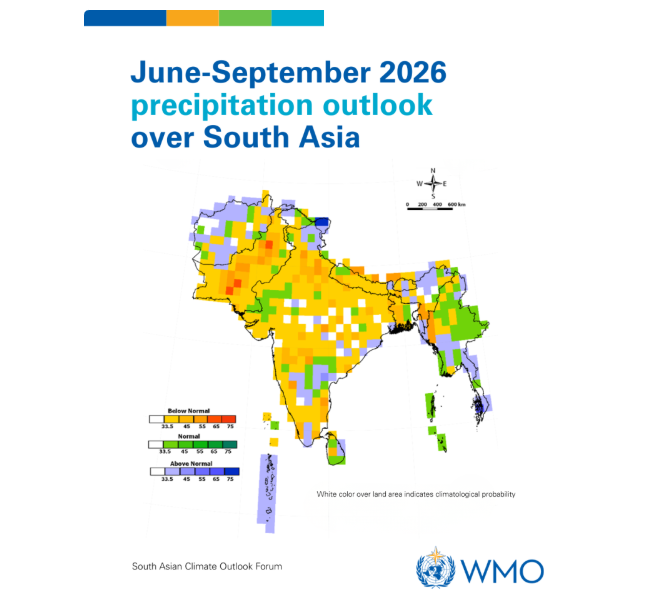
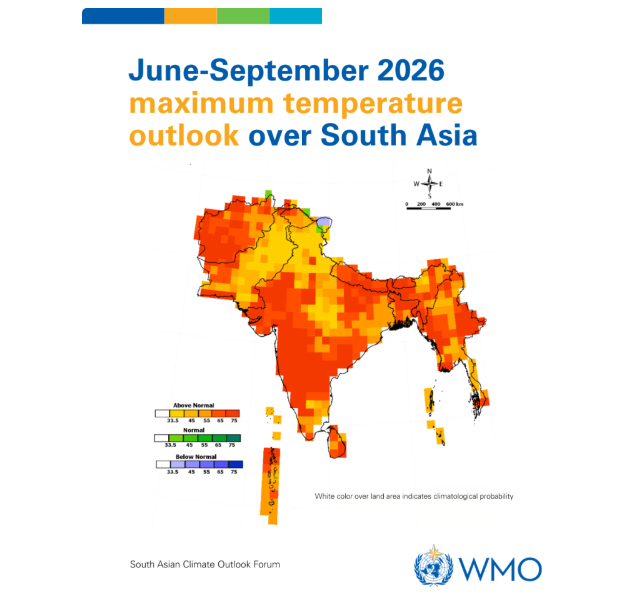
The WMO cautioned that higher temperatures could compound the impact of reduced rainfall by increasing evaporation rates and depleting soil moisture, even in areas that receive seasonal precipitation.
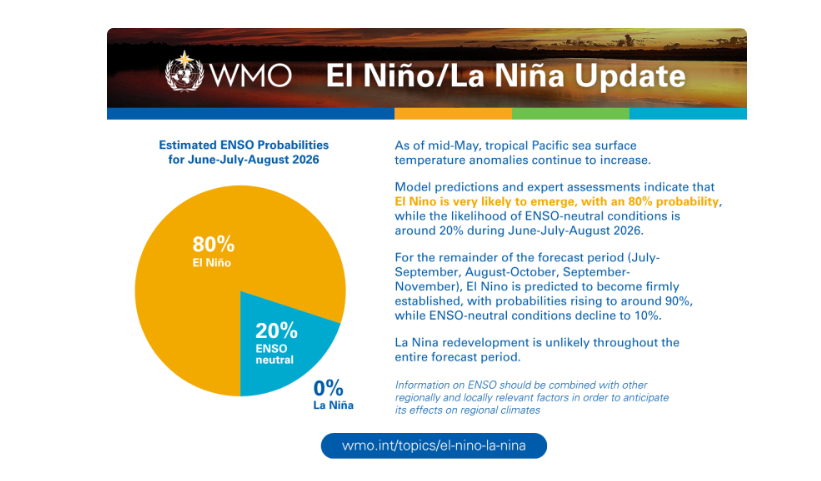
The forecast is linked to the expected development of El Niño conditions during the monsoon season and a shift of the Indian Ocean Dipole towards its positive phase.
‘El Niño at the doorstep’
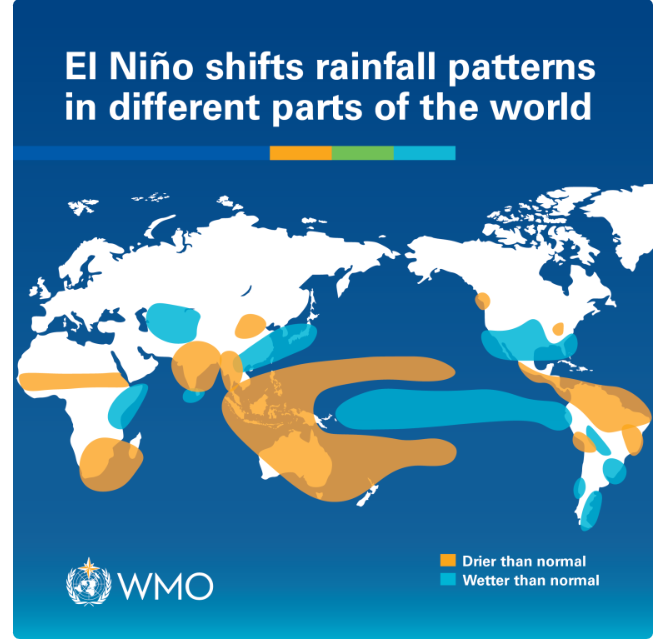
El Niño is a naturally occurring climate phenomenon that originates in the tropical Pacific Ocean but influences weather patterns across much of the world, including South Asia and Pakistan.
Under normal conditions, strong trade winds push warm surface waters westward towards Indonesia and Australia, while colder, nutrient-rich waters rise along the western coast of South America. This circulation helps regulate global temperature, rainfall and atmospheric conditions.
During an El Niño event, these trade winds weaken or sometimes reverse, allowing warm ocean waters to spread eastward across the central and eastern Pacific. As sea surface temperatures rise in these regions, atmospheric circulation patterns are disrupted, altering rainfall and temperature trends worldwide.
For South Asia, El Niño is often associated with a weaker monsoon and hotter conditions, although its impacts can vary depending on other climate drivers operating simultaneously.
Warning that El Niño is expected to develop in the coming months with a 90 per cent probability, UN Secretary-General António Guterres said the phenomenon would “pour fuel on the fire of a warming world”, intensifying the impacts of climate change across the globe.
He cautioned that its effects would be felt across borders with increasing speed and severity, urging governments to respond with stronger climate action, an accelerated transition away from fossil fuels, expanded renewable energy deployment, greater protection for vulnerable communities and universal access to early warning systems.
The warmer conditions, combined with uneven rainfall distribution, could heighten the risk of climate-related hazards, including heatwaves, drought conditions, and stress on food and water systems.
What it means for Pakistan
For Pakistan, this signals a potentially challenging monsoon marked by greater climate variability rather than a straightforward drought scenario. While parts of the country’s northwest may still receive near-normal rainfall, the broader regional outlook points to heightened risks for water management, agriculture and heat-related impacts.
The Pakistan Meteorological Department expects a high probability of rainfall deficit, particularly across Punjab, Sindh, southern Khyber Pakhtunkhwa and most of Balochistan.
In contrast, the northern regions, including Gilgit-Baltistan, parts of northern KP and Kashmir, are likely to receive near-normal to slightly above-normal rainfall, offering some relief to upper catchments.
 However, even with uneven rainfall distribution, temperatures are projected to remain above normal nationwide, with the sharpest increases expected over Sindh, southeastern Balochistan and parts of Punjab.
 The PMD warns that this combination of heat and erratic rainfall could heighten risks of heatwaves, urban flooding during intense spells, water stress for agriculture, and glacier-related hazards in the north, underscoring a challenging summer season ahead.
The interplay of uneven rainfall and above-average temperatures may further strain irrigation systems, crop productivity and public health, highlighting the need for preparedness in climate-sensitive sectors.