

LAHORE
On Sunday, April 19, a delegation of women activists travelled to the village where 22 year old Rubina Chandio was murdered recently having been declared ‘kari’ (tainted). The following day the Sindh Police suspended Inspector Muhammad Hashim Hakro, the Station House Officer of Tando Masti Khan (District Khairpur/Sukkur Range).
The announcement was made via a letter dated 20 April, and signed by the DIG Establishment, Captain Parvez Ahmed Chandio, specifically saying that the SHO had been suspended and will be asked to report to the respective office.
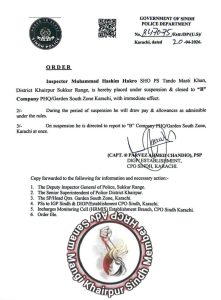
The suspension has taken place after the SHO was accused of being complicit with the local tribal and feudal leaders in the locality where Rubina Chandio was killed, including being accused of demanding money from the girl’s family.
Earlier the father of the girl said on video that the SHO had Mohammad Ramzan, father of the deceased Khalida Chandio, made serious allegations against the police after the video went viral. He said that the SHO Tando Masti had demanded the girl’s family to give him Rs 100,000, otherwise a case would be filed against them. He asked the other party to give Rs 5 lakh and added that the SHO took money from both and filed a government case himself.
“We sold our sheep and goats and gave the money to the police,” he said. “Police took money from the hands of the local wadera Chaudhry Asghar Hondal. Now the police are committing atrocities by demolishing our house, authorities should take notice.”
The video of Ramzan’s statement went viral before senior officers in the police took action. However the action has been appreciated by women rights activists and human rights defenders across Sindh.
Resistance condolence camp held for Rubina Chandio
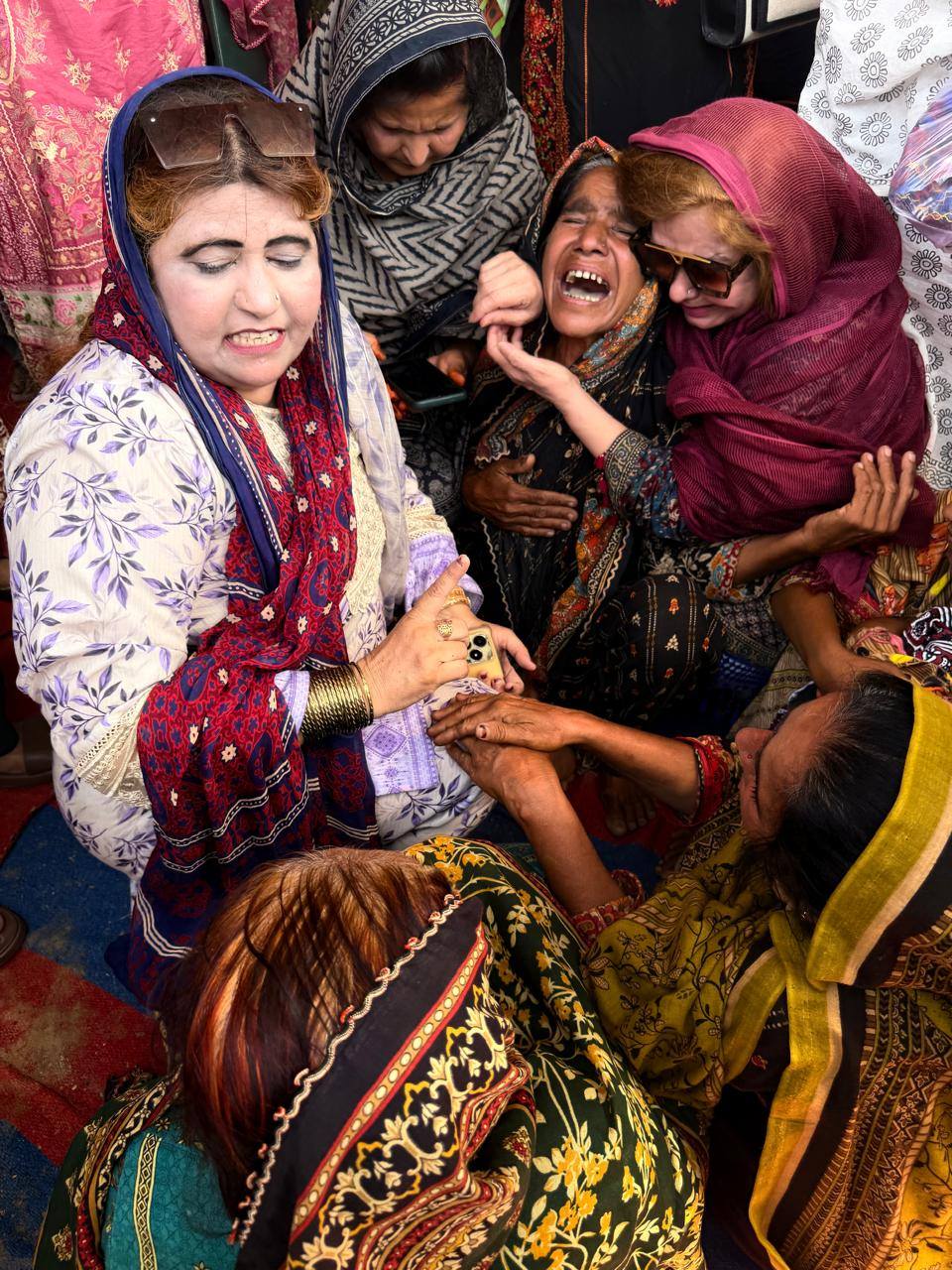
Women rights activists under the banner of Women Action Forum, WAF, (Hyderabad chapter) took a delegation from their respective cities across Sindh to the village near Tando Masti in order to hold a funeral in absentia and a gathering to mourn the victim of the brutal killing in the name of so-called honour.
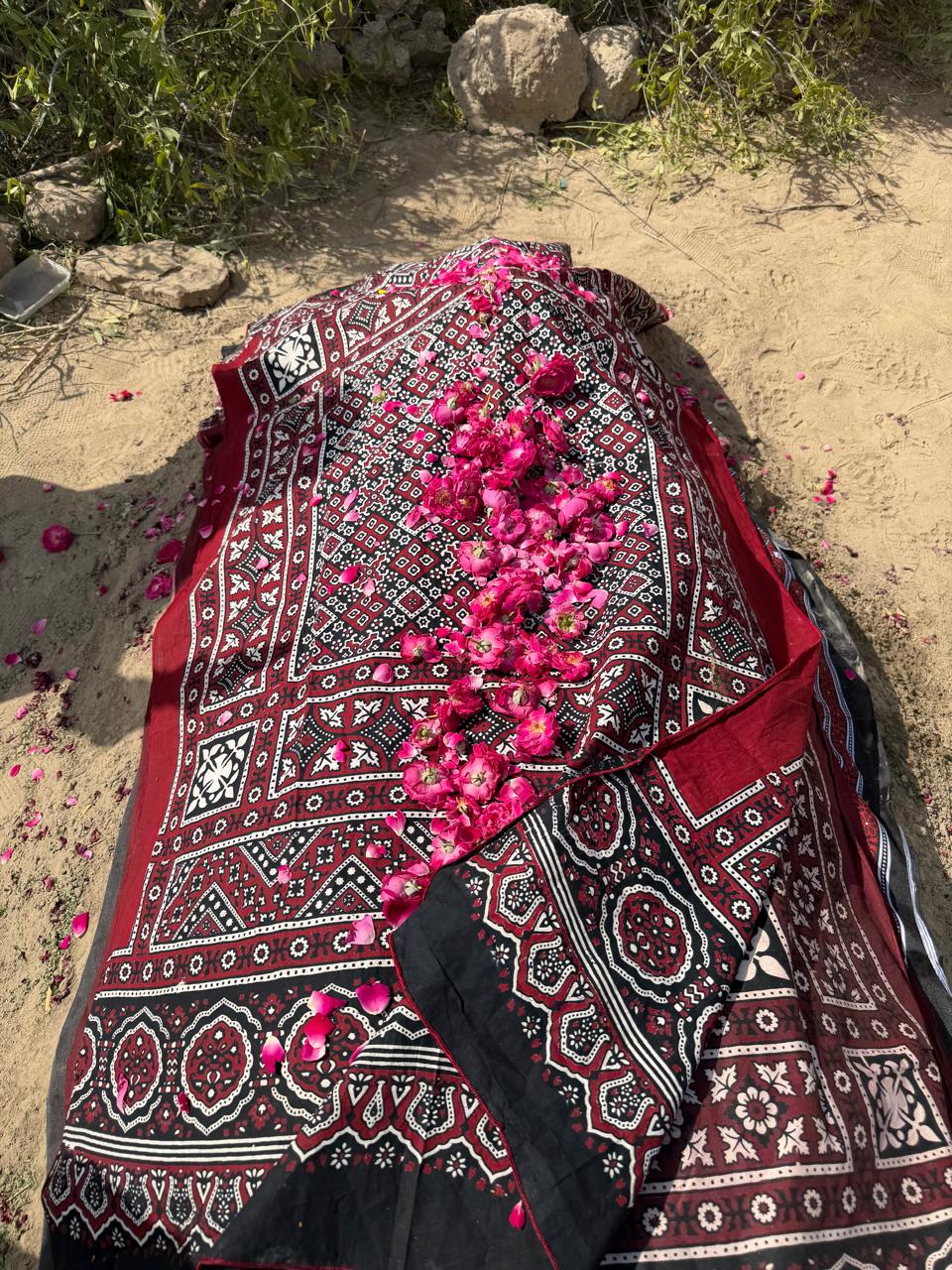
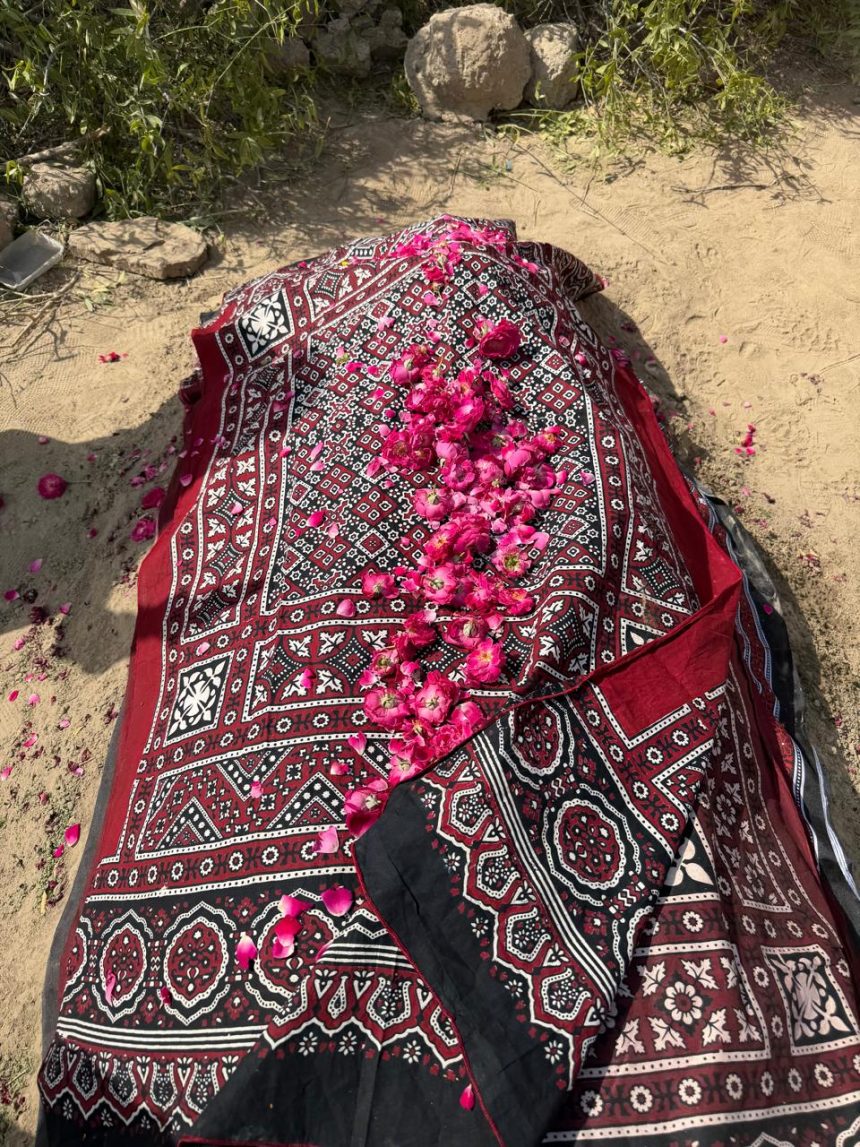
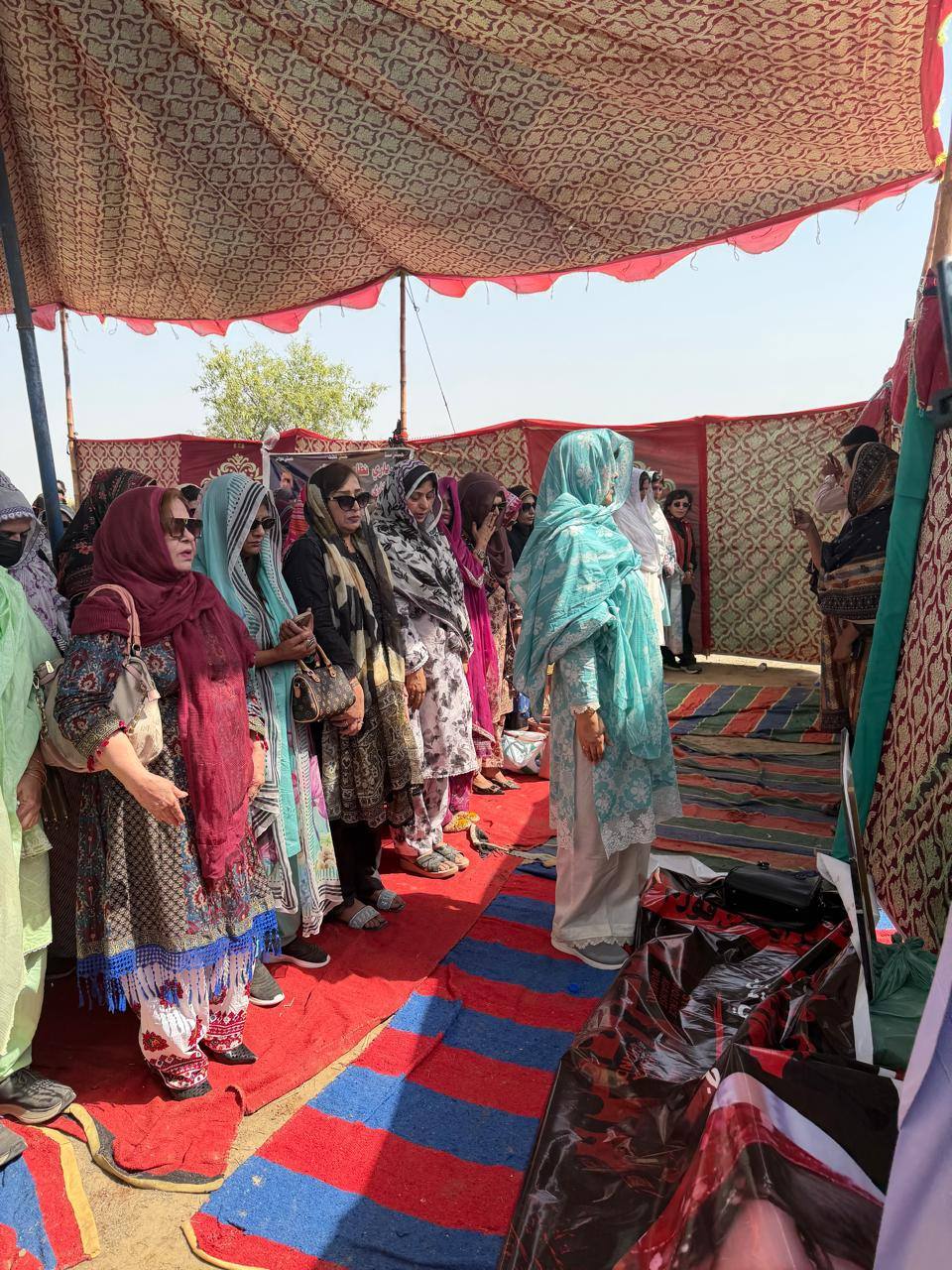
Rubina was buried in a pit without any ghusl, (bath) shroud or funeral prayers. A large number of women from different districts including Karachi, Hyderabad, Nangarparkar, Mirpurkhas, Khairpur, Sukkur and Larkana participated in this gathering, while their male allies also came to express solidarity. The participants showered flowers on the grave, offered flowers and ajraks and lit incense sticks. After the prayers a joint commitment for women’s rights, dignity and equality was reiterated. It was particularly emphasized that a woman has the full right to marry, love and live a life of her own choice.
Speeches by women leaders
In their speeches, the women leaders who reached Tando Masti said that killing women in the name of “business”, desecrating their bodies and criminalizing marriage of choice is in no way acceptable. They rejected the idea that sees women as property rather than human beings.
Criticism of state institutions and social system
The speeches said that behind the killing of women in Sindh, not just individuals but an organized, powerful social system is at work, which includes some elders, chiefs and elements of the police. Due to this nexus, justice is not provided and the oppressed families are left helpless.
Symbolic message and collective resolve
The women participating in the gathering once again reiterated their resolve at the grave of Khalida Chandio that the struggle against violence against women and honor killings in Sindh will continue. They said, “We want a Sindh where women are not slaves but equal citizens—where they can love, marry as they please, and live their lives with dignity. We will continue Latif’s struggle for this Sindh, where a woman’s human emotions are not considered a crime, and where there is humanity, love, and equality.”
Concern over social situation and silence
In their address, women leaders said that the incidents of murder in the name of “business” are increasing, while a “terrible social silence” prevails across Sindh. Many incidents have become daily news, which is reducing sensitivity against oppression.
The participants said that the ruling classes are intoxicated with their power, while other political and social organizations have also started considering these incidents as part of the norm, which is a very worrying trend. Every day, news of the murder of an innocent woman comes to light, but despite this, the massacre of women in Sindh is not being made a part of the political agenda.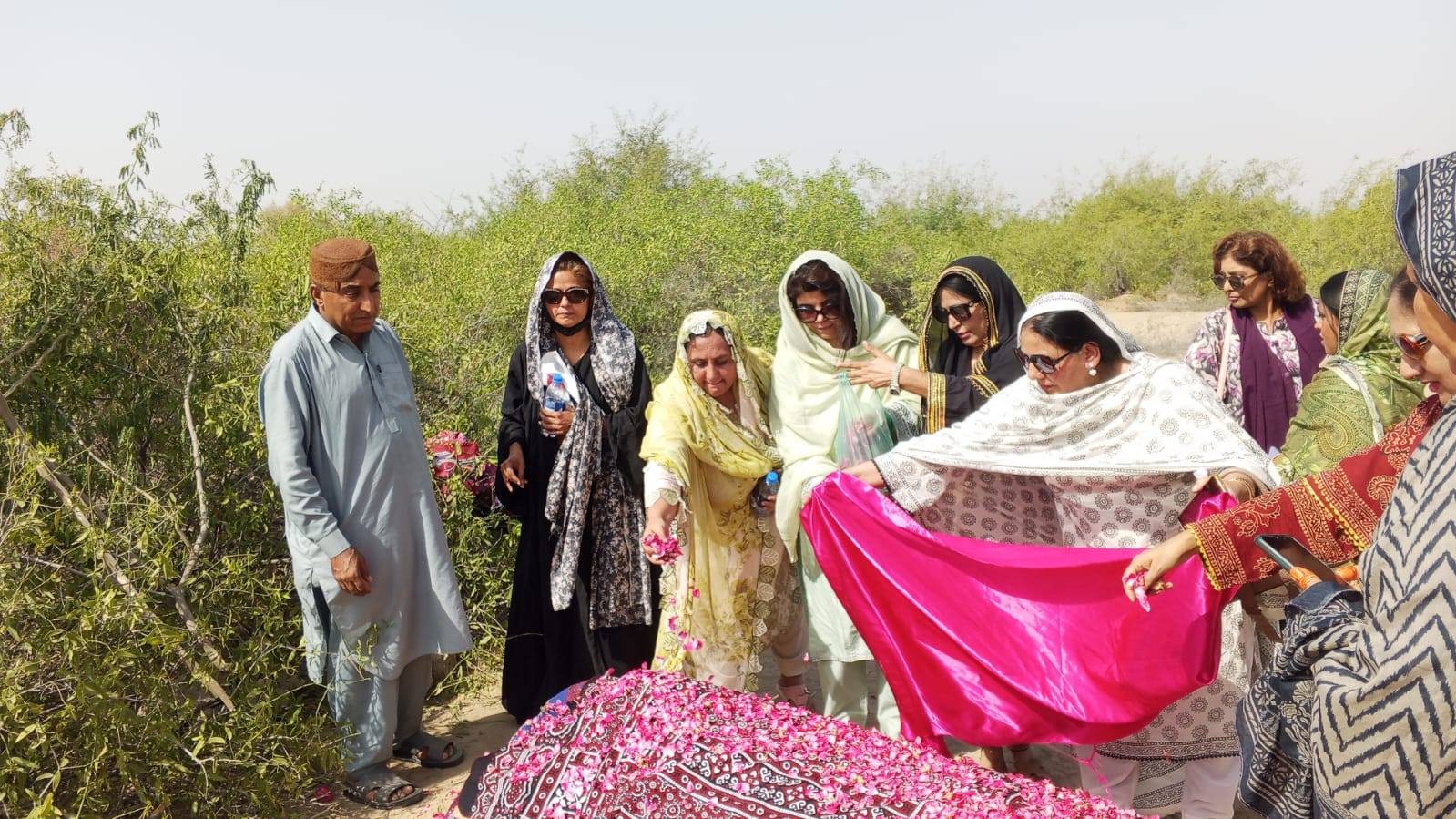
This issue needs to be raised at the political level, not just as an incident, but as a social deterioration and state failure. However, so far, inter-political and social movements have ignored it as an issue of women’s organizations only.
Questions on the role of the police
The gathering also mentioned the Bakrani incident, where the bodies of a mother and daughter were allegedly handed over without postmortem after the murder and later buried without bathing and shrouding, for which the role of the police was severely criticized.
Demands
A transparent, independent and impartial investigation into the incident should be conducted.
The facts should be brought to the public immediately and strict legal action should be taken against the responsible police personnel and other parties.
The provincial government should immediately establish a high-level commission to prevent killings in the name of “execution”, which should conduct a detailed investigation into the role of elders, chiefs, police and the local powerful system.
Based on the recommendations of the commission, a special task force should be set up, which should work under a zero-tolerance policy, speed up the trial of cases in special courts and ensure strict and exemplary punishment to the culprits.
Strategic Suggestions
The Women’s Action Forum demanded that a high-level commission be formed to stop killings in the name of “execution”, comprising senior police officers, High Court judges and representatives of civil society. The commission should conduct a detailed study of the social, political and economic aspects at the ground level and bring out the following points:
- The role of the informal power system of elders and chiefs
- Weaknesses of the police and judicial system
- The influence of local political and social power
- Based on the report of the commission, a special task force should be established which:
- Make an effective policy to end the practice and ensure its implementation
- Ensure prompt FIRs and transparent investigations
- Try cases in special courts
- Ensure strict and exemplary punishments for the criminals
- The women also for the first time led funeral prayers. After Rubina’s tragic killing, the women showered petals and raised their hands in a pledge saying that the struggle of Sindh’s women would continue until they got the right to live the lives of their choice.
“We lobbied hard for this to happen as soon as we knew that the girl had been buried,” said Professor Dr Arfana Mallah, academic and prominent women’s right activist. “Such girls are not given funeral prayers, nor are they even buried in the local graveyard. They are buried in unnamed graves somewhere else. They are not given the proper mourning either.” Dr Arfana said that principals of many schools and colleges across the province answered their call, along with doctors, lawyers, and many other professionals and they joined them in the visit to the village. Almost 500 people came, out of which 450 were women, she said. “This custom of karo-kari allows them to bury the woman without even a proper shroud. The girl is not perceived as a Muslim and not even as a human anymore. We knew the girl had not been given the respect she deserved, so we the women of Sindh have stepped up to give her that respect and honour. We held a funeral in absentia for her (ghayabana namaz-e-janaza).
We are here to challenge this entire system,” added Dr Arfana. “We are the protectors of such women, We held this funeral and now we are demanding the body be exhumed and buried again with respect.”
A first: Funeral prayers led by women
The women led the funeral prayers, and then spread the Sindhi Ajrak on a replica of the coffin, which was a symbol of the honour they were bestowing on the girl. They then sprinkled petals to extend their love. There had also not been any customary mourning, and so they pitched tents in the area and sat there for the entire day till evening which is also a tradition in the local funerals.
“The family of the girl came including her parents and her maternal aunt, even though they did not want to,” said Dr Arfana. “Her brother did not come however. They did not agree with the girl running away but they said she should not have been killed. By the end of the day however they were sitting in the tent with us mourning her.”
Rubina Chandio was living in Karachi with her husband of six years when eight months ago he had gone missing. She was then sent back home to live in the village from where she tried to elope with another man Saddam Chandio, whose family has kept him in hiding, but they readily handed over Rubina to the local waderas.
She also clarified that the photograph going viral on the internet where a girl is seen being buried in the soil is actually AI generated and completely fake.
“She had her post mortem and was not even in the same clothes as they photo shows her to be,” she said.
However she along with other women activists of WAF have denounced the way the police have attacked and demolished the homes of those who are accused.
“Their homes have all been bulldozed,” said Amar Sindhu earlier – also a prominent women rights activist and an academic. “What was the fault of those women and children who were uninvolved in the crime? They are now sitting on the streets without homes.”
“In 2014 we went to find a graveyard of kari women, on the Sindh and Balochistan border,” said Arfana. “When we finally did find it it was full of unmarked graves. We prayed for these women and then poured petals on each grave. From then on we vowed not to let any honour killing victim be buried without honour. We also pushed for a law that the jirgah system should be banned from making decisions on women’s issues and the Supreme Court did ban it but after a hiatus these incidents started again.”
Tragically, even the families of such women support the custom of karo kari.
“Until this patriarchal mindset accompanied with a feudal mindset is not broken, there is no way these things will stop,” said Dr Arfana. “In the last 20 years the so-called political government in the province have only managed to strengthen the feudal system and the jirgah system rather than empower the government institutions,” she said. “It is extremely troubling to see that in the last five days eight women have been killed for various reasons.”