

By Dauran Baloch
QUETTA
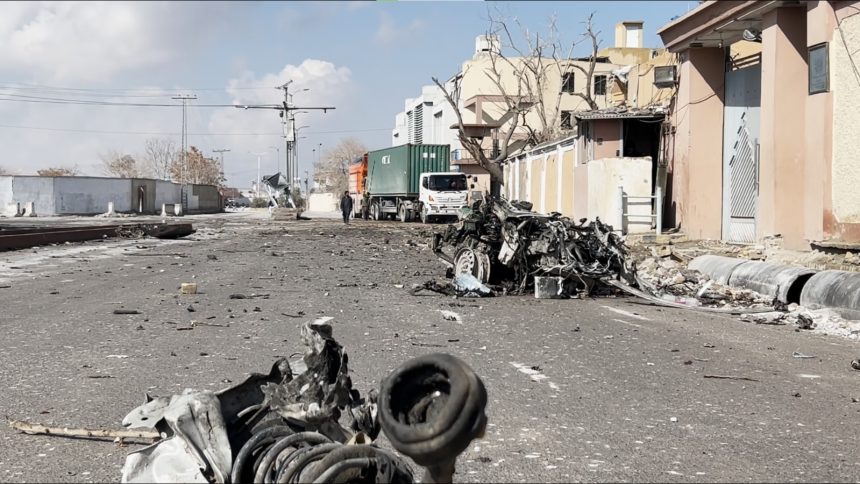
According to security officials, a total of 216 militants were killed during the operations. The violence also claimed the lives of 36 civilians, while 22 personnel of the security forces were killed. Civilians were caught in the crossfire at several locations, further deepening public fear and anxiety.
Following the attacks, internet services were suspended across Balochistan, severely disrupting business activities. Small traders, digital transactions, Easypaisa users and people dependent on online work have been particularly affected. In addition, Section 144 has been enforced across the province, banning pillion riding, face coverings, wearing masks and gatherings of more than one person.
Briefing the media, Balochistan Chief Minister’s Adviser on Information Shahid Rind said that security forces had responded swiftly and effectively to the attacks at all 12 locations. He added that all areas, except one site in Nushki, had been cleared, though search and combing operations were still under way in Quetta. Nearly 100 suspected individuals have been taken into custody, and a large cache of illegal weapons including RR guns, anti-aircraft guns and RPGs has been recovered.
Senior lawyer Advocate Imran Baloch told Voicepk that internet access in most parts of Balochistan had long been virtually non-existent. He said areas such as Qalat, Kharan, Qila Saifullah and Koh-e-Suleman had remained without internet for years, while connectivity in Quetta itself was unreliable. The suspension, he added, had hit small businesses, students and professionals the hardest.
Imran Baloch criticised repeated road closures, the erection of barricades and the imposition of Section 144, saying such measures only added to the hardships of ordinary citizens. He pointed out that roads were often reopened for VIP movements, fuelling a growing sense of deprivation among the public.
Syed Abdul Wali, a resident of Quetta originally from Pishin, said students and ordinary citizens were living in constant fear after the recent incidents. He noted that Quetta, despite being the provincial capital, had no major industries or factories, with most residents dependent on small businesses that had now come to a standstill.
Appealing to the government, he said Balochistan’s economy largely depended on cross-border trade and urged authorities to keep border-linked business activities running so that people’s livelihoods were not further damaged.
For now, fear, uncertainty and anxiety continue to prevail across Balochistan, as residents wait for peace, stability and the restoration of normal life.