

November 10, 2025
By Rehan Piracha
LAHORE
Former senior retired military officers remain divided over the proposed abolition of the Chairman Joint Chiefs of Staff Committee (CJCSC) position, which would be replaced by a Chief of Defence Forces (CDF) role to be held concurrently by the Chief of Army Staff. The change is envisaged in amendments to Article 243 of the Constitution under the 27th Constitutional Amendment Package that the Senate passed on Monday.
The federal government aims to modernize defence coordination by elevating the COAS to CDF, combining operational command with control of all services. However, critics argue this would consolidate power and undermine the existing military command hierarchy.
The CJCSC position, established over four decades ago, has been largely ceremonial, with the Army dominating the role. The proposed amendment would dissolve the post on November 27, 2025, making the COAS the CDF and placing all three services under their authority.
Concerns about the COAS-led CDF position
According to Lt-Gen (retired) Naeem Lodhi, a former defence secretary and federal minister for National Security, the actual shape of the new military hierarchy and delineation of powers among all service chiefs vis-à-vis the CDF is not clearly mentioned in the amendment. “It is likely to emerge after Rules of Business are rewritten,” he added.
“Combining the offices of COAS and CDF in one person may not be an efficient arrangement and also not a prudent option, as it may put pressure and burden on a single mind for making diverse decisions,” Lodhi cautioned.
While some may argue this will bring unity of command and clearer instructions for focused objectives, Lodhi warned that “keeping the appointment of CDF only Army-specific may not work well in future scenarios, as the character of contemporary wars is changing rapidly in favour of air warfare, space satellites, cyber wars, missiles, drones, laser guns, robotics, information wars, etc.”
Institutional imbalance concerns
A key question under the new system is who would control transfers, postings, and promotions in the Air Force and Navy.
Lodhi believes the COAS-led CDF position (as defined in the amendment) will not assert command over other services to the level of promotions and postings of senior officers, except perhaps for advising the PM on selection of their chiefs.
Former corps commander Lt-Gen (retired) Aamir Riaz disagreed with suggestions that the change would create institutional imbalance. “The focus should be on enhancing national defensive capability, not preserving individual institutional domains. If my effectiveness as an Army officer increases because of better coordination with the Air Force and cyber units, then our institutional capability is enhanced, not diminished. This step objectively increases the effectiveness of Pakistan’s defence,” Riaz told Geo News.
Brigadier Haris Nawaz, a military affairs expert, explained the role of the proposed Chief of Defence Forces (CDF) in an interview with Munizae Jahangir in her Spotlight show on November 11. According to Nawaz, the CDF will have overall command of the army, naval, and air force services, but will not interfere with transfers and postings within the respective forces.
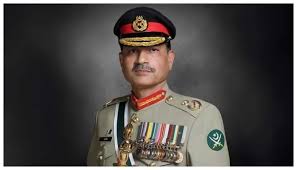
Regarding the CDF’s tenure, Nawaz stated that the COAS will concurrently hold the CDF position, implying that the tenure is linked to the COAS’s tenure. “The CDF would retire when he completes his tenure as COAS, currently set at five years under the law,” he added. Nawaz mentioned that COAS Field Marshal Asim Munir is expected to complete his tenure in November 2027.
However, Lt-Gen Asif Yasin Malik, a former defence secretary, warned against concentrating authority under a single person. “By placing an army officer as the Chief of Defence Forces with authority over the Air Force and Navy, the proposed system invites institutional imbalance and potential disaster,” Dawn newspaper quoted Malik as saying in its analysis of the proposed changes published on November 9. “This amendment appears tailored to benefit a specific individual rather than to strengthen the defence structure,” Malik told Dawn.
A more effective replacement?
According to Lodhi, the CDF position is likely to be a more effective replacement of the CJCSC, with reduced staff and less expenditure. “The original intent of establishing the Joint Staff Headquarters was to devise a Military Strategy in consultation with Political Authority and all Services,” he explained. “Then evolve a Developmental Strategy keeping in view the resources available, carry out resource allocation and finally coordinate Services Strategies and Plans.”
That headquarters also shouldered the responsibility of developing strategic assets and their deployment and employment plans. Many common functions of the three services—such as Strategic Intelligence, logistics, military hardware procurement, and media—were intended to be under Joint Staff Headquarters. “But all the intended tasks became difficult to perform as the Army’s size and clout kept encroaching on its jurisdiction and space,” Lodhi added.
Command of Strategic Assets
The amendment to Article 243 also envisions a new position of Commander of the National Strategic Command, formerly headed by the CJCSC. The position would be filled by an army officer recommended by the CDF to the prime minister.
“The CDF won’t directly command National Strategic Command, which will be headed separately by an army officer,” Nawaz clarified. He noted that the Strategic Plan Division was previously headed by an army officer with overall command of operations.
According to Lt-Gen (retired) Aamir Riaz, the position would not affect existing civilian oversight through the National Command Authority (NCA) headed by the prime minister. “The National Command Authority, headed by the Prime Minister, remains the supreme body overseeing our nuclear program. The CDS and service chiefs are part of it. The creation of the National Strategic Command is about bringing various strategic forces under one operational command to strengthen coordination and, therefore, our overall deterrence. The civilian oversight of the NCA remains intact and is, in fact, strengthened by this more streamlined command structure,” he told Shehzad Iqbal on Geo News.
However, Lodhi opined that keeping command of Strategic Forces exclusively with the Army (if that is the intent) may not sit well with other services. “This has probably been necessitated to have better positive and negative controls on Strategic Assets—that is the requirement of such a tense regional and international environment. But making permanent changes for a transitory period would need future review.”
“My conclusion is that the newly proposed CDF System may remove anomalies and inefficiencies in the short term, as long as the Army wishes to retain the lead strategic role. Otherwise, for the long run and under rapidly changing technologies for waging wars, a more flexible and balanced arrangement is necessary,” Lodhi said.
Civil-Military balance
Asked whether, given Pakistan’s history of civil-military imbalances, consolidating so much power in one position—the CDS—might make this relationship more fragile, Riaz said he did not foresee it significantly altering the current civil-military equilibrium. “That balance is determined by broader political and national dynamics,” he added.
In his view, appointing the COAS as the first CDF is an evolutionary process. “Currently, Pakistan’s primary disputes are land-based, such as the conflict over Kashmir,” he said. The Army is the largest force, engaged on both eastern and western fronts and in internal security. “To ensure the new headquarters gets firmly established, it is pragmatic to have the Army Chief lead it initially,” he added. “As the system evolves, I am confident that in the future, the Air Chief or Naval Chief could also hold this appointment,” Riaz said.