

September 15, 2025
By Xari Jalil
LAHORE
National Commission for Human Rights (NCHR), in collaboration with Legal Aid Society (LAS), launched a documentary and research report on Monday, to understand the drivers of forced conversion through marriages (FCM) and its multidimensional impact on survivors, religious minority communities (RMCs), and Pakistani society.
The report presents first-hand accounts from survivors of FCM and clarifies its definition with regard to the concept of being ‘forced’ and of ‘consent’. The event brought together legal experts, minority rights activists, and criminal justice professionals to explore actionable steps to tackle the pressing issue of FCM. Justice Dr. Syed Muhammad Anwer was the chief guest on the occasion.
The event started with the opening remarks by CEO of LAS Haya Emaan Zahid, followed by remarks from Chairperson NCHR Rabiya Javeri Agha.
Later, Maliha Zia, Director LAS, presented an overview of report’s findings. The event included a documentary screening focused on FCM by Aisha Gazdar (Filmmaker) Produced by Bond Advertising, and an interactive panel session led by Maliha Zia from LAS.
Panellists engaged in meaningful discussions, shared insights and experiences that will contribute to ongoing efforts to protect and promote the rights of religious minorities in Pakistan. This provided a collaborative environment for service providers to address the pervasive issue of FCM in Pakistan and promoted discourse development on FCM.
Rabiya Javeri Agha said the issue of FCM was a pervasive and deeply entrenched problem in Pakistan, disproportionately affecting girls and women from religious minority communities. “Despite existing constitutional and legal frameworks aimed at protecting religious freedom, FCM persists due to a complex interplay of socio-cultural, economic, and political factors, reflecting systemic vulnerabilities and societal pressures,” she said.
She said that the Commission has taken various suo moto notices of FCM cases, in which minor girls and women were abducted, forced to convert to Islam and married off to their abductors. “However, relief has been provided to the victims and their families due to the intervention of the NCHR.”
In her opening remarks, CEO LAS Haya Emaan Zahid said that the impact of FCM are severe with victims suffering from psychological trauma, physical and sexual abuse and social stigmatisation.
“This practice not only devastates individual but also undermines the fabric of communal solidarity and cultural heritage within religious minority communities, eroding their ability to practice and propagate belief.”
The research report divides drivers of FCM into two categories including motivations of perpetrators and vulnerabilities of survivors. The motivations of perpetrators are explained in the light of influence of religious duty and ideological convictions, ideologically motivated sexual grooming, trafficking and prostitution, sexual motivations and power dynamics, impunity for perpetrators of FCM, and glorification and sensationalization in media.
The report highlights the vulnerabilities of survivors into four different sub-categories: cognitive vulnerability of children to sexual violence and forced marriage, adolescence, rebellion and risk-taking stage of girls exploited by predators, gender-specific vulnerabilities of women, and the intersection of socio-cultural and economic factors.
A pervasive human rights issue
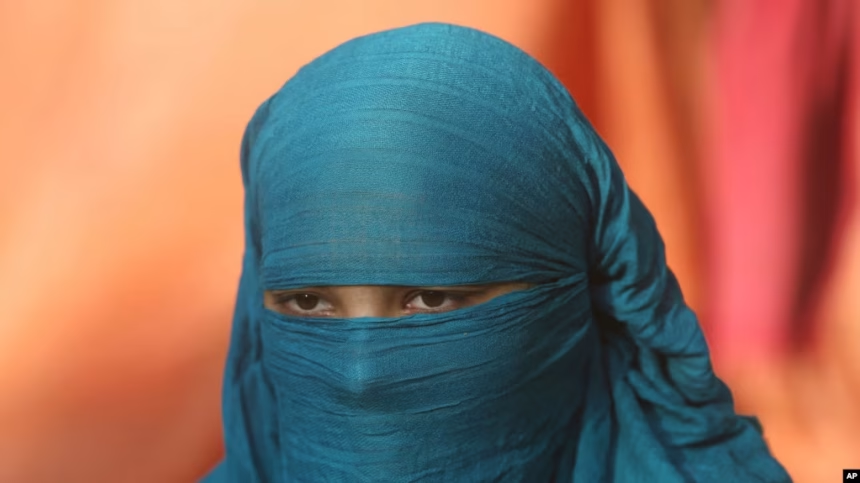
Th report highlights Forced Conversion through Marriage (FCM) as one of Pakistan’s most troubling human rights issues, exposing entrenched discrimination against religious minorities and the systemic inequalities that sustain it. Despite constitutional guarantees of freedom of religion and equality, Hindu and Christian women and girls are routinely coerced into converting to Islam and marrying Muslim men.
The Constitution promises protection of religious freedom, marriage, and minority rights, while the Pakistan Penal Code criminalizes forced marriage. Yet, forced conversion is not legally recognized as a separate crime. Attempts to legislate against it have repeatedly failed due to resistance from religious and right-wing groups. As a result, cases are pursued under fragmented laws on abduction or confinement, leaving survivors with little hope of justice.
The drivers of FCM are deeply rooted in Pakistan’s social and political fabric. Patriarchal norms strip women of autonomy, socio-economic inequalities leave minorities vulnerable to exploitation, and extremist ideologies fuel intolerance. For minority women, these factors combine into “double discrimination”—being targeted as both women and religious minorities.
Pakistan’s multi-religious identity has hardened into a constitutional divide between “Muslims” and “non-Muslims,” with the latter barred from holding top state offices. This institutional “otherization” creates systemic barriers to education, employment, healthcare, and religious practice. It also reinforces social prejudice, which has fueled mob violence, particularly in blasphemy cases. A Legal Aid Society poll showed that over a quarter of respondents favored extrajudicial execution for blasphemy suspects, while nearly one in five supported collective punishment of entire minority communities.
Women and girls from minority groups face layered disadvantages: poverty, lack of access to education, cultural restrictions, and heightened risks of gender-based violence. Their marginalization is compounded by stereotypes that erode their autonomy and subject them to coercion. As one activist noted: “Being minority, being poor, being a woman are all these things which are great weaknesses.”
The report calls for inclusive policies that address the root causes—ensuring equal access to education and jobs, safeguarding freedom of religion, and protecting women from violence.
Forced Conversion through Marriage (FCM) remains one of Pakistan’s most urgent human rights challenges, disproportionately targeting Hindu and Christian women and girls. Despite constitutional guarantees of religious freedom and equality, survivors continue to face coercion, insecurity, and exploitation under a legal system ill-equipped to protect them.
FCM occurs when a girl or woman from a minority community is pressured to convert to Islam and immediately married to a Muslim man. Rights groups argue that such cases overwhelmingly involve minors, perpetuating early marriage, poverty, and abuse while entrenching discrimination against religious minorities. Critics, however, insist many cases are voluntary interfaith unions miscast as coercive due to cultural opposition to “love marriages.”
Reliable data is scarce, fueling this divide. Civil society groups such as the People’s Commission for Minorities Rights and the Centre for Social Justice have reported sharp rises in cases, while the Movement of Solidarity and Peace estimates around 1,000 underage girls are converted annually. Yet official disaggregated statistics are absent because Pakistani law does not recognize forced conversion as a crime in itself. Instead, cases are pursued under charges like abduction, rape, or child marriage, obscuring the true scope of the problem.
Patterns in reported cases are strikingly similar. Survivors are often poor minors from Sindh and Punjab who are groomed before being coerced or abducted. Clerics issue conversion certificates—sometimes inflating the girl’s age to 18 or above—to bypass child marriage laws. Courts frequently accept such documents and alleged “consent” at face value, despite evidence of intimidation and duress. Hearings are often held under pressure, with courtrooms packed by religious zealots.
Legal definitions of “force” remain too narrow, focusing on abduction or violence while ignoring psychological manipulation, blackmail, economic vulnerability, and societal pressure. Activists stress that these subtle tactics strip away genuine consent just as surely as overt coercion. “Being minority, being poor, being a woman are all these things which are great weaknesses,” said one rights advocate.
While opponents dismiss the issue as politicized, survivors’ stories and consistent case patterns show that FCM is real and widespread. Rights organizations are calling for specific legislation, reliable data collection, and stronger protections to ensure no child is compelled into faith or marriage against her will.