

July 15, 2025
By Rehan Piracha
LAHORE
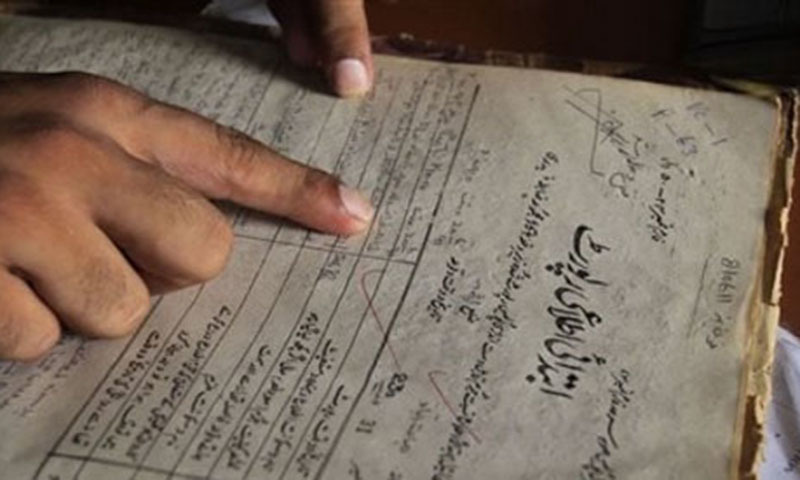
In a strongly worded judgment, the Supreme Court has equated the widespread refusal or delay in the registration of First Information Reports (FIRs) by police—especially in cases involving those who are vulnerable and marginalised—with a misuse of power that benefits the privileged and undermines constitutional governance.
The 30-page verdict was authored by Justice Athar Minallah and endorsed by Justices Irfan Saadat and Malik Shahzad Ahmed Khan, and was issued in response to a jail petition filed by one Seeta Ram. The petitioner had been sentenced to death in a 2018 Umerkot murder case, with the Sindh High Court (SHC) upholding the conviction in 2023. The Supreme Court has converted the jail petition into a criminal appeal and has acquitted Seeta Ram, citing procedural irregularities and a lack of conclusive evidence.
Too many similar cases
But the significance of the judgment extends far beyond Seeta Ram’s acquittal. The bench used the case to shine a spotlight on systemic failures in Pakistan’s criminal justice system—particularly in how police handle the registration of FIRs.
“This case is only a tip of the iceberg and it reflects adversely on the status of the criminal justice system,” the court observed. “The phenomenon of refusal to or delay in registration of a criminal case… has been invariably observed in cases affecting the rights of the most vulnerable, marginalised or underprivileged classes of the society.”
The court underscored that under Section 154 of the Code of Criminal Procedure (CrPC), the officer in charge of a police station is legally bound to register an FIR immediately upon receiving information about a cognisable offence. Any refusal or delay—intentional or inadvertent—was termed a “serious dereliction of a statutory duty” and a violation of the Constitution.
“The officer in charge of a police station has no authority to refuse or delay its registration,” Justice Minallah wrote. “Such conduct erodes the confidence of the people in the criminal justice system… These are characteristics of a police state and not a State meant to be governed under the Constitution.”
The court rejected common justifications offered by police for delaying FIRs—including cultural traditions, reconciliation efforts, complainant preferences, and the need for medico-legal certificates—as alien to the law and incompatible with constitutional governance.
“These reasons may be justified in a society governed under tribal and archaic traditions,” the verdict stated, “but not when the governance is under a Constitution which guarantees to every citizen protection of law and to be treated in accordance with law as an inalienable right.”
‘Widespread issue’
During proceedings, the Inspector General of Police (IGP) Sindh and Acting Prosecutor General appeared before the bench and acknowledged the issue. A written report submitted on June 2, 2025, admitted the problem was widespread. While the court appreciated the candid response, it dismissed the reasons offered as untenable.
The court warned that the failure to promptly register FIRs strengthens public perception that the police serve the interests of the powerful rather than the people.
“Acknowledgement of such reasons would be perceived as capture of the police force and the criminal justice system by those who wield power and influence, rather than the system being subservient to the rule of law,” the court cautioned.
In response, the Supreme Court directed its office to circulate the judgment among the Inspector Generals and Prosecutor Generals of all provinces and the Islamabad Capital Territory. It called upon provincial and federal authorities to establish mechanisms ensuring strict compliance with Section 154 CrPC and advised prosecutors to assist police in developing standard operating procedures (SOPs) that reflect the law’s true spirit.
“The trust of the people in the impartiality, fairness and independence of the criminal justice system… is the sole test to determine whether they are being governed in accordance with the Constitution or the norms that characterize a police state,” the judgment concluded.
Legal experts echo SC’s concerns
Speaking with Voicepk, Shabbir Hussain, associate lawyer at AGHS Legal Aid Cell, confirmed that delays in FIR registration are a common practice across provinces. He attributed this to both cultural habits and institutional bottlenecks.
“Police in all provinces are reluctant to file FIRs promptly as stipulated under the law,” Hussain said. “They prefer the aggrieved party to become the complainant, which leads to unnecessary delays.”
He noted that in many cases involving violence, families deliberate at length over who to nominate as the accused, leading to bloated FIRs that include individuals not even present at the crime scene. “This is particularly common in fights and domestic disputes where affiliations and family rivalries shape the FIR content,” he added.
Hussain also criticised the police practice of demanding a medico-legal certificate (MLC) before filing an FIR in assault cases — despite there being no legal requirement for one.
“The law doesn’t require a MLC to register an FIR. The police are empowered to file one immediately on the basis of a complaint,” he clarified.
Another key reason for delays, according to Hussain, is the internal bureaucracy within police departments. In some provinces, Station House Officers (SHOs) routinely seek permission from senior officers before registering FIRs. While most officers are aware of the legal obligations, Hussain said, they often opt to conduct internal inquiries rather than initiating formal investigations as required by law.
To ensure compliance, Hussain urged firm administrative action. “Negligent officers should face censure, penalties, or demotion. That would send a clear message that delays in filing FIRs will not be tolerated,” he said.
He pointed out that Punjab Police has already begun taking initiative in certain cases by registering FIRs themselves—particularly in suspected honour killings—rather than waiting for family members to file complaints. “There’s no legal bar preventing the police from being the complainant if the aggrieved party is unavailable,” Hussain explained.
The Supreme Court’s directive places the onus squarely on provincial and federal governments to enforce the law and restore public faith in law enforcement. Legal experts believe this ruling could become a landmark moment—if translated into tangible police reforms and greater accountability.