

July 01, 2025
By Iqra Manzoor
LAHORE
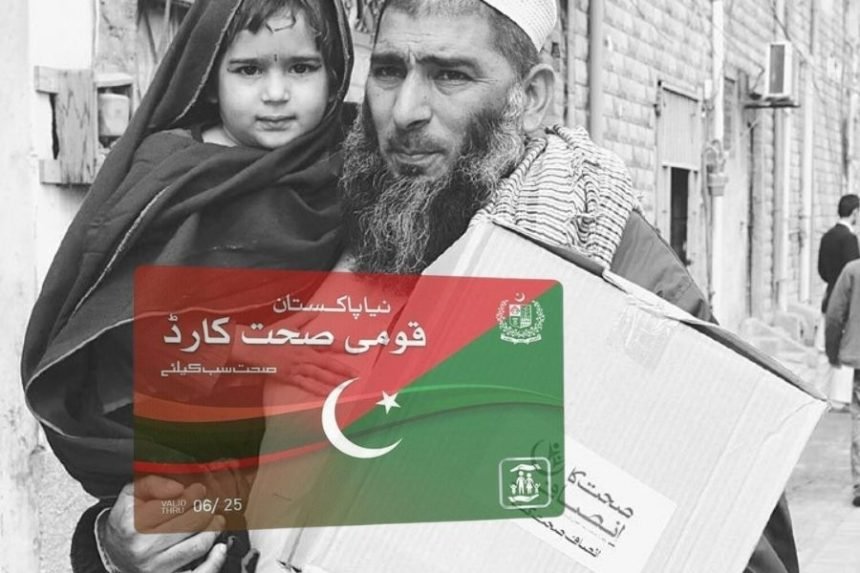
As the Punjab government officially announced the closure of the Sehat Sahulat Card Programme, more formally known as Universal Health Insurance (UHI), in all public sector hospitals across the province, healthcare professionals see it as a concerning move.
The suspension of the free healthcare services under the initiative has been effective since June 30, 2025, according to a notification issued by Ali Razaque, Chief Executive Officer of the Punjab Health Initiative Management Company (PHIMC).
“As per approval of the competent authority, implementation of Universal Health Insurance in public sector hospitals is going to be closed on 30th June 2025.”
However while the programme has been discontinued in public healthcare facilities, it will still continue to function in empaneled private hospitals across Punjab, albeit with limited financial coverage.
Rationale behind closure
Speaking to Voicepk, Razaque—who assumed the CEO position during the Pakistan Tehreek-i-Insaaf (PTI) government in October 2021—clarified that the programme had not been entirely suspended but was being ‘phased out’ from public hospitals, due to overlapping coverage.
“The services provided in public hospitals are already free of cost. Moreover, under Chief Minister Maryam Nawaz’s ‘Special Health Initiative,’ new public healthcare programmes now offer expensive treatments like heart surgeries and transplants, which were previously not included in SSP,” he explained.
Razaque further stated that the government aimed to prevent duplication of benefits, which was resulting in financial inefficiencies.
“Many doctors were reportedly receiving dual payments—one from their salaries and another under SSP reimbursements. This created an unnecessary burden on the health budget,” he said.
He added that under CM Maryam Nawaz’s revamped health programmes, several life-saving treatments previously excluded under the Sehat Card are now covered free of cost in government hospitals.
Concerns over reduced coverage
However, medical professionals and healthcare associations have expressed concerns over the move.
Dr. Salman Haseeb Chaudhary, Chairman of the Grand Health Alliance Punjab and Patron-in-Chief of the Young Doctors Association (YDA), told Voicepk that the decision effectively marks the end of the Sehat Card programme as it was originally envisioned.
“People used to rely on Sehat Cards for comprehensive treatment at public hospitals. Now, despite CM’s new initiatives, the range of covered diseases has shrunk, and patients are expected to bear up to 50 per cent of the treatment costs at private hospitals—even with the card,” he said.
Dr. Chaudhary argued that while treatments may technically remain free in government hospitals, essential medicines are often unavailable.
“The SSP ensured the availability of medications that were otherwise missing from public hospitals. That’s no longer guaranteed under the new arrangement,” he added.
He also criticized the new mobile health units introduced under CM Maryam Nawaz’s outreach programme, claiming they lack the necessary equipment and infrastructure to deliver effective treatment.
“Doctors are expected to examine patients in field vans bearing the CM’s photo. But without proper equipment, these mobile clinics are unlikely to succeed. It’s a misallocation of the health budget,” he remarked.
Government’s reassurances
In response to public criticism, Punjab’s Health Minister Khawaja Salman Rafiq denied that the Sehat Card has been suspended altogether.
“There is no truth to claims that Sehat Sahulat Cards have been suspended. The programme remains fully operational in private hospitals. Government hospitals provided free treatment before Sehat Cards and will continue to do so,” he stated.
Despite the minister’s assurances, public health experts warn that the end of SSP in public hospitals, coupled with reduced coverage and rising private hospital costs, could have significant implications for low-income patients.
As the province moves forward with CM Maryam Nawaz’s new healthcare initiatives, questions remain about their ability to match the reach and impact of the now-defunct public sector component of the Sehat Sahulat Programme.
In the meantime, the Sehat Card programme is still continuing in other provinces. In September 2024, Advisor to Khyber-Pakhtunkhwa Chief Minister on Health, Ihtisham Ali, announced that Rs4.5 billion had been released to the State Life Insurance Corporation under Sehat Insaf Card, and rubbished reports that the programme was shutting down.