

April 26, 2024
Staff Report
LAHORE
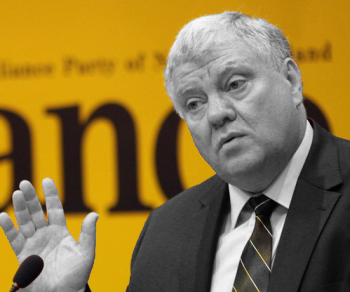
John Cushnahan was the former Chief of the 164-member European Union Election Observers Mission (EU EOM). In 2002, he released a report after he had completed his mission in Pakistan to observe, evaluate and report the electoral process. The report was produced by the EU Election Observation Mission and presents the EU EOM’s findings on the National and Provincial Assembly Elections – 18 February 2008 in Pakistan.
He was invited by Fine Gael to contest the European Parliament (EP) election in 1989 in the strongly nationalist Munster constituency. After being re-elected twice, he retired in 2004. During this period, John was elected Vice President of the EP Regional Policy and Foreign Affairs Committees and was EP rapporteur on Interreg, Hong Kong, Sri Lanka, Pakistan and Kashmir. John was also appointed by the EU Council as Head of Mission to lead multi-national and multi-disciplinary teams in South Asia on five occasions, the objective of which was to strengthen Democracy and Human Rights in the region.
Following are some important extracts and findings from the report.
SUMMARY
The 18 February 2008 National and Provincial Assembly Elections saw a pluralistic process in which a broad range of views were expressed, an election that was competitive and a polling process which achieved increased public confidence in comparison to previous elections. A more significant role was played in these elections by the media and civil society, including by providing greater scrutiny of the
process.
However, there were serious problems with the framework and conditions in which the elections were held and a level playing field was not provided during the campaign, primarily as a result of abuse of state resources and bias in the state media in favour of the former ruling parties. As a result, the overall process fell short of a number of international standards for genuine democratic elections.
These include the citizen’s right to take part in the government of his or her country directly or through freely chosen representatives (UDHR Article 21), freedoms of expression (UDHR Article 19) association and assembly (UDHR Article 20), the right to an effective remedy (UDHR Article 8), the right to non-discrimination (UDHR Article 2), and the right to universal and equal suffrage (UDHR Article 21). There was also a lack of transparency in the performance of the election administration and the results process.
The elections took place in a difficult security environment in which the threat of violence and an atmosphere of fear prevailed. As a result of attacks on political party gatherings, over 100 party supporters were killed during the campaign. In addition, over 50 people were reportedly killed in clashes between supporters during this period. Tragically, on 27 December 2007, Benazir Bhutto, leader of the Pakistan Peoples Party (PPP) was assassinated at a campaign rally, leading to widespread anger, violence and rioting around the country. In this context, the election process, particularly on the day of voting, saw courageous commitment to the democratic process by voters, candidates and party
workers, election staff, representatives of media and civil society, and state personnel. The election process began while emergency rule was in place and the Constitution was suspended, together with its guarantees of fundamental rights. Several thousand people, including judges and journalists, were detained. Emergency rule was lifted only one day before the beginning of the campaign period. During the period of emergency rule many judges, including the Chief Justice, were removed following an executive order, damaging public confidence in the independence of the judiciary and the rule of law.
This is particularly significant given the judiciary’s prominent role in the election administration as well as election adjudication.
The legislative framework for elections does not provide an adequate basis for the conduct of genuine democratic elections. A number of areas need to be more precisely regulated and brought in line with international standards. In particular there is insufficient provision for the independence of the election administration and transparency in its work, especially in regards to the results process. There are
multiple deficiencies in the complaints and appeals process. The right to stand as a candidate is also breached by the legal requirement for a bachelor degree or madrassa qualification, which excluded the overwhelming majority of the population (circa 95%).
There was a lack of confidence among election stakeholders in the independence and efficacy of the Election Commission of Pakistan (ECP). While technical preparations were generally undertaken efficiently and on time and saw some important improvements, particularly in regards to training and 1 In accordance with EU election observation methodology, the EU EOM to Pakistan assessed the conduct of the National and Provincial Assembly elections in line with international standards for elections. The primary source was the Universal
Declaration of Human Rights (UDHR). This provides for the fundamental rights essential to a genuine democratic process.
the use of translucent ballot boxes, serious problematic issues already identified during the 2002 elections were not sufficiently addressed. The ECP lacked transparency in key areas of its working practices, and did not formally consult with political parties and other stakeholders. It did not take sufficient responsibility for various aspects of the process which should be under its control, including supervising the work of returning officers, enforcing the Code of Conduct for Parties and Candidates, staff training, voter education, complaints resolution, and re-counting and re-polling. Almost 81 million voters were registered to take part in the elections, out of a total estimated population of approximately 160 million. However shortcomings in the voter registration process and the inclusion of 2002 data resulted in an unreliable electoral roll that includes a significant number of duplicate entries, erroneous entries and omissions. As a result, there was a lack of confidence among political parties and civil society in the accuracy and efficacy of the electoral roll. Of the 26 million entries from the 2002 data (added following a Supreme Court ruling in August 2007), a significant number of people could not vote because they did not hold the required national identification card.
This affected predominantly the rural poor and women. The Ahmadis (who are not recognised by the government of Pakistan as Muslim) were required to register on a separate voter list, a discriminatory practice without adequate justification, as a result of which they boycotted the elections. The campaign was low key and subdued, but saw a broad range of views expressed, including some criticism of the President, government and ruling parties. Most campaigning took the form of small meetings or door-to-door visits. Only a few large rallies were held. A number of political parties promoted a boycott of the process, in particular in Balochistan. Nazims (elected heads of a local government bodies) were directly involved in campaign activity and widespread misuse of state resources was observed, mostly on behalf of candidates of the former ruling parties. There were credible reports of police harassment of opposition party workers and agents. Since the 2002 elections, sources of information available to citizens have significantly increased and the media environment has become more diverse and vibrant.
However, restrictions and pressures placed on the media before and during the election period seriously limited freedom of expression and
the public’s right to receive information. In spite of this, private media outlets provided candidates and contesting parties with comprehensive and pluralistic coverage. In contrast, public broadcasters failed to live up to their responsibility to maintain balance, providing substantial coverage to the President, government and PML-Q (Pakistan Muslim League – Quaid-e-Azam), and limited coverage to other parties. Media outlets’ detailed coverage of election day and the results aggregation contributed to a sense of scrutiny of the process that was seen to be significant in inhibiting attempts at fraud.
Although women’s political rights are protected in the law, in practice there are heavy limitations on the exercise of these rights. Women were under-represented in all aspects of the electoral process: as voters, candidates for general seats, electoral officials, and in political parties. Insufficient measures were taken to meet legal obligations to enable women to exercise their right to vote, as is stipulated in the Constitution, the Convention on the Political Rights of Women (CPRW) and the Convention on the Elimination of Discrimination against Women (CEDAW) to which Pakistan is State Party. In addition, agreements by stakeholders to exclude women from electoral participation in some areas were not addressed by the ECP.
Civil society played a more significant role in comparison to previous elections, in particular through domestic observation before and on election day. Most notably, the Free and Fair Elections Network (FAFEN) mounted a comprehensive programme, observing and reporting on the campaign period and conducting a parallel vote tabulation on election day While over 18,000 FAFEN observers were accredited, in one third of districts this had been an administratively problematic process. On election day FAFEN observers were not able to gain access to all polling stations or constituency results compilations.
Voting and counting was generally assessed favourably in polling stations visited by EU observers, although some disorder and procedural irregularities were noted. Positive developments included better trained polling staff than in the past and use of translucent ballot boxes and standardised voting screens for the first time. However problems were also observed, particularly in female polling stations. These included failure to protect the secrecy of the vote, incorrect application and checking of ink, general disorder and confusion, and a lack of sufficient polling booths for women. In a positive contribution to transparency, agents representing candidates were present in the vast majority of
polling stations visited, and generally received copies of the results. However, in a breach of basic transparency safeguards, at nearly two thirds of polling stations visited, results were not publicly displayed.
While EU observers generally assessed the compilation and consolidation of results processes favourably in constituencies where they were present, there were further breaches of basic transparency safeguards in both cases. Observers (including from the EU EOM) were not always
granted access to the compilation process and breakdowns of constituency results by polling station have not been published at constituency level or on the internet, as was promised by the ECP. The EU EOM is aware of suspicious results in a number of constituencies, including polling stations with implausibly high turnouts and questionable margins of victory. This indicates the possibility of malpractice, which warrants investigation by the electoral authorities. However the ECP has not initiated such activities and instead made apparently sweeping rejections of complaints filed by unsuccessful candidates, thus denying a fast and effective mechanism for redress through re-counting
and re-polling.
There is a widespread lack of confidence in the complaints and appeals processes. Prior to the publication of results, redress could be sought through the superior courts. However, the independence of these courts was undermined by the fact that all judges had sworn an oath under the controversial Provisional Constitutional Order (2007), and therefore are perceived to be close to President Musharraf and the former ruling parties. Following publication of the final results, judicial challenges could only be lodged by candidates to election tribunals composed of current or former judges appointed by the Chief Election Commissioner. This lack of an independent appointment mechanism,
together with a record of inefficiency (39 petitions were outstanding from 2002 elections), contributed to a further lack of confidence. More generally, there is a continuing culture of impunity surrounding electoral offences, with very few prosecutions undertaken.
The election process is not yet complete. Some constituencies are still to hold polling, and some cases are outstanding at the superior courts and tribunals. Improvements to the overall election process could still be made through the publication of individual polling station results, petitions being dealt with in an efficient, transparent and prompt manner, and investigation of alleged election offences. In the longer term, it is essential that the state authorities and political parties demonstrate sufficient political will to improve the framework and conditions for elections in line with international standards. In this context, detailed recommendations are included at the end of this report. Key
recommendations include:
1. Steps should be taken to ensure there is an independent judiciary, so that effective oversight of the election process can be undertaken.
2. The appointment of the Chief Election Commissioner and ECP members should be subject to stakeholder consultation and should provide for independence. The ECP should be restructured, and should take full responsibility for its mandated tasks. The election
administration should operate in a transparent and consultative manner.
3. Election legislation should be reviewed in a consultative manner, for example through an all-party constitutional review committee. Specific issues to be addressed include the independence and transparency of the election administration, complaints and appeals
procedures, and candidacy requirements.
4. Election appeals should be dealt with in a timely manner by judges who are independently appointed. Petitions should be permissible from a wider range of election stakeholders.
5. The law should be amended, and the ECP should issue and enforce instructions, to ensure that all counting and aggregation processes are fully open to scrutiny. This should include detailed polling station results being swiftly displayed at the constituency and on the internet.
6. The ECP should take full responsibility for the production of an accurate and complete electoral roll. It should work with National Database and Registration Authority (NADRA) to incorporate any entries not captured through its own enumeration (either from a new
enumeration or the one undertaken for the Electoral Roll 07). The data captured should be subject to a comprehensive nationwide check for duplicates.
7. If only Computerised / National Identity Cards (C/NICs) are permissible for registration and/or voting, acquisition of a CNIC must be facilitated so that there is no barrier to participation.
8. Freedom of expression should be subject to “necessary” restrictions, rather than “any reasonable restrictions” (Constitution, Article 19) and reform of the legal framework regulating media activities should be undertaken. Restrictions on media content should be reduced, and clear-cut definitions should be introduced.
9. State media should institute clear and transparent procedures to ensure its news and public affairs broadcasts during an election campaign are impartial.
10. The government should intensify its efforts to reduce women’s severe under-representation in the electoral process, in accordance with its international commitments under CEDAW and CPRW. Political parties also have a significant role through their internal practices,
policy agenda, candidate nomination, and voter awareness. Some improvements have been made by the Pakistani state authorities, for example with training and the use of translucent ballot boxes.
However other identified problems with the framework and conditions for elections remain outstanding. The EU EOM was pleased to note that following the elections, all parties it met with reported a strong commitment to electoral reform. The EU EOM notes the willingness of the EU and wider international community to work together with the authorities, political parties and civil society in Pakistan to improve the election process, and encourages the people of Pakistan to continue to work towards the conduct of elections in full compliance with
international standards for genuine democratic elections.
INTRODUCTION
EU mission members arrived in Pakistan on 9 December 2007, following an invitation from the Pakistani authorities. Due to the imposition of emergency rule, the mission began as an Election Assessment Team, becoming a Limited Election Observation Mission from 27 December, and anElection Observation Mission (EOM) on 4 January 2008. The EU EOM was led by Michael Gahler, Member of the European Parliament (MEP). The EU EOM is independent from EU Member States, the European Parliament and the European Commission, in its findings and conclusions. The EU EOM adhered to the Declaration of Principles for International Election Observation, commemorated
at the United Nations in New York in October 2005.
A total of 48 long-term observers (LTOs) were deployed throughout Pakistan covering 65% of constituencies, observing and assessing the different stages of the electoral process in accordance with international standards for elections. Over the election day period, the EU EOM was joined by a seven member delegation from the European Parliament, led by Robert Evans MEP, which endorsed the preliminary statement, issued on 20 February 2008. On election day, the mission had 131 observers, from 23 EU Member States, Norway and Canada, who visited 445 polling stations in 115 constituencies to observe voting, counting and the compilation of results. The EU EOM then observed
the results consolidation, and complaints and appeals process, remaining in country until 10 March 2008.
Assessment in Accordance with International Standards
In accordance with EU election observation methodology, the EU EOM to Pakistan assessed the
conduct of the national and provincial assembly elections in line with international standards and best
practice for democratic elections.
Given that Pakistan not a State Party to the International Covenant on Civil and Political Rights (ICCPR), the principal source of international standards for elections and committed to by 160 Member States of the United Nations,2 the primary source was the Universal Declaration of Human Rights (UDHR).3 The UDHR provides for the fundamental rights and freedoms essential for the conduct of a genuine electoral process. These rights and freedoms constitute the origin of subsequent human rights treaties that include elements relating to elections, including the ICCPR. In line with EU methodology, the EU EOM also referred to General Comments of the United Nations Human Rights
Committee, the body charged with providing interpretive guidance on the implementation of the rights and freedoms laid down in ICCPR. The EU EOM considers the comments of the Human Rights Committee relevant and valid as the rights to which they refer are those first laid down in UDHR. The EU EOM also considered other treaties to which Pakistan is a State Party, including the Convention on the Elimination of All Forms of Discrimination against Women (CEDAW), the Convention on the Political Rights of Women (CPRW), and the International Convention on the Elimination of All Forms of Racial Discrimination (ICERD). In addition, United Nations General Assembly resolutions
are considered.
The mission concluded that these elections fell short of a number of international standards, including the citizen’s right to take part in the government of his or her country directly, by standing for office or through freely chosen representatives (UDHR Article 21), freedoms of expression (UDHR Article 19) association and assembly (UDHR Article 20), the right to an effective remedy (UDHR Article 8),
the right to non-discrimination (UDHR Article 2), and the right to universal and equal suffrage (UDHR Article 21). There was also a lack of transparency, as called for in Article 1f(i) of the United Nations General Assembly’s resolution on promoting and consolidating democracy (A/Res/55/96). Based on its analysis of the elections, the mission makes a series of recommendations designed to assist Pakistan in meeting international standards in future elections and furthering its democratic development.
Restrictions on Observation
The security situation within the country resulted in the EU EOM restricting its coverage to avoid observers being subject to undue risks, consequently there was no observation of political rallies. There was also no observation at all in various parts of the country, including the Federally Administered Tribal Areas (FATA), and parts of North West Frontier Province (NWFP) and Balochistan. The Ministry of the Interior also required observers not to go to various parts of the country for reasons of security. Prior to election day the Ministry of the Interior and the Ministry of Foreign Affairs required all international observers to cover a maximum of two districts. While in practice the size of districts meant that this had little impact on the EU EOM’s activities, such a restriction from the host authorities is counter to observation requirements as stipulated in the Declaration of Principles for International Election Observation. Over the election day period, the Ministry of the Interior made additional localised restrictions on EU EOM observation in parts of Balochistan, giving security concerns for certain nationalities as the reason.
Political Background 1999-2007
An EU Election Observation Mission (EOM) to the National and Provincial Assembly elections in October 2002 concluded that unjustified interference by state authorities “resulted in serious flaws being inflicted on the electoral process”. There was particular concern about the independence of the Election Commission of Pakistan (ECP), restrictions on political parties and candidates, misuse of state resources and deficiencies in the compilation of the voter list. It also noted a lack of political and public confidence in the electoral process and results.
The 2002 elections resulted in a hybrid military-civilian order, in which General Musharraf retained both the Presidency and COAS posts. A pro-Musharraf alliance of parties (PML-Q, National Alliance, PPP-S, PML-F, and PML-J) with support of independent candidates obtained a majority of seats in the National Assembly and Punjab province. The MQM became the main coalition partner to PML-Q in the federal government and in Sindh province. A coalition of Islamic parties (MMA)11 made a strong
showing particularly in the North West Frontier Province (NWFP), where it formed the provincial government, as well as in Balochistan, where it became a key partner to PML-Q in the ruling
coalition. The National Assembly was constituted on 16 November 2002, the same day as General Musharraf took an oath as President for another five-year term, without the position having been subject to an election (as provided for in the LFO12).
In January 2004, immediately after adoption of the 17th Amendment to the Constitution, General Musharraf obtained a vote of confidence from Parliament as President. The 17th Amendment had provided Pakistan’s armed forces with a significantly enhanced role and enabled the President to dismiss the National Assembly. In return, President Musharraf promised to give up his Army post by the end of 2004. However, he later retreated from this commitment, arguing that his military uniform was important in the campaign to rid the country of extremism.
Elections for local government bodies (for some 7,000 nazims13 at union council, tehsil/taluka, zila and city district level) were held in August 2005 on a non-party basis. There are reports that these local elections were subject to rigging and involved some incompetence amongst election officials. It is also argued that many of those elected, are close to the government.
In March 2007, the role of the superior judiciary became crucial following President Musharraf’s decision to suspend the Chief Justice and other senior judges. This resulted in a political movement led by a large number of lawyers and supported by opposition parties, which demanded an independent judiciary and the rule of law. The Chief Justice was accused by President Musharraf of misuse of power and nepotism. On 20 July 2007 the Supreme Court dismissed the President’s reference as illegal and invalidated the suspension. It is widely believed that the President wanted to subjugate the judiciary in view of his controversial claim to re-election as President by the outgoing
assemblies.15 The Supreme Court decision to overturn the suspension of the Chief Justice by the President considerably weakened Musharraf’s position and gave a significant boost to civil society, which was active in support of the Chief Justice.
The Presidential elections were held on 6 October 2007 with a low turnout due to legislators of the opposition parties either boycotting the elections or resigning. Out of the 685 legislators in the assemblies who cast their ballots, 671 voted for Musharraf (57% of eligible voters), and eight voted for Justice Wajihuddin, with six ballots rejected.
In parallel to the run-up to the Presidential election, negotiations took place between General Musharraf and Benazir Bhutto, leader of the Pakistan People’s Party (PPP), on a power-sharing arrangement. On 5 October 2007 the government promulgated the National Reconciliation Ordinance (NRO), which gave indemnity to all cases, including those against Ms Bhutto, involving public office
holders accused of corruption between 1986 and 1999. This effectively ensured that the PPP did not resign from the assemblies in advance of the presidential election, although there was still a last minute walkout. The NRO did not cover cases against former Prime Minister Nawaz Sharif, of the PML-N. Significantly, before the start of the election process, Benazir Bhutto, leader of the PPP, and Nawaz Sharif, leader of the PML-N, returned to the country.
Emergency Rule
On 3 November 2007 President Musharraf in his capacity as COAS suspended the 1973 Constitution and issued a Provisional Constitutional Order (PCO) imposing emergency rule. This was officially explained on the grounds of increased terrorist threats and activity. However the action was widely considered to have been taken to replace the increasingly independent judiciary, which was about to rule on the legality of his re-election as President. The PCO resulted in a new set of Supreme Court judges who subsequently dismissed all petitions relating to his election. Meanwhile there was a strict house arrest of former Supreme Court judges, including the former Chief Justice Iftikhar Chaudhry,
and three prominent lawyers, including Aitzaz Ahsan (President of the Supreme Court Bar Association).
These detentions violate, inter alia, freedoms of movement, assembly and association, and the right to liberty (UDHR). The lawyers’ movement for the restoration of deposed judges and an independent judiciary continued with several demonstrations, as well as the lawyers’ boycott of the courts every Thursday. Attempts by lawyers to reach the detained Chief Justice’s residence on a number of occasions were stopped by police, who used tear gas and water cannons. Student activities in support of detained judges and lawyers were also curbed by the state authorities. Under emergency rule, fundamental civil and political rights were suspended, including safeguards relating to arrest and detention, and freedoms of movement, assembly, association and speech. Several thousand people, including journalists and lawyers, were immediately detained. Significantly, in view of the upcoming elections in which the judiciary was to play an important role, some 60 judges of the superior courts who refused to take an oath under PCO were deposed. Several were detained, including the Supreme Court Chief Justice Iftikhar Chaudhry, and remained so throughout the election period. President Musharraf stepped down from the post of COAS on 28 November and confirmed that the elections would be held on 8 January 2008, within the time period stipulated by law. Emergency rule was lifted on 15 December 2007, a day before the start of the official campaign period, but only after key elements of the election process had been completed, including the filing of candidate nominations.
Following the declaration of emergency rule, opposition parties, under the banner of the All Parties Democratic Movement (APDM), expressed strong objections to the conditions for the elections and threatened to boycott. However, no agreement on a boycott was reached between the PPP and PMLN, the two main opposition parties, and in the end both decided to participate. While this ended a
nationally effective boycott, the remaining parties of APDM (including Imran Khan’s PTI) continued to boycott and became the major political force in Balochistan province.
RESULTS
A: Compilation and Consolidation of Results
The aggregation and announcement of results takes place at the constituency level. The total results
for the constituency are then transferred through to the ECP centrally, who announce these totals,
without any checking of the individual composite polling station results. Thus responsibility for the
results is with the Returning Officer (RO) of each constituency. This aggregation takes place in two
stages; firstly on election night there is the “compilation” of results, which is an aggregation of
unofficial results. This unofficial result is announced immediately. Following this, at a date
determined by the RO, there is the “consolidation” of the official results. This involves assessment of
“doubtful” ballots and the inclusion of postal ballots.
Both of these stages of results aggregation have historically been the subject of controversy, with
allegations of rigging and observer exclusion.181 Such exclusion has been critical as there has been,
and continues to be, no provision for individual polling station results to be made public at the
constituency level or higher. Without such a breakdown of results, the announced total cannot be
checked for accuracy. Failing to make available a results total with a breakdown by polling station,
clearly increases the risk of stakeholder rejection of the result and the process, and therefore increases
the risk of agitation and violence. While it is theoretically possible for candidates to obtain individual
statement of counts from agents in all polling stations, in practice this is difficult to organise across an
entire constituency. Furthermore, as stated above, agents were not always given copies of results, and
in nearly two thirds of polling stations observed, the statement of count was not displayed, rendering
any self-organised process of cross-checking practically impossible. Thus, there was a serious failure
by the electoral authorities to provide basic information on the election at a local or central level.182
This is despite attention being repeatedly drawn to the issue by the election stakeholders and the
international community prior to the elections, the ECP having all the state’s resources at its disposal,
and UNDP/SNEP providing to the ECP electronic scanned copies of all the constituency results with a
breakdown by polling station.
Compilation of Constituency Results
The results compilation process on election night was assessed favourably in the majority of the 50
NA constituencies observed by the EU EOM (out of a total of 268). However disorder was noted in
nearly a quarter of constituencies visited. Polling station materials and statements of the count were
not stored in a secure manner in nearly one fifth of compilations observed. Constituencies generally
received polling station statements containing errors, but did not always effectively address these. In
two constituencies observers reported some inaccuracy in the announced constituency result, with the
total not being fully in accordance with the polling station results. No deliberate attempts at
manipulation were observed.
Access to scrutiny of the aggregation remained a major problem in this election. Six EU observer
teams, one of which included the Chief Observer, were denied access to the compilation process.183
This was a clear violation of ECP instructions and the conditions for deployment of an EU EOM. In
10% of cases where EU observers were present, they were not granted sufficiently close access to be
able to conduct meaningful scrutiny. Furthermore there were very low levels of scrutiny by agents and
observers. Agents were not present in over half the constituencies visited. Domestic observers were
present at less than one third of compilations. When agents or observers were present, in over a third
of cases they were also not granted sufficiently close access for effective scrutiny. Over-crowding was
frequently cited as the reason for lack of permission to enter or for close access, indicating a lack of
understanding of the importance of scrutiny. ROs were also not consistently clear about who could be
present, with unauthorised persons present in nearly 20% of constituencies observed. In more than
half the constituencies observed, copies of the statements were not given to all agents present. In only
a couple of cases were the constituency results displayed with a breakdown by polling station (as is
recorded on Form 16), otherwise only the total votes were given.
Consolidation of Constituency Results
The consolidation of the official results generally took place within a few days of polling.184 EU EOM
teams observed this process in 35 NA constituencies (out of 268), and found that, as with the
compilation, there was a general lack of transparency but no obvious attempts at manipulation. There
was improved EU EOM access to this stage of aggregation with only one case of EU observers being
denied close access.185 The findings of observation of consolidation, and the improved access to this
stage of the process, indicated that the previous obstruction of EU observers was probably not
deliberate, but more due to a lack of space and familiarity with election observation. Unfortunately,
critical transparency measures continued to be overlooked. Form 17 (Result of the Count) was not
posted outside the RO’s office in 65% of observations, and not distributed to all agents present in 23%
of observations. Form 16 (showing the polling station breakdown) only displayed in six constituencies
observed. With one exception consolidation was assessed to accurately reflect polling station results.
The consolidation stage of aggregation appears to be somewhat burdensome, with little apparent extra
value. Its main advantages (another opportunity for scrutiny, decisions on doubtful ballots and the
inclusion of postal ballots) could all be accommodated at earlier stages of the process. There was a
lack of stakeholder interest in consolidation, with election agents and domestic observers rarely
present.
During consolidation, the postal ballots for the constituency are added in to the aggregation. Although
the ECP has no record of the total number of postal ballots received, it appears to be comparable with
previous years with an estimated figure of between 60,000 and 80,000.187 This total is less than might
be anticipated given the number of those eligible to vote using this mechanism.188 In particular those
eligible include over half a million polling staff and the hundreds of thousands of security personnel
who were predominantly working away from their home location for the election.
Parallel Vote Tabulation
FAFEN, the leading domestic observer network, conducted a parallel vote tabulation (PVT), which
involved its observers recording the results from a selected sample of polling stations and
independently aggregating these results in parallel to, and for comparison with, the official results of
the ECP. FAFEN’s sample involved projections from approximately 12% of polling stations in a
constituency. FAFEN published data for 33 NA constituencies, commenting that: “vote percentages
for candidates announced by the ECP are within the PVT margin of error for those candidates in 29
out of 33 constituencies. The PVT estimates for one constituency (NA-32) are inconsistent with the
unofficial ECP result vis-à-vis the winning candidate and first runner-up. In three other
constituencies (NA-195, NA-229, and NA-232), the PVT estimates have a significantly different
margin of victory, but have the same winner as that announced by the ECP … The PVT shows that
one or more polling station results in five of the 33 constituencies have turnout rates higher than 100
percent – in some cases, nearly all polled votes are for one party.”
B: Complaints Relating to Election Results
There was a lack of clarity over procedures for re-counts and re-polling with no information on how
and by when such requests should be lodged.190 There was also a lack of transparency, with the ECP
not making available information on how many requests were lodged, how many were conducted,
how many were dismissed, and on what grounds. There is no requirement for the ECP to issue a
written decision, although the ECP claimed that all candidates were notified in writing about
decisions.
The PPP accused the former ruling parties of massive rigging on election day in 27 NA and 22 PA
constituencies, mostly in Sindh. PML-N candidates submitted complaints relating to eight
constituencies. Parties asked the ECP to resolve these complaints before the announcement of the
official results. While the ECP ordered re-polling at 43 polling stations in seven NA and eight PA
constituencies following requests by candidates,191 including at least one case where a re-count
resulted in a different candidate being returned, 192 the EU EOM was aware of various other cases with
credible supporting evidence where it appeared that the ECP failed to adequately address problems
(for example, see below). In one application, serious violence was documented, resulting in the RO
requesting the ECP not to announce the results and to investigate the allegations. However the ECP’s response was that the case was “too intricate and contentious” to be investigated and the application
was dismissed.193 Such a response breaches the right to an effective remedy.
In a press release on 25 February194 the ECP stated that it had disposed of all applications from
contesting candidates for re-polls and re-counts, and that if candidates sought any further action they
should make an appeal to the election tribunal in their province. Without further information, it was
not possible to assess if the ECP’s apparently sweeping rejection of applications was warranted or
made for reasons of administrative convenience.
The truncated opportunity for re-counts and re-polling denied opportunity for an important early
remedy. These mechanisms could have helped provide certainty in the results and confidence in the
process. Re-polling and re-counts can also save the burden and time delay of going through a judicial
appeal process.
C. Publication of Results
Based on preliminary results from compilation in the constituencies, the ECP published unofficial
results on its website from 20 February 2008.197 On 1 March the official results were published in the
gazette,198 for all constituencies except those withheld due to the “defeated” candidates having taken
stay orders or other orders from courts on account of alleged irregularities, or where stay orders were
issued by the ECP. Of 272 NA seats where polling was held, 253 were notified and 15 withheld.199 Of
the remaining four constituencies, two had election proceedings terminated due to the death of a
candidate, resulting in “fresh elections” reported to be held within 45-60 days of the main election
date. The elections in the other two were postponed due to the law and order situation. Five byelections
will also need to be held as a result of candidates having won a seat in more than one NA
constituency.200 These are expected to be held on the same day as the fresh elections, i.e., mid-April at
the earliest.201
The ECP gave repeated assurances that polling station results would be published on its website.
International technical assistance from UNDP/SNEP provided the software architecture for this and
also scanned the Form 16s (which contain the breakdown of constituency results by polling station).
However, the ECP did not published this data on its website or make it public at constituency level.
Polling station results could be checked if they were published at all polling stations, however EU
EOM observers found that such statements of count were not displayed at nearly two thirds of polling
stations.202 Polling station results may still be accessed by special application (with a charge);
however such barriers profoundly limit scrutiny and therefore compromise confidence in the process.
The publication of polling station results is also critical for providing a basis for candidates to lodge
petitions.203 Publication of polling station results at constituency level and on the internet would thus
significantly improve the quality of the electoral process. Despite this point being repeatedly made to
RECOMMENDATIONS
The following recommendations to improve the electoral process and related areas are offered for
consideration and action by the Pakistani authorities, political parties, civil society and the
international community:
Improve the Legal Framework
1. The existence of an independent judiciary is a general requirement for a democratic state. Steps
should be taken to ensure and protect the independence of the judiciary. This would provide
effective uncontested arbitration and oversight of election processes.
2. Election legislation, including the Constitution, should be reviewed in a consultative, participatory
manner, for example through an all-party constitutional review committee. A unified election law
should be produced and other texts relevant to elections should be amended as required (such as
the penal code). Amendments should be made to the unfettered discretion currently enjoyed by
state authorities in regards to various parts of the election process. Specific issues to be addressed
include the independence and transparency of the election administration, complaints and appeals
procedures, candidacy requirements and the legal circumscription of the power of the courts. The
mandate and functioning of the caretaker government could also be more precisely defined for
clarity on institutional responsibilities.
3. Requirements for candidacy for the National and Provincial Assemblies should be brought into
line with international standards by removing the requirement for a bachelor degree or an
equivalent educational certificate. Vague qualification and disqualification criteria of a moral
nature should be revised.
4. The law should be amended so that candidates can only run in only one constituency in any
election.
5. Election offences should be reviewed to have more proportional penalties. It should not be an
offence to encourage a boycott of an election, as the right to vote also includes the freedom not to
vote and to express this view. Offences should be subject to investigation and prosecution with
sanctions imposed in a consistent, proportional and transparent manner. Such cases should be
heard in a timely manner in order to promote the deterrent effect of the law.
6. Steps should be taken to ensure that the residents of the Federally Administered Tribal Areas
(FATA) and the Federally Administered Northern Areas (FANA) enjoy fundamental political
freedoms and civil rights as other citizens of Pakistan under the Constitution. Restrictions on
political parties in FATA should be removed and party based elections should be introduced in the
area.
Develop the Independence and Capacity of the Election Administration
7. The law should be amended so that appointments to the positions of Chief Election Commissioner
and ECP members are based on stakeholder consultation. For example, selections could be made
by the National Assembly requiring a broad political consensus. Eligibility could be expanded
beyond members of the superior judiciary. The law should stipulate the length of the term of office
of ECP members.
8. The ECP should be required to submit regular public reports and could be accountable to the
National Assembly for its activities. The ECP should use its extensive powers to ensure that all of
its responsibilities are fully implemented. Failures of the ECP to fulfil its legal responsibilities
should be subject to Supreme Court rulings.
9. The ECP should be supplied with the necessary professional staff and reorganized to ensure that it
has the skills base and management structures to professionally provide required services.
Separate departments dealing with legal issues and complaints, logistics/operations, training, and
voter education should be established. Activities in ECP sub-federal offices should be fully subject
to central management direction and oversight. Systems should be put in place to ensure sound
inter-departmental communication and institutional cohesion. Any outsourcing of activities should
be fully subject to ECP management and should be well documented in order to provide for
sustainability.
10. The ECP should develop a strategic plan to chart its reform, and detailed work management plans
for each of its activities.
11. The ECP should undertake continuous formal consultation with stakeholders, in particular with
political parties and civil society. Institutionalized consultation mechanisms and stakeholder
forums should be established down to constituency level.
12. All District Returning Officers and Returning Officers should be fully under the central
management and fully accountable to the ECP. If temporary appointments to these positions are
made, there should be consultation with electoral stakeholders, especially political parties, and an
effective and timely mechanism for objections against proposed appointments should be
established. Any state personnel acting in these positions should not be concurrently undertaking
responsibilities from their permanent position.
13. The appointment of polling staff should be based on an open system for nominations with
opportunity for objections. In order to increase confidence in the process, consideration should be
given to appointments being open to others in addition to state employees, and the ECP budget
should be adjusted accordingly.
14. The ECP should ensure that all polling staff are assigned to one duty polling station only, and in
sufficient time to allow for postal ballot application. Last minute changes to polling staff should be
avoided and should require written public justification.
Improve Scrutiny and Transparency of the Election Administration
15. The ECP should develop transparency in all of its operations (as acknowledged as an essential part
of democratic development in UN General Assembly resolution on promoting and consolidating
democracy). In particular:
(i) The ECP should formalise and publicise a schedule of its meetings and all resulting
decisions should be immediately publicly available.
(ii) All internal instructions issued should be immediately publicly available.
(iii) Information from provinces, districts and constituencies should be centrally gathered and
made publicly available on the internet as well as at the local level (for example complaints
lodged, numbers of postal ballot applications, polling station locations, polling station results).
(iv) The ECP website should be further developed and kept fully up-to-date.
16. The law should be amended to clearly stipulate the rights and responsibilities of observers and
should guarantee unfettered and close access of candidates, their agents and observers to all stages
of the electoral process including the aggregation of results.
17. The ECP should ensure agent and observer scrutiny is provided for by issuing specific regulations
and guidelines, and through training of ECP staff. Accreditation should be easily available to
observers. Regular consultation with observer groups should be undertaken by the ECP.18. The ECP should ensure that all polling station statement of counts are given to agents and observers and are immediately displayed.
19. The law should be amended to require detailed polling station results to be swiftly displayed at the
constituency and on the internet. All polling station results should be submitted to the ECP for
immediate publication on the official website.
20. All election related documents should be available for public inspection at all levels of the election
administration without payment of a fee or undue administrative burden.
Improve the Electoral Roll
21. The ECP should produce an accurate and complete electoral roll, and consider the possibility of
this being subject to continuous updating. The ECP should work with National Database and
Registration Authority (NADRA) to ensure incorporation of any entries not captured through its
own enumeration (either from a new enumeration or the one undertaken for the Electoral Roll 07).
The data captured should be subject to a comprehensive nationwide check for duplicates.
22. There should be greater coordination between the ECP and other state agencies, over information
necessary for revision of the electoral roll, for example removal of the deceased and persons
declared by a competent court to be of unsound mind.
23. The ECP should ensure that the display period is well publicised, that the draft electoral roll is
available at multiple sites within a constituency, and that the process of corrections is accessible
and efficient.
24. Procedures for changes in the electoral roll made under Section 18 of the Electoral Rolls Act 1974
should be clearly defined with regard to due process, and should be fully subject to justification
and scrutiny.
25. The ECP should make strenuous efforts to secure enrolment by 18 year olds.
26. If a Computerised / National Identity Card (CNIC) is required for voting, then acquisition of a
CNIC should be facilitated so that there is no de-facto barrier to electoral participation. Financial
obstacles should be removed, through the issuing of CNICs without a charge. NADRA outreach
should be extended, particularly to marginalised and under-represented groups such as women,
rural populations in remote areas, people with disabilities, internally displaced persons, and people
who are nomadic, homeless or living in temporary accommodation.
Equalise Constituencies
27. During the next delimitation exercise, the ECP should ensure that newly delimited constituencies
are approximately equal in size, in order to uphold the principle of equal suffrage.
Extend ECP Voter Education and Information
28. An extensive voter education programme should be conducted by the ECP ahead of the
registration display period and election day to ensure that voters are fully aware of their rights and
opportunities. This should particularly target groups traditionally marginalised from the process,
such as women and young people.
29. The ECP should provide all voters with clear information on their individual registration details,
including electoral roll serial number, and allocated polling station and its location. Parties should
not be relied upon to provide such basic information
other reccomendations included, Enhance Procedures for Complaints and Appeals, Improve the Political
and Campaign Environment, Improve the Activities of Political Parties and Candidates, Strengthen the
Freedom of the Media, Extend Civil Society’s Role in the Electoral Process, Promote the Participation of Women,
Promote the Participation of Non-Muslim Minorities, and Strengthening Commitment to Human Rights.